“What is art, after all, if not simply giving out what you have inside you? Didn’t it all boil down to sticking a female in front of you and painting her as you feel she is?”
— Emile Zola, L’Œuvre, (1886)
This line, from the mouth of Claude Lantier in Zola’s L’Œuvre (that fictionalised telling of his relationship with Paul Cézanne) is not, either in its register or its content, unique in the annals of art history. What makes it at all interesting, and differentiates it from all those manifestos, letters of intent, and well-rehearsed phrases artists are wont to deploy in mannered interviews, is that it has been drafted in the service of a novel. By such means so much else flows: an argument not only to be construed and tested by the exercise of dialectical exchange, but lived through, as all ideas must, whether great or no, housed as they are within the exigencies of flesh and blood. We might say what distinguishes this form of work from the ‘novel of ideas’ is that the latter wishes in some manner to describe ideas by means of fiction’s resources, rather than render them within the full texture of human affairs. This may explain why so many of such novels have as their main characters little more than cyphers, and why perhaps the only truly successful example of the genre remains Sartre’s La Nausée, probably because of its adherence to phenomenology, that most novelistic of philosophical schools.
That there is a small, lesser-known, and inevitably French tradition of novels which concern themselves with the life and work of artists — and, as a consequence, with ideas of art as they exist day-to-day in human life — should not then surprise us. What is surprising is how few, if any, exist which treat of aesthetics as Aldous Huxley does science and production in Brave New World, or Orwell totalitarianism in 1984. For running between Balzac’s Le Chef-d’œuvre inconnu, Manette Salomon by the brothers Goncourt, Zola’s L’Œuvre, and Maupassant’s brilliant and sadly little known work Fort comme la Mort, each with their own scope and approach to its subject, is a vein as rich and unique as there is in the corresponding English novel of the same period, with its capacious societal embrace and comedic fecundity. Even that formidable blue-stocking George Eliot, perhaps the deepest mind ever to grace the English novel, only includes such matters within a wider frame. Little wonder then, that the seductive vapours of Gallic taste, which periodically waft over the channel to English shores, inflecting the writer’s and painter’s tastes alike, are easily discernible for this reason. Its most pungent scents can be found lingering between the pages of The Picture of Dorian Gray.
What a surprise then to find in The Naked Spur a novel whose protagonist is a painter and which nonetheless forgoes all such conversation, all such musings and pontification upon matters of art. We know Mr Adams does not lack the necessary application or knowledge, for he is a well-regarded painter and art critic in his own right, and has penned numerous reviews in estimable journals as well as monographs on painters as diverse as Magritte, Velasquez, Vermeer, Da Vinci, and others, besides his more polemical works on the state of contemporary culture. The man, in other words, knows what he thinks. All the more reason then to divine his approach to the subject.
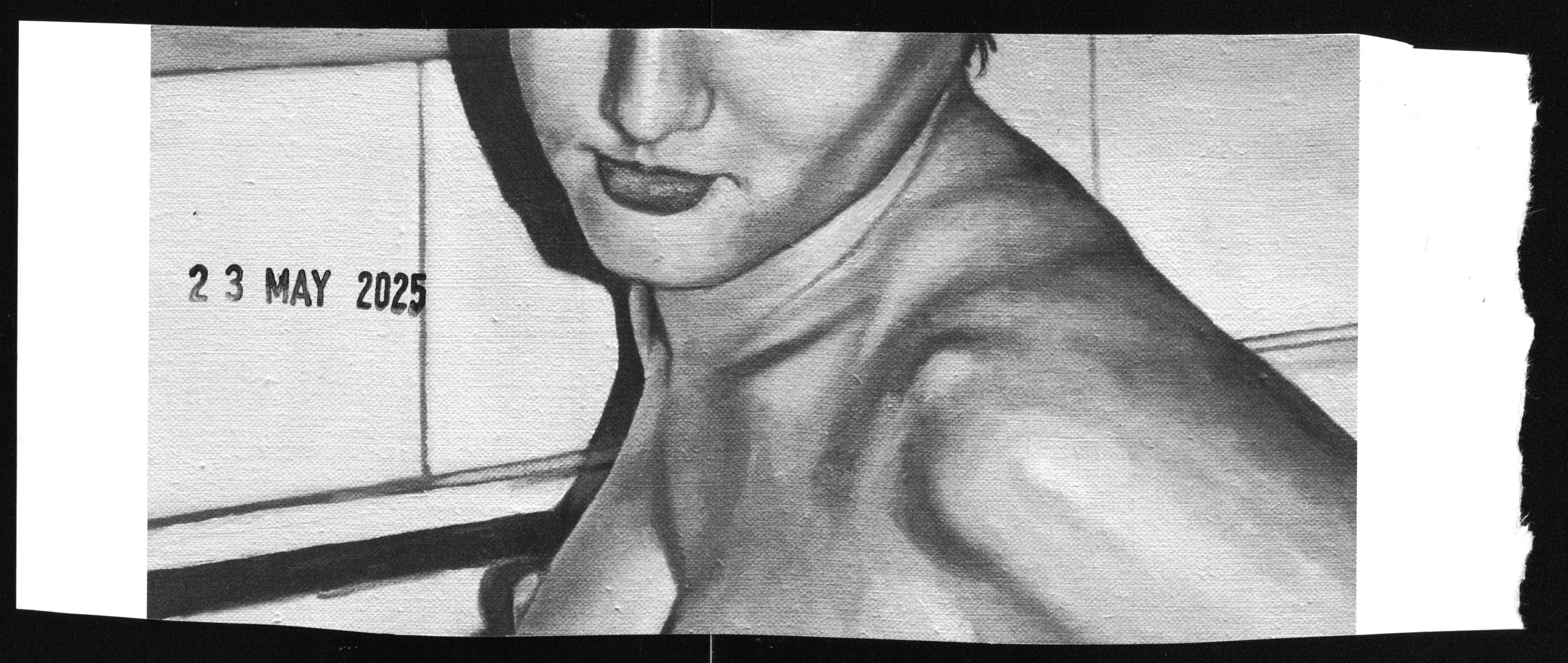
Set in the London of over twenty years ago, a time when old Nokias and Sony Ericssons, their buttons bulbous and tactile, were the ubiquitous mobile phones; when Marlboro Lights had yet to be rebranded to the more gauche ‘Gold’; and when a middle-class presence was still discernible in the heart of city, the novel centres around the exploits of A., a young painter struggling to get his art seen or, more to the point, sold. Paying for his studio out of the wages he receives from his copyediting job in the City, A. drifts between there and his house share, various art supply shops, his doomed gallerist, and the numerous studios, exhibitions, and showings of friends, enemies, and acquaintances. Painting nudes from contact magazines — not, initially it appears, from lack of funds — he naively approaches galleries with examples of his art only to be inevitably turned down. Yet he persists in his chosen medium despite its being out of favour, and even with the subjects which he chooses to depict, however graphic and commercially unviable they may be. Eventually a friend of A.’s brokers an arrangement by which couples are to mail in their candid photographs for him to paint on commission. It is from the name given this scheme that the novel derives its title.
However, painting in broad brushstrokes the plot and milieu in this way does only a disservice to the novel. For all this will undoubtedly sound as if easily assimilable to the expectations of the reader, right down to the coughs of blood in the sink and the ships-crossing-in-the-night liaison. Yes, there is a ‘set’ of which A. lingers at the fringe. Yes, there are vapid critics who are rightly skewered. And yes, there are parasitic landlords, the odd glimpse of Russian prostitutes emerging from underpasses, and eccentric housemates and living arrangements. Yet what’s unique in this book is not so much the subject as its handling.
Written in vignettes as long as five or so pages or little more than a paragraph, there is no grand sweeping narrative; and what makes it cohere is not so much a driven plot than a series of recurring motifs. The effect is less consequential than cumulative. Such examples include the partial skeleton which in one episode A. retrieves and brings to his studio, only for him to be nearly caught dumping it into the river in a later chapter, all with no more explanation given than I present to you now. Others are more subtle and ubiquitous. For instance, one of the chief settings of this book is the station platform, the street, the DLR carriage. None of these instances are exploited for a broad landscape of the city. Instead we peer at it, partially and with intermittent interest, as one does for whom its features have become ubiquitous — through office blinds, doors left ajar, in quiet moments when startled from our habitual musings by the passing ambulance siren or an arguing couple on the street. Often these vignettes begin with a description of A.’s travels in just this manner, along the same or similar routes, and with their destination leading more often than not to no consummation, whether of desire or of more artistic or material needs. This cycle of to and from is a canny counterpoint to the more overt cycle of motifs which recur throughout the book, and which help to bring coherence to the inconsequential matter of modern life which exists beneath an all prevailing ennui.
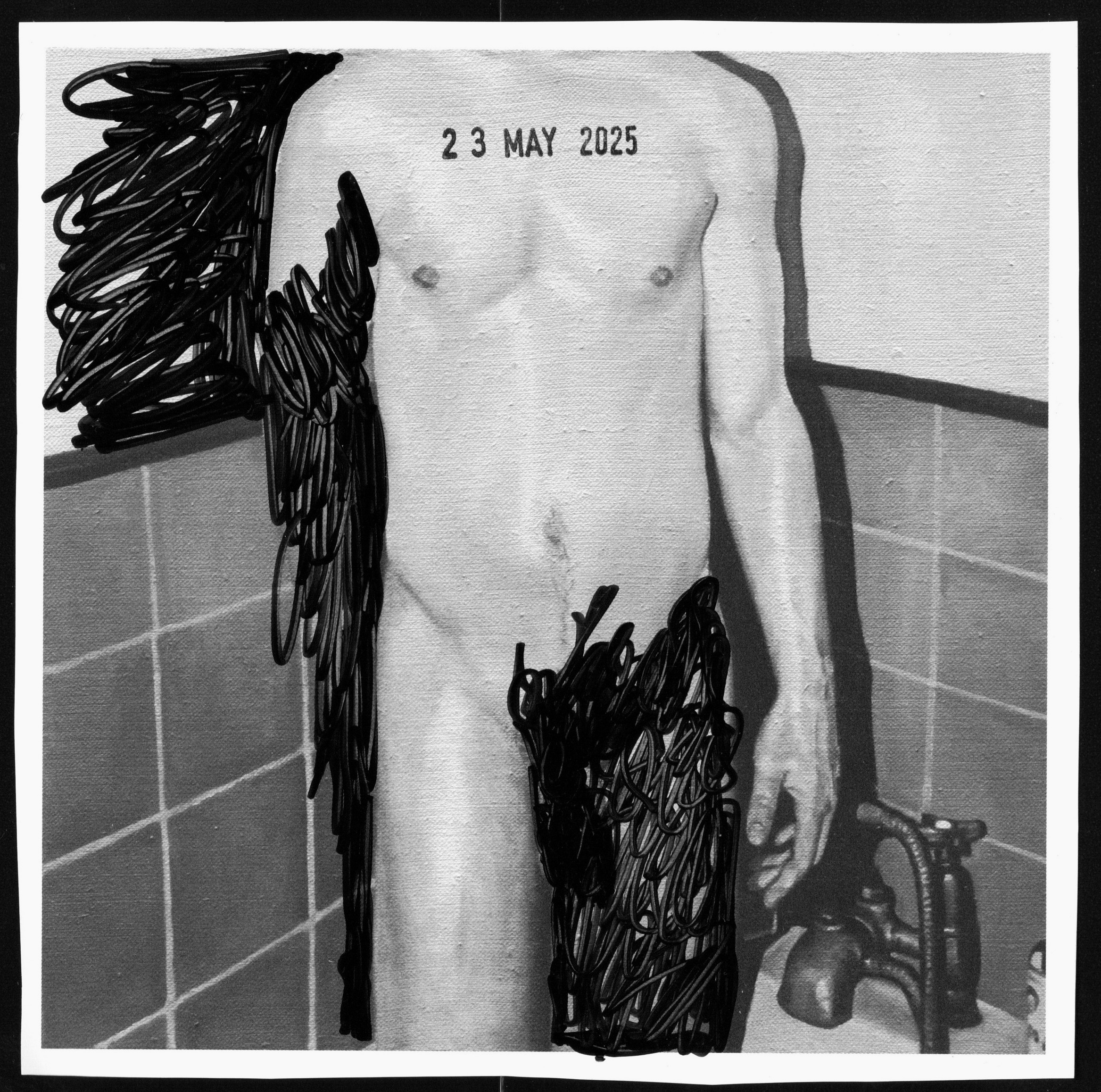
Yet the most striking aspect of this novel must be its near total absence of inner life. Not once, by my reckoning, does Mr Adams grant us access into A.’s mind by use of free indirect style or a single deployment of the verbs ‘thought’ or ‘remembered,’ or any of their myriad synonyms. Without internal motivation, such scenes as when A. paints Theresa — a brief episode — are ones in which we, not unlike her, are attempting to construe some motive or driving force behind the hand which delineates her form. Similarly, like him, the reader attempts to sound, despite the business of painting, the true shallows of her naiveté. This episode is particularly well drawn, touching, and in its depiction of that slightly odd practice of life drawing, captures in miniature the larger strands of high yet fleeting intimacy in the book. All the more interesting to note then we are never given a description of A. himself. It is almost as if Mr Adams is afraid if he were to allow access to A.’s motivations, to attribute to him a past, an upbringing, hopes and longings, or even a face, then the reader might just connect with him too thoroughly. Yet he captures the very particular kind of facile delicacy which all men find themselves deploying when in the very foothills of intimacy. For when the flirtations begin to rise between A. and Theresa the heart of every man reading must wince and melt at once, recalling the untold times such lines have escaped their lips: ‘It’s sad when you cover yourself with clothes. It’s like the sun going behind a cloud.'
The purpose behind this deliberate attenuation becomes clear when we recall what Mr Adams has written about his own intentions both on his Substack and in The Critic. In the latter, after quoting the episode in which A. clumsily approaches a gallery only to be rejected, he writes:
The gallery was wrong and the approach was wrong but the artist was also wrong. When I wrote The Naked Spur, I wanted readers to feel empathy and engagement with this awkward central character but also frustration at his self-sabotaging behaviour and his failure to properly use what advantages he had. I wanted to portray the characters in a scathing manner; most of all A., who is the agent of his own downfall, should be under more scrutiny than any other.
Rarely are we presented with such a roman-à-clef, in which its chief score to settle, more so than with galleries, museums, critics, and any other artist, is with the author himself. Yet with what doggedness does Mr Adams lay bare his younger self for our judgement. Not by the divulgence of any particularly poor practice — this is a book of millennium peccadilloes and numbness, not de Sade — but by its rigorous attention to tone. For with Mr Adams’s attention set almost entirely on the exterior of character and events, presented via the means of these discreet vignettes, we are offered an accumulation of detail — routines, destinations, purchases, conversations, precise and almost cartographical delineations of streets — which result in something not dissimilar from a diary, yet with a distance that remains nevertheless disturbing. It is from this accretion of detail that we are to pass judgement. For while the prose remains dry and aloof, its manner of observation is imbued with that unsettling combination of persistent attachment and distance of tone which is redolent of the most obsessive voyeur, though drawn less from the tattered sheets of an unhinged lover than from the sober jottings in a Stasi agent’s notebook. The persistent, indeterminable cough — another one of the book’s motifs — which periodically comes to haunt A. in his studio adds to this feeling, as if the man with the headphones and surveillance screen is sitting in the next room. The result is an intimacy of gaze which nonetheless leaves A. inscrutable.
Take this vignette from early on in the book:
A. washed the last paint from his hands and went to his room. As he was closing the curtains, he paused. A couple was crossing the courtyard. The girl was wearing a blue-and-white scarf, a letter “Q” visible on it. Her hair was cut in a bob. The man was wearing a hood. They passed out of sight. There was a pause then a door shut. The man walked away alone.
A. closed the curtains.
Just as A. shuts the curtains on the outside world so does Mr Adams shut us out from A.’s own interior life. Moments such as this recur regularly throughout the novel, and are registered in the same detached but focused manner. This, I maintain, is the fundamental tension throughout. For it is clear Mr Adams has made a laudable, even highly ambitious attempt to lay before us the failings of a character not only without preemptory judgement or the narrator’s thumb in some small way slipping onto the scale — this way or that — but without an ounce of mitigation. The result is that when we do truly feel sympathy for A. it is not as a result of pity for his circumstance, but in admiration of his dedication (these are too often confused), and that when we are inclined to condemn him it is for his own actions, and not on account of any rhetorical swaying or special-pleading.
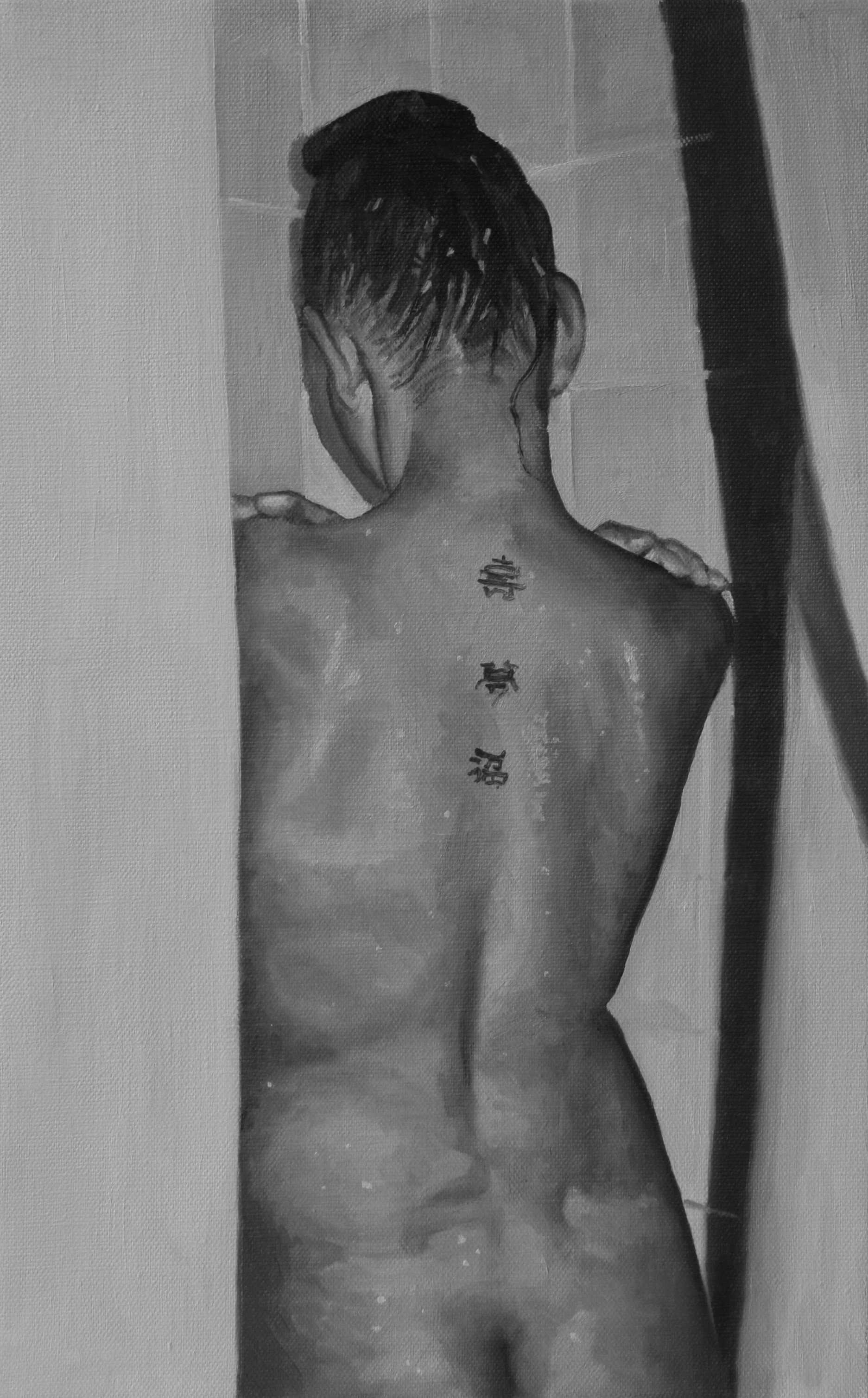
Yet if Mr Adams’s aim was to be his own chief prosecutor, he may well have been better served had he attributed more explicitly to A. an inner life. For every crime must have its motive, and if we are to pass judgement on A. we might be more inclined to convict if we were to understand more precisely the reasons for his state of mind. This is, of course, a risky strategy. For this is a novel that, if it does not exactly avoid the invocation of empathy, is certainly highly suspect of the ways in which it plays to the gallery. There are, for instance, no disquisitions or affected perorations on aesthetics, about A.’s aim in painting these nudes or about his desire to revolutionise contemporary art. There are no moments, however fleeting, in which we are privy to memories of art college, of childhood, of the spark which first lit this persistent self-damaging desire to paint. The result is that A. dances at the boundary of the personalised and unique and the societally configured: between a fictionalised depiction of Mr Adams’s own history and an emblematic figure, imbued to some extent with the failures of a whole generation of artists.
This goes some way to explain the repeated descriptions of painting, not as some personal communion with the Muses, but as manual labour:
A. pressed his palm against the canvas he had first hung up, then examined the heel of his hand. It was clean. Taking the canvases from the wall in the order they had gone up, A. painted them with neat primer from the tub he had opened, then replaced them on their screws. A. left the studio and rinsed the brush under the tap in the corridor.
Mr Adams rarely distorts by metaphor or euphemism. He keeps his aim true, forgoing appeals to high aesthetics to focus on the physical aspect of the work, ‘the sensual and practical part of his art,’ to take a phrase from Hazlitt. Here the prose finds a consummate subject, for there is no accident that it is in similar descriptions as these that, in his quiet, understated manner, Mr Adams manages to capture in A.’s friendship with Hartley — a fellow artist — that typical male attachment, borne of mutual exertion and confluence of will, in which nothing of much consequence is ever discussed while quietly the foundations of fraternity are being laid. (This, incidentally, remains a mystery to all women.) Similarly, by excising any higher claims of art from his characters, he manages to widen the scope of such tragedy as exists for A. implicitly by focusing on those moments by which that toiling aspect, which in its own small way has its artistic pleasures — of close attention to the thing, to the production of something beautiful and satiating — enters into the lives of many. The description of A. making chili for instance, which appears half-way through the novel, mirrors so closely that of his descriptions of painting and its necessary preparations that one can only conclude Mr Adams aims at a wider point, that there exists a beauty in craft in many spheres of human endeavour, replete with their own assuaging powers. Most are inevitably fleeting, and are ill-served by having their palest shades placed in galleries; but that there exists a desire in most men to make, whether it be paintings or chili con carne, and to wring from the task such small pleasures as modernity can afford, is something the novel is tacitly alive to.
The point becomes almost explicit in one of A.’s supervisor’s monologues, whereby the hidden ambitions of A.’s colleagues are laid bare:
“You’ve got your art, Norman’s got his book writing, Jenny’s got her acting. None of those pay much. That isn’t the point. You do it because that’s your life. None of you made an active decision to be here, you just ended up here.”
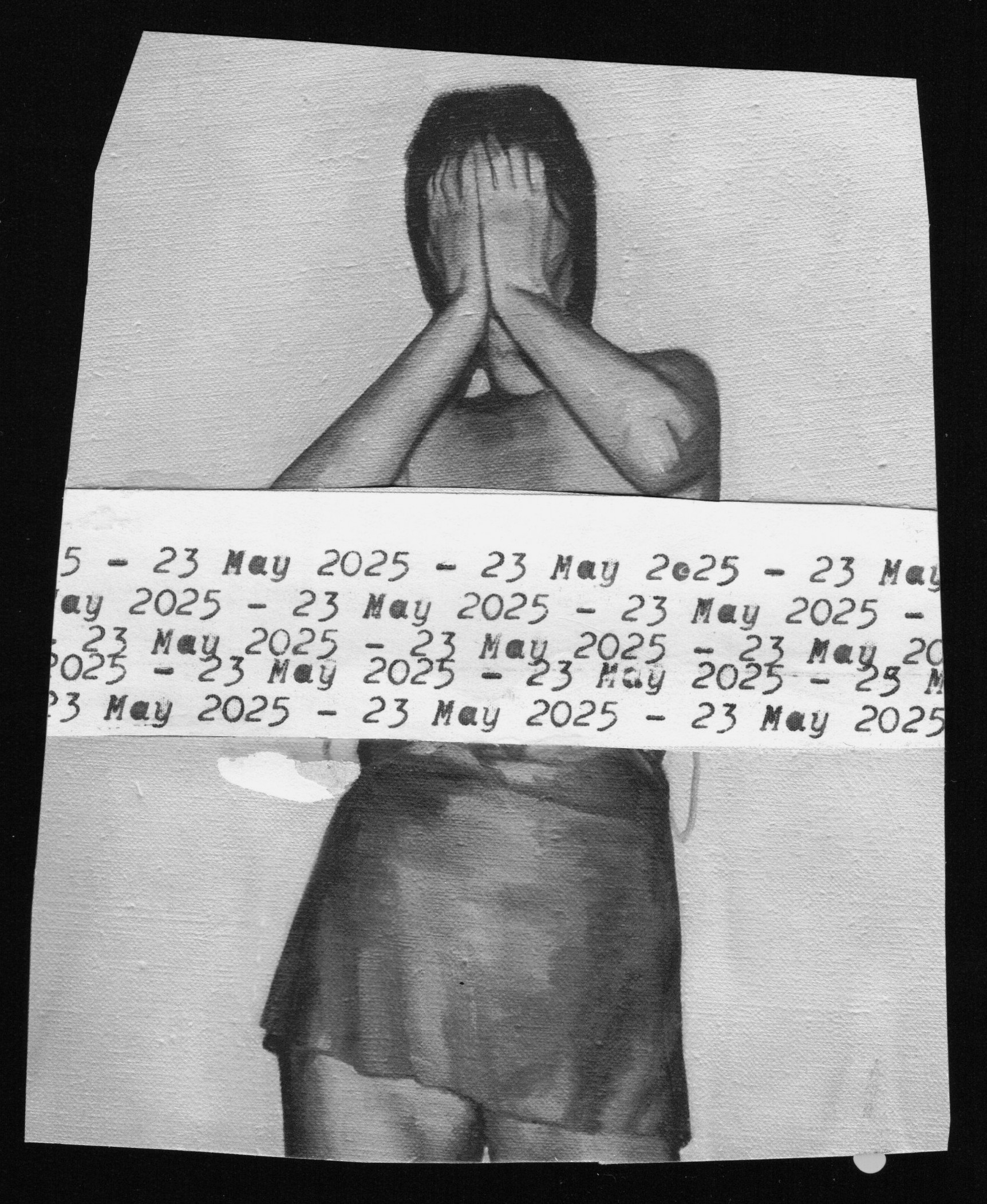
It is here the novel moves beyond its more obvious moments of social satire to a deeper penetration, revealing the darker side of the near total democratisation of the artistic temperament. For in A.’s shadow are all the other lives, different but somehow mirrored in his own, subject as they are to the same iniquities, illusions, failing hopes, and persistent desires, which are the stuff of all thwarted men. In those flitting glimpses of other characters, whether it be of the refectory cook, A.’s gallery owner, or some uncouth yob walking his pit-bull and swearing at a little child, we must pause to wonder whether some similar inner existence goes on impenetrably, its lack of fulfilment while not directly visible nevertheless felt everywhere in the whole fabric of social relations presented. For if inner life in the end proves not to be totally nonexistent in this novel, but something locked away, with no discernible exit, then its only proof of life is the muffled sound that travels through the interconnecting wall; overheard, in other words, like the stifled wail in the night, or the exasperated sob in the early morning.
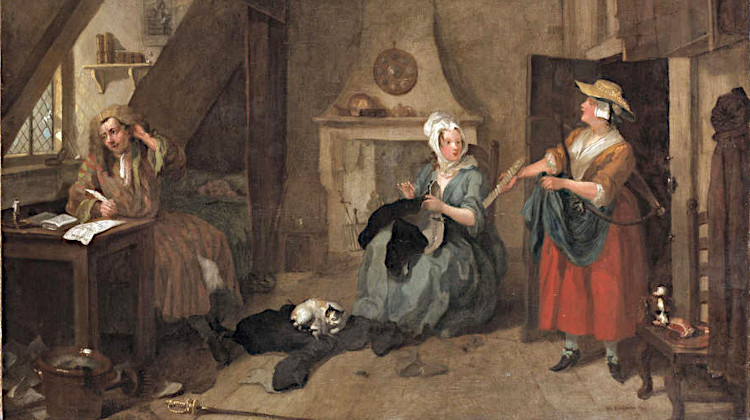
Yes, there are some short-falls; infelicities and repetitions of style which Mr Adams would improve by recourse to elegant variation. Yet, in the last analysis, it would not be untrue to say this novel shows something of a fresh mode of attack upon the subject of modern life. Whether it portrays A. in as scathing a manner as Mr Adams wished is ultimately beside the point. For reading this novel I was more than once reminded of what John Berger once observed of Hogarth, that when he ‘said that he would rather rid London of cruelty than paint the Sistine Chapel, he was making a more than reasonable choice.’ I do not mean that I necessarily believe Mr Adams would agree with Berger’s assessment, but that either side of the choice is not ill-judged. For we can see here, at the heart of this novel, that the manner by which men who produce art must exist is forged somewhere near the borderlands of their craft and society, negotiating however unfortunately their customs arrangements. The strivings of such men cannot then exist for them merely as an idea, as a pretty thing we are thankful exists in the Tate Gallery for our bank holidays, nor as that nebulous category for sorting known as ‘Culture’, but as dreams cast in the intemperate and capricious medium of life. At a time when men such as myself flood the ether with miles and miles of criticism, to have a man in our midst produce such a novel at all should be counted a welcome achievement. That it shows the blood, sweat, and agony required to produce art in our age is — let us not be blind — nothing short of a great gift.
— Amory Crane
The Naked Spur by Alexander Adams is out now, published by Exeter House (an imprint of Imperium Press) and priced at £15.99/$20. You can purchase it here.
(All the above paintings are by Alexander Adams and appear here with the kind permission of the artist.)
Amory Crane is Editor-in-Chief at Decadent Serpent. He covers such topics as Art, Literature, and the more broadly Cultural, reporting straight from the chamber of what Shelley once called the ‘unacknowledged legislators of the world’. You can follow him @LaughingCav1 on X or on Substack. He also writes fiction.