
Author: Ryan Shea
There is something particular about a fabulist who has no proper interest in fiction.
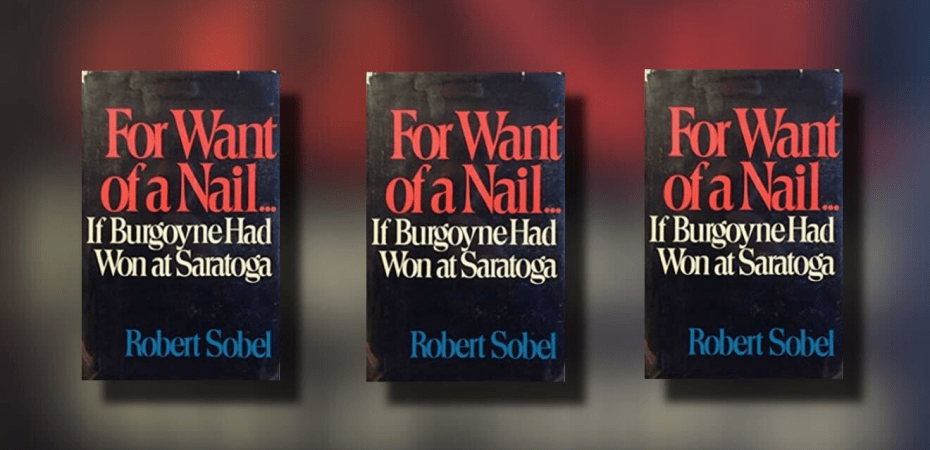
Robert Sobel’s name will appear in no list of canonical or counter-cannonical authors. It is difficult to count a writer of business such as Sobel among the great masters, but it is more troublesome to consign him to irrelevancy. Sobel was no J. R. R. Tolkien who constructed a mythology for modernity, nor was he a Philip K. Dick that constructed an after-modernity from pure mentality, but Sobel too refuses to sit beside even the primped etiquette of straitlaced stylists such as Conrad Aiken. As a professor of business at Hofstra University, Sobel’s business was the business of books and books of business. His bibliography to the contemporary reader is now largely benign and plodding, tomes of booms and busts: The Great Bull Market: Wall Street in the 1920s (1968), Inside Wall Street: Continuity and Change in the Financial District (1976), Last Bull Market: Wall Street in the 1960s (1980). The only works that may fetch any interests are the those that suggest a possible heterodoxy to the business of modernity: The Manipulators: America in the Media Age (1976), IBM vs. Japan: the Struggle for the Future (1986), and then his subdued magnum opus on American political personality Coolidge: An American Enigma (1998). It is then all the more odd that such a stalwart of business history would press his mark on American literature by outright fabricating another modernity parallel to ours: For Want of a Nail: If Burgoyne Had Won at Saratoga (1973).
Sobel’s For Want of a Nail is the product of a style so scarce it might as well be classified as sui generis; a book that presents itself as an academic historiography of an elaborate counterfactual world. Sobel’s subject is an alternate timeline where the British were victorious over the American rebels with all the ironies, political disputes, and unreal bibliography that entailed. Sobel’s book is more an object that would surface as an element of a short story rather than a book-in-itself. One is freely allowed to peruse Sobel’s pseudo-novel (for lack of a better term) with all the maps and charts of a royal North America that never was. The book is not locked behind the veil of fiction as, say, Philip K. Dick’s ironic alternate history for an alternate world, “The Grasshopper Lies Heavy”, from the earlier The Man in the High Castle (1962) is. Sobel though diverges from Dick by sacrificing character for pure conceit. The text, presented in the style of a dissertation, is confounding, challenging, and a pure fiction that refuses to engage with the expectations of fiction. Characters emerge then evaporate through snippets of interviews, plot progression is glimpsed through election statistics, and the American Sobel (our Sobel) goes as far to cite himself as an alternate Australian Sobel (their Sobel) who has published works such as The Fifth Point: Ezra Gallivan and His Creative Nationalism (1967). One should become familiar with these tricks as they are Sobel’s tools for drawing out inlaid ironies from larger details.
While Sobel’s style is undeniably economical, For Want of a Nail’s scope is baroque: featuring an elaborate progression that stretches from the prelude of the Battles of Saratoga in 1777 to the height of an uncanny Cold War, termed “The War Without War”, in the 1960s. The “dissertation” though opens with disclaimers of cryptic international tension between unfamiliar entities, named as the C.N.A. and U.S.M., before launching into a historical description in the tradition of very real arch-loyalist Joseph Galloway. The first three chapters are dedicated to a less than sympathetic, though scholarly, analysis of the causes of the American Revolution before George Washington’s “terrorist” army is crushed by General John Burgoyne on the grounds of Saratoga in 1777. The American cause thereafter sputters and dissolves as the Continental Congress falls to infighting; Washington dies largely a obscurity, while General Burgoyne is elevated by the Crown to the titular Duke of Albany over North America. The world thereafter spirals into a great political wrangling of debate, exile, and conflagration which is drawn out through the citations of texts both uncanny and unreal: Alexander Hamilton’s Farewell to Change: Thoughts on Leaving the C.N.A. (1785), Edgar Wainwright’s Bloody Patrick Henry: The Cromwell Who Failed (1917), and Russell Snow’s Decision in London: Forging the Britannic Design (1953) are but a select few of the hundreds of illusory texts that Sobel gives proper citation to in a complete index of irreality. The general crux is that, though defeated, the variable dynamic humors that would have formed the United States are simply dispersed into other projects rather than properly extinguished.
Sobel draws a new political equilibrium between two (later three) political powers which inherit the variable traits which would have composed the United States had the revolution not been moribund. The three nations are the three theaters which the respective casts of personalities fall under: the Confederation of North America (C.N.A.), the United States of Mexico (U.S.M.), and Kramer Associates (K.A.). Constituted from the British colonies, the phlegmatic Confederation of North America is the most philosophical of the three powers as it remains symbolically under Britain with a shared political system. Founded by the radical diehards of the failed “North American Rebellion”, the United States of Mexico (originally named Jefferson) is a heterogeneous nation of sanguine exiles, Mexicans, and Native Americans who inherit the firebrand politics, militaristic traditions, and the stain of slavery. Sobel’s most interesting creation though is the shadowy Kramer Associates which only coheres far later during the late 19th century. The choleric Kramer Associates are a transnational corporation which constitute themselves as a company with a state rather than a company within a state. The Kramer Associates were, originally, the most outlandish element in all of For Want of a Nail, but it appears the Kramer Associates of our world simply took until the 21st century to arrive; thus vindicating Sobel’s proto-megacorporation. The C.N.A., U.S.M., and K.A. become the constant “elements” of the book then as characters pass before the brunt of history, assassination, and fleeting relevancy.
Though his language is universally dry in all accounts, Sobel is often able to manage a stirring description in a sort of Neoclassical style. Warfare is of course a perennial subject as in any history. The Rocky Mountain War between the Confederation of North America and the United States of Mexico presents a unique horror which is not glimpsed anywhere else in the book: “All four generals—Doheny, Hernandez, Smithers, and Homer—died in the mountains, the first three of the cold, and Homer by his own hand.” Humanity continues to crawl in through morbidity as a particularly striking footnote expands upon the results of a pointless war in the wintry mountains: “Even today, visitors will come across military hardware in the snows, and from 1968-1971 more than ten bodies a year have been found, some in remarkable states of preservation.” The only deficiency one may deem in it as a history book is a scarcity of cultural description beside some brief mention of philosophical musings—the reader is told Manitoba is a haven for philosophers and Quebec is, unsurprisingly, a hotbed of radicalism. The preface though outright acknowledges this paucity in texture by declaring: “The reader seeking information and analyses regarding cultural trends will not find such here.” Sobel intends for us to find ourselves in the political and economic exaggerations of a broken funhouse mirror rather than from the poet’s lips.
Sobel’s though is a supremely funny writer. The stark professor of business holds a discerning enough eye to accurately capture the dark absurdities of history. His history is as arbitrarily cruel as our own: General Burgoyne (titular Duke of Albany) dies of pneumonia as soon as he relishes his laurels in North America. The reader is offhandedly informed that, due to the moribund French Revolution, France remains a kingdom ruled by Louis XVIIth under the thumb of a very much alive and reactionary Marie Antoinette. Then the last road mark of our American history we find is on page 197 with the mention of an irrelevant railroad lawyer in the Western territories of the C.N.A. who goes on to achieve very little of note in politics: Abraham Lincoln. It is by page 200 the reader is freely afloat in Sobel’s word with no familiar reference points to measure by. Sobel’s is the world of Ezra Gallivans, Bernard Kramers, and Benito Hermións who all have their own unique successes, failures, and quirks. It is no small help that Sobel’s pen is as poisonous as a scorpion so has no issue sketching out the hypocrisies and absurdities of human nature in truncated, clip-like scenes. The crowning achievement of this is when the son of the exiled Mexican emperor responds to journalists about a possible return to Mexican politics: “I think Mexico has had quite enough of my family.” All this is then compounded by a presumed wider meta-narrative that the Australian Sobel (their Sobel) is an agent-saboteur employed by the Kramer Associates in Taiwan for propaganda purposes!
Sobel’s talent rests in crafting the work as a recursive discussion and dissertation upon itself. The book is in itself a palace coup against the ivory of academia which Sobel long chaffed under. Sobel himself was in return resented by his environment for his perceived defections to the “mass market” by penning potboiler business histories for the best seller list. What differentiates Sobel’s counterfactual history is that there is no ready ideological revelation, there is no coherent system constructed, there is only the practice of history through personality and process. For Want of a Nail is organic in itself; it is a logical product of the world described. The book features no time travelers, no alien invasions, and no gods-from-the-machine—excepting only the atomic revelation of the bomb. Sobel’s book is a history of men and women who are so much less than angels. The reader will find no miraculous hand that diverts the river of history here besides a tricky turn of fate favoring General Burgoyne on the grounds of Saratoga over Washington. Sobel’s pseudo-novel is an attempt to reconstruct modernity through the disassembled parts of modernity; partially erroneous, but not impossible.
One need only examine the retraction to the book appended as a sort of epilogue. The brief “critique” is contextualized as a truncated commentary on Sobel’s dissertation by one Professor Frank Dana of the University of Mexico. The interloper (obviously an alternate mask for our Sobel) advises the reader to critically review the first three chapters which cover the origins of the “North American Rebellion.” Professor Dana there directs the reader to review the sections of history which, to us, are more factual than fictional. Sobel here implies that the “characters” of For Want of a Nail are subconsciously aware there is another reality, another modernity implied in their own history which they will never be able to fully substantiate. The reader is left with a particularly pungent punchline of critique from “Professor Dana” that denies both utopia and dystopia on each side of the counterfactual coin: “But the most serious problem is his presentation of the North American Rebellion, in which the loyalists could do no wrong, while the rebels are presented as fools, clowns, traitors, and knaves.”
One can of course insist that Sobel failed at giving much color to those clowns, traitors, and knaves, but a glance at Sobel’s other work shows character to him was more historical anecdote than particular description such as in Coolidge: An American Enigma (1998). Coolidge: An American Enigma will, due to convenience, always be remembered as Sobel’s swan song and functional magnum opus; though he personally considered the business history The Life and Times of Dillon Read (1991) his personal best. Coolidge sits as an engaging character study of the subdued aspects of the American character by way of 30th president of the United States: Calvin Coolidge. Coolidge serves as an understated subject for a biography and one who institutional historians have not always reviewed favorably. It is expected then Sobel takes a rather revisionist stance on the topic by arguing for “Silent Cal” Coolidge as the last effective, classical American president prior to the high office becoming a celebrity position. We find here not a fool or knave, but Calvin Coolidge as a common man of surprising sensitivity: the last president to have never flown on an air plane, the last president to personally greet civilian visitors at the door of the White House, and the last president to regularly pen poetry in private. It is here one will find Sobel at his most terse and efficient as a popular historian.
Sobel has no issue raising Coolidge’s mystique by the fact the stoic “American enigma” burned his papers before death. It is a character study and Sobel can draw a robust character. The reader is treated to Coolidge as a rather perplexing phenomenon and man of striking personality. Sobel several times in detail describes Coolidge’s penchant for staring out the window in silence to the point it essentially became a hobby for him. One knew they were an intimate friend only when they were allowed to join Coolidge in contemplation; a rare honor which only a select few such as wife Grace Coolidge and political confidant Frank Stearns were granted. Coolidge’s sense of humor is also highlighted which was not untrue to his sense of a responsible political acumen through philosophical individualism. One of the more evergreen anecdotes repeated is Coolidge’s summation of a preacher’s sermon to his wife: “Sin. He’s against it.” Coolidge apparently learned about that exact anecdote, denied ever having said, but did declare on the matter of the story: “It would be better if it was true.” Coolidge was stark and silent though never exactly morose. Sobel’s skeleton key for the mentality of Coolidge is the famous (perhaps now once famous) of the man who bet he could get President Coolidge to utter more than three at a Washington dinner party. Coolidge’s only words the entire night were his parting words to the unlucky betting man: “You lose.”
Calvin Coolidge’s acumen in politics was of course an extension of his root-and-soil New England mentality. Sobel’s Coolidge is a tight-lipped Yankee Machiavelli with the ever present hints of a dandy’s interior world behind the exterior—we are informed Coolidge was apparently a flashy dresser in college. Coolidge’s father, notary John Calvin Coolidge Sr, famously administered his son the oath of office in the parlor of their family home in Vermont, in the middle of the night, after the untimely death of prior president Warren G. Harding. The news had to be delivered by foot to the Coolidge house as the building had no telephone and the only nearby telegraph was in the local post office. This entrance to high office provided Coolidge no end of political boons as he portrayed himself above the squalor of Washington D.C.’s political culture and beyond the wave of European mass ideology. The issues of Coolidge’s time seem quaint today: the role of business in the United States, the question of how international politics was to be conducted, and the dispute over if the president was to be a mere functionary or representative of the United States. Coolidge was a man more comfortable behind the desk of the, then recently reconstructed, Oval Office than behind the butt of a rifle. He was notoriously better at sussing out political talent than he was at quail shooting. One will read that Coolidge, as a force of American history, was more defined by what he did not say rather than what he did speak up on. Coolidge’s place in history, Sobel suggests, was both due to, and hamstrung by, his penchant for total evaluation. One was not to move unless absolutely necessary or absolute victory could be assured with the least number of moves. This image of an American politician was rare even at the time, and, today, can be considered all but extinct.
What then unites For Want of a Nail and Coolidge: An American Enigma in Robert Sobel? The two works are both totally unalike in format and yet not dissimilar in philosophical subject. Both are suffused with Sobel’s desire to reconstruct a sense of modernity, our sense of modernity. For Want of a Nail is a total disassembly and reassembly of modernity that seeks to induce a vertigo in the reader; a sense that what we are is greater than systematized jargon. History could be reconstructed from humans, but humans could not be properly reverse engineered from history. Coolidge: An American Enigma though offers a more subtle, more tantalizing revisionism that each and every constructed rendition of modernity will collapse (or re-cohere) under a few critical blows. The world as humanity makes it, with all the contrivance and artificiality, is not anymore than the measure of those who construct it through living. Yet, in these two books, Sobel’s glowering humor remains throughout. The business of humans is after all history, real or fake.
One may do best to always remember that economical adage of Calvin Coolidge on fickle popularity in regards to the legacy of Robert Sobel: “It is good to get out while they still want you.”
Ryan Shea is a New England Tom of Bedlam. His writing focuses on the antipodes of literary culture and the Internet. His work has previously appeared in The Los Angeles Review of Books, Atlas Obscura, and in French translation in the review Librarioli. He is currently a columnist for the music site Invisible Oranges. He looks forward to each project that requires one thousand and one nights to complete. His meandering cross sections can be found at Zoflyoa on Instagram.
Discover more from Decadent Serpent
Subscribe to get the latest posts sent to your email.
