
Author: Casey Morris
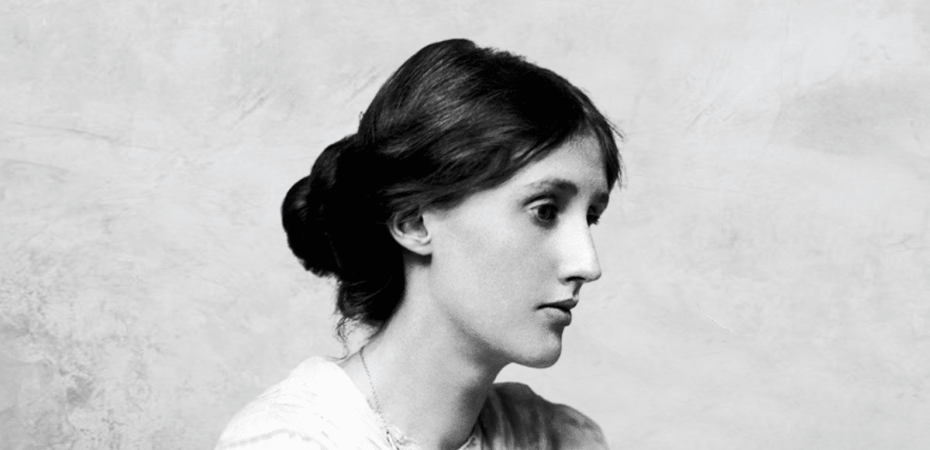
Virginia Woolf is inseparable from the boundary-pushing tides of her era. Modernism and feminism are as much a part of her prose as the lyrical and ironic registers she mastered. Fans of Mrs. Dalloway and To the Lighthouse may not know that a new book, The Life of Violet, contains some of Woolf’s earliest stories. Indeed, she never intended them to be published. Scholar Urmila Seshagiri’s correspondence with Longleat House, the former estate of the Marquess of Bath, revealed an astonishing find: an unknown typescript of The Life of Violet, one with more authorial revisions and development than the draft owned by New York Public Library (the hub of Woolf’s papers). Transcribing and minor editing aside, Seshagiri’s gift to readers is an exciting addition to Woolf’s oeuvre. The Life of Violet steeps us in the imagination, irreverence, and burgeoning gifts of a genius in flower.
A mock-biography of her friend Violet Mary Dickinson, The Life of Violet has three stories: “Friendships Gallery,” “The Magic Garden,” and “A Story To Make You Sleep.” These trace her rebellious yet confident journey through English aristocratic society. Violet’s attributes (she was tall, quick-witted, and independent) are less a foil to standards of femininity than a challenge, a humorous and satirical one, to the Victorian social norms Woolf later confronted in A Room Of One’s Own. The stories are full of fantastical characters and events: a Giantess, a magic garden, and a retelling of Japanese folklore (in which Violet becomes a princess with divine powers of healing and renewal). Woolf’s flowing and textured style takes shape, especially in the final pages. Most impressively, the influence of earlier writers like Austen, Eliot, or Wollstonecraft comes to fruition in a voice at once candid and wry, strong yet distinctly feminine.
“Friendships Gallery” introduces Violet. Told in the style of a roman à clef, Woolf retracted names of the real-life women featured (some of whom read and enjoyed the story). Such a private and intimate vibe belies Woolf’s humour; “Friendships Gallery” entertains as much as celebrates Violet’s aristocratic upbringing. Born laughing or crying (or both), Violet doesn’t fit Victorian stereotypes: her imposing stature betrays less overconfidence than self-assurance. Not exactly dutiful is she, nor has she any ambition to renounce Bath society. What Violet lacks in comeliness she abounds in curiosity, friendship, and light-heartedness, a hybridism that sees her through rites of passage. The annual dance at the Bath Corn Exchange offers opportunities for status, even marriage. This prompts a word from her Aunt: “Mary Dickinson. . . remember that you are neither beautiful nor wealthy, nor, for anything I can see, in any way attractive; God in his infinite goodness has caused you to grow at least six inches higher than you should grow, and if you are not to be a Maypole of Derision you must see to it that you shine forth as a Beacon of Godliness.” Undaunted and wearing a golden cross, Violet attends with “ . . . the spirit of a Martyr to the Stake.” She meets a Peer, who upon hearing her plight laughs so heartily Violet relents; she removes the Quaker relic with a laugh. He even encourages her to bury the cross. Her refusal signals a nod to tradition. But it feels more like a compromise, a hewing of deadwood for a new path. The last sequence with Violet’s tutor, the fastidious Fraulein Müller, replays the same cultural pressure (this time to learn enough Elizabethan drama and Shakespeare to navigate drawing-room talk). Violet’s deep love for learning exceeds expectations: “. . . each governess when she left felt that she had imparted a great deal.” Less concerned with niceties, Violet is a cultivated and sociable woman who’s carved a place for herself, one between the reins of duty and ambition. Violet’s place, one Woolf would argue for all women, is not an afterthought or mere accessory. It’s independent, an active and level station to that of men despite the patriarchal mores of her time.
This very Woolfian theme evolves in the next story, “A Magic Garden.” Inspired by Violet’s cottage, Burnham Wood, in Welwyn, Hertfordshire, Woolf fortifies her portrait with a touch of fantasy. What begins as a description of Giantesses (aristocratic ladies) lounging in a summer garden, partaking of its beauty and idle pleasures snaps to Violet. She is the “. . . tall rod of a plant with queer little tassels always quivering and austere silver leaves which prick you if you don’t know the way of them.” Keen to learn cottage-upkeep, Woolf describes her stride across the garden or her journaling on how to keep flies off roses and London specialists who “beeswax tiles.” Woolf quips such antics represent a “momentous” change in the otherwise stately annals of Somersetshire history, one historian George Trevelyan couldn’t resist (such delicious sarcasm). Imagery of the garden creates a tranquil scene, with flowers, trees, and fauns listing in the brush. A significant event comes in a conversation with an old gardener. Violet muses on his decrepit yet proud demeanour. Her interest and respectful tone with him awakens a long-suppressed desire, one Woolf depicts in his manner of holding shears: “Freedom gleamed in his eyes while he spoke, and he waved his shears towards the house as men waved bloodstained bayonnettes once before the Bastille.” This isn’t a passing gesture or hyperbole; Violet’s courtesy is revolutionary because proper ladies don’t mind the gardener. They certainly don’t indulge his knowledge or experience. Subsequent conversations with the ladies (e.g. about the garden’s drainage system and where to purchase roses) climax in “a cottage of one’s own.” Violet’s cottage represents more than an autonomous feminine space. It’s an affront to entrenched class and patriarchal structures, to the status quo where mobility of thought and deed is a gendered privilege.
“A Story To Make You Sleep” propels Violet into the stratosphere of allegorical myth. Inspired by Violet’s tour of east Asia with Nobel laureate Lord Robert Cecil, the story brims with Japonisme that captivated fin de siècle Europe prior to the outbreak of war. Set in Tokyo, a mysterious monster washes onto shore, gasping and flailing about. The townspeople climb a mountain (Shin-To) to offer “wheaten cakes” to ancestral shrines. This soothes the dying beast, whose spirit alongside many trapped souls flee his carcass in trails of wisp and smoke. Terrified, the townspeople call on the Bald Pated Crow. From his perch atop Shin-To, the crow soars above the city and disperses the evil spirits. But then something even stranger happens. During the hour of ritual prayer, they behold two giant princesses (one of whom symbolizes Violet). An important detail, and one of thematic continuity, is that upon seeing the two princesses everyone bursts into laughter. The equanimity of laughter, among the high priests to the lowliest peasants, blurs lines of caste and gender. The two princesses exert a profound albeit disparate influence over Tokyo; two competing philosophies of worship emerge, each grounded in the ethos of their respective princess. One receives “fruit, vegetables, and woolen underclothing,” while the other (à la Violet) “broken china, rose leaf jam, and painted books.” Finally, and most importantly, the offerings to each princess are miraculously reversed overnight. The worshippers wake to a confusing reality, one time and evolution merge to a single harmonious unity: men and women, boys and girls live, work, and pray together. No gendered conformity. Just the stream of life. Its evocation of Japanese culture and folklore aside, “A Story To Make You Sleep” makes a bold statement. Violet as a heroine-princess charges the imagination with truths revelatory and yet deeply human. Femininity is heroic. Its power and love are metonyms of a world-historical movement that is its purest instantiation. Femininity is universal. Its offerings sound beyond role or sect, up to the law-giving firmament of all creation.
Engrossing in imagery and lyricism, and a boon to readers and scholars, The Life of Violet offers a glimpse into the formative years of an English literary icon. It has what Poe called the finest quality of fiction, the unity of effect: its brevity can be enjoyed in one sitting. This doesn’t undermine its depth or lyricism, nor Seshagiri’s afterword which provides historical context for the reader. On all fronts, Woolf delivers a rewarding mock-biography of Violet Dickinson that foreshadows her later masterpieces. Crucially, it confirms what many may rightfully wonder about any artist: who was she before Mrs. Dalloway or To the Lighthouse? What The Life of Violet affirms is how Woolf’s vision of liberated femininity, of women fully realizing their immanent potential, drew upon her reading as much as her experience. Like Violet, she lived with the choice of duty or ambition. But instead of an answer she asked a question. Why? Why can’t I write, or vote, or work, or own property, or (god-forbid) have a cottage of my own? The sweeping social and cultural movements in England and throughout the West of the past fifty years owe much to Virginia Woolf. They owe as much to Violet humming and tending her summer garden.
Born and raised in Texas, Casey Morris studied literature, philosophy, and ancient Greek at St. John’s College in Annapolis, Maryland. He loves reading and writing about literature, especially old and new poetry. He is also a fan of historical fiction, documentaries, and shoegaze. He is Decadent Serpent’s Literature Editor.
Sources:
Woolf, Virginia. “The Life of Violet.” Edited by Urmila Seshagiri. Princeton University Press. 2025.
Discover more from Decadent Serpent
Subscribe to get the latest posts sent to your email.
