
Author: George Marsden
I will never not smile when I enter a bookshop and find myself confronted by the ‘Literature’ section. If only these books form the shop’s portion of literature, then what (pray tell) do all the other books constitute? It’s even more of a treat when I discover a shop that keeps ‘Literature’ and ‘Poetry’ apart. We know what’s meant here, of course. ‘Literature’ means the classics and the more serious attempts from contemporary writers; the stuff making up university courses and Booker Prize shortlists, rather than “beach reads” or the sort of thing Blake Lively likes. If you’re feeling cynical, you call it the stuff we should read rather than what we want to read.
And a month hardly seems to go by without some cynicism directed at ‘literary fiction’ getting an airing. In March the Spectator published a piece bemoaning modern “storyless literary fiction”. Lionel Shriver came out to bat for highbrow books in response, but even she evinced a dislike for “plotless”, intellectualised tales. Upon the news of David Szalay’s ‘Flesh’ winning this year’s Booker, it seemed that one Telegraph writer is equally suspicious of anything consciously highbrow. Can this be right? is there any point to a novel that doesn’t set out to “hook you” with an “engaging plot”? is fiction worthwhile even if it doesn’t hold your hand through a beginning, middle, and end?
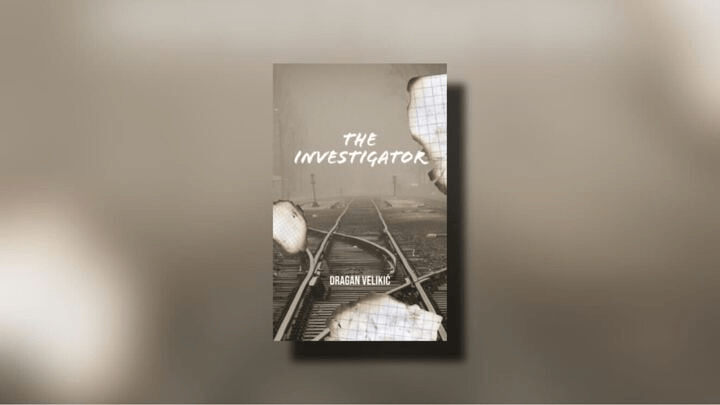
In answering these questions, Dragan Velikic’s The Investigator can be instructive. Originally published in 2015, an English edition was only released this year despite it becoming the most borrowed library book in the author’s native Serbia, and earning him the country’s Nin Award. It is also exactly the kind of plotless musing that, apparently, has wrecked the market value of Anglophone literary fiction for good. But, and importantly for the readers who make up that market, it draws its strength precisely from being that kind of book. Its translator, Christina Pribićević-Zorić, and publisher Istros Books deserve immense credit for bringing it the attention of a wider audience.
There’s very little action indeed in The Investigator. Perhaps to some English readers this is unexpected, given how closely involved the novel is with the history of the Balkans; after all, “action” seems to define the last one-hundred years of that history. It begins and ends with the author-narrator’s mother (perhaps the closest thing to a plot here is the recurring visits he pays his mother at her care home). She has dementia, a fact that I suspect is true Velikić’s biography but that also functions as a useful device. In her confusion at whom she is talking with and where, his mother’s condition acts as a trigger for the author to interrogate Yugoslav history as it stands to him through his maternal relation.
And the significance of dementia in this context, of forgetting and remembering, surely isn’t lost even on the Western reader. Through his patchwork narrative, Velikić’s point is to impress the essentially demented nature of being Yugoslavian: of the radical forgetting that permitted the repossession of homes belonging to the Serbs of Pula (the author’s Croatian hometown), but that also allowed the very conditions within which Yugoslavia could be formed in the first place. In his mother’s final days, she starts speaking Fiuman (a dialect of Venetian), a language she could not have spoken for many years; it serves as a reminder that the forgetting that characterised the post-90s history of Serbia, Croatia, and Bosnia was in keeping with much that went before it.
It’s during these conversations with his mother that he recalls a childhood neighbour, Lizeta Benedetto. From an Italian family in pre-First World War Thessaloniki, Lizeta’s life is symbolic of the wider Balkan experience. Narrating it to a young Velikić, she evokes the multilingual life of Thessaloniki (switching from Greek, to Italian, to Ladino) before the population transfers that saw Turks swapped for Anatolian Greeks; the insecurity of the declining Ottoman world has her father packing her off to school in Vienna and she eventually comes to live in Trieste. From there, she revisits Thessaloniki (it had recently been all but destroyed in a fire) and eventually settles in Pula. Neither Serb nor Croat, her foreignness sets her apart from the Yugoslavia newly arrived around her, whilst also connecting her to a past with a far less questionable pedigree than Tito’s state. She introduces Velikic’s family to the daughter of the Italian who owned their home before the Second World War, establishing their later displacement as one event in a litany of similar horrors that plagued the region.
More curious is Lizeta’s function as a sort of surrogate mother to Velikić. When his own mother takes his sister to Zagreb for a trip, it’s with Lizeta that he stays. Freed from the discipline imposed by his mother, he compares living at Lizeta’s to coming from under the weight of some great taboo. Velikić’s mother’s neurotic orderliness is what we in the West would now colloquially describe as autistic; she polices fellow beach and cinema-goers for social infractions like littering and chewing loudly; she compulsively records the names of hotels she has stayed at in a journal, the loss of which leaves her inordinately upset. As a result, it isn’t difficult to empathise with a young boy’s wish that the other woman was his real mother.
But it’s as an adult, and an adult with a post-90’s perspective, that he recognises the danger that lies in such a reality defying fantasy. The contrast Velikić makes between the two personalities is a contrast between the two societies that birthed them: the Mediterranean world of Lizeta’s pan-European origin, and the dark Croat village and the severe Šabac teacher training college that calcified his stern mother. The former bears an obvious seduction for Velikić, perhaps even contributing to the ideal against which he often measures the old Yugoslavia and the new Serbia. But he knows he doesn’t belong to it. Just as he eventually comes to terms with his mother’s mannerisms, he embraces his connection with the world (like Lizeta’s, now vanished) in which he was born.
He crystallises this sentiment in these words:
This appraisal is by a person who, on a freezing cold January day in Ćuprija in 1978, his lips pursed, did not take the military oath; a person who never visited Tito’s grave; a person who was never a member of the League of Communists…now, this same person would like to save from oblivion a period, no worse than the one that followed, when most people lived a decent life; to stand up to false patriots and profiteers, to those whose strong muscles of Croatdom and Serbdom were tattooed, in their youth, with the date when they entered the Yugoslav People’s Army and ran in the relay race for Tito’s birthday, only later to shamelessly revise their past…
Against revising the past, against all falsehoods, he understands the truth of who he is.
These are powerful reflections that come to exist against the backdrop of a drawn-out characterisation. Relying as they do on a meditative tone, it’s difficult for me to see how this novel would be improved by any suggestions from the anti-literary cavillers in the British press. For that reason, Velikić’s novel is necessary reading for anyone interested in how literary fiction saves itself from going the way of the verse-drama (even if Blake Lively is unlikely to make a film out of it).
George Marsden is a graduate of Glasgow University, where he read English and Classics. His writing has appeared in IM-1776, The Mallard, and Sublation Magazine, among other outlets. As song writing is the only form of modern poetic expression with a mass audience, George thinks it merits special critical attention. He also aims to counter the nefarious influence that Oasis have had on British culture. Read his work here.
Discover more from Decadent Serpent
Subscribe to get the latest posts sent to your email.
