
Author: Cameron Aitken
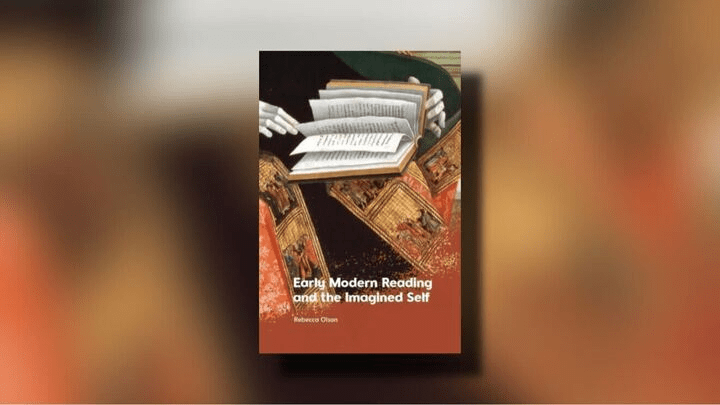
This is rather an unusual book in the sense that it discusses reading during the Early Modern period in the form of speculation. Space is an interesting concept within literature which spans from anything related to occupying space or even crossing a threshold. This monograph attempts to imagine the social space of the early modern reader in the Tudor period. The argument is fundamentally arcane and difficult to follow. Initially, Olsen poses a question asking who we imagine is reading alongside us as we read alone in our studies. She describes this as her theory of “readers once removed” — the abstract idea that alludes to a kind of spectre of another reader reading over you. Who do we imagine to be these other readers? I am not quite so sure where the book leads. After the preliminary idea of this theory, she makes an extraordinary claim which I am (perhaps foolishly) unable to decipher:
In the last thirty years, the perception of a larger, more diverse audience or network of users made possible by the internet has often incited enthusiasm about a newfound potential for human connection – potential not always realised, as twenty-first-century digital racism has made clear.
Perhaps I am not well-equipped to comprehend these remarks, but I am perplexed as to how a discussion about human interaction immediately jumps to a discussion of racism. Firstly, I thought that people who are unkind on the internet are generally quite unpleasant in a whole range of ways and not just racism. But, secondly, I was expecting to read a work of criticism on Early Modern England and not 21st Century attitudes towards social justice. The reasoning behind this is speculation on who our imagined readers are in our current period. I am unsure as to how this is gauged because surely it is an impossible task that cannot be carried out with even the most methodical of systems.
Olsen alludes to the idea that while we cannot imagine readers of the Tudor period, we can look to editorial decisions as to how they might have an impact upon their imagined reader. Her argument is that editorial decisions are capable of shaping the way we view humanity. She claims that it is an editor’s responsibility to facilitate the reading community of any time. It seems that Olsen’s point centres around the fact that not having a grammar school education is a hindrance to people without this humanist education who wish to read the text. She goes on to make another point that I am yet to understand; she claims that humanism was ‘… unstable in this period, when many writers were educated in grammar schools but went on to write texts that offer an ambiguous take on humanism’s ability to make good on its promises.’ If anything I constantly need clarity as to the points that are trying to be made. What promises have been made and how is a grammar school education in any way detrimental? The whole purpose of a humanist education is to question the idea of the human and how one interacts positively within a community. It is the overarching tensions and conflict of thought which elucidate our own humanity.
There are, however, some nice passages relating to Shakespeare and the examination of different editorial decisions. Yet I still find the argument difficult to follow and occasionally awkward. There are some moments which make incredible assumptions and leave me a little confounded. A curious example is the following: ‘… we are taught to read in certain ways that reproduce social hierarchies, and like so many of our ongoing colonial systems, we can trace the development of these methods back to the early modern period.’ This claim baffles me, but it is possibly the theme that seems to reappear throughout the book. I am interested to know what our ongoing colonial systems are; I am especially interested in how we are taught to read that does not just recognise the hierarchies in society, but actively reproduces them. If I have totally misread or misrepresented this monograph then I will stand corrected, but my initial observations are that the book is abstruse and difficult to follow from chapter to chapter.
Early Modern Reading and the Imagined Self by Rebecca Olson is published by Edinburgh University Press. It is available here.
Cameron Aitken is a First Class English Literature Graduate and Jazz Musician. He loves poetry and philosophy, and has a background in literary theory. He is also interested in psychoanalysis, and thinks about films through this lens. He is an Early Modernist at heart.
Discover more from Decadent Serpent
Subscribe to get the latest posts sent to your email.
