
Author: George Marsden
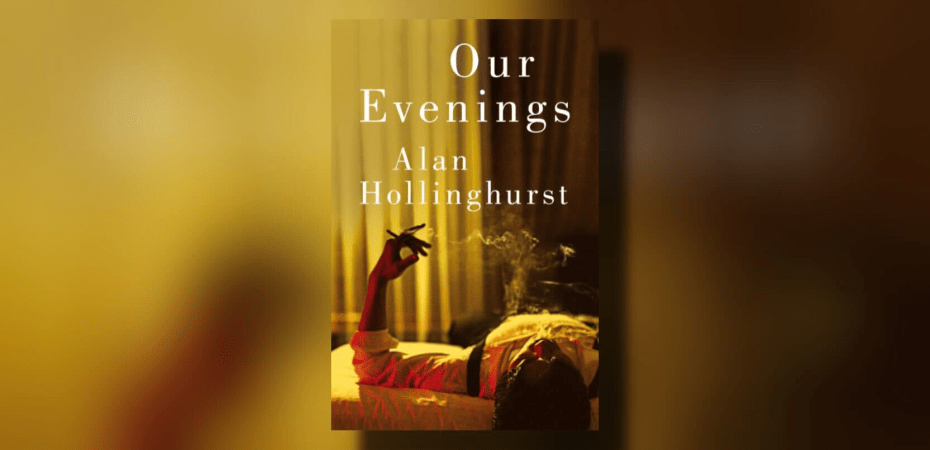
For most critics, Alan Hollinghurst is a novelist unruffled by modernism. He continues the tradition of the nineteenth century novel, as if Joyce and Proust had never written, or were (in their different ways) mere faddists. So much for most critics. Not only does this assessment mischaracterise him, I suspect it’s also one that’s starting to grate, especially if his latest novel, Our Evenings (now out in paperback from Picador) is anything to go by. As well posing as the purported memoir of its protagonist — an especially pre-nineteenth century device — towards the end of ‘Our Evenings’ its protagonist-narrator, David Win, comments on the changing narrative style of the book that, for the reader, has yet to finish: the earlier years are more novelistic, he thinks. Indeed, there is a palpable change in the voice telling the story. Closing in on the present, the voice grows more opinionated, more anecdotal. Its epilogue is also narrated by another character, with a more reflexive commentary on the text which deliberately colours the reader’s interpretation. While I suppose it would be too much to describe all this as “postmodern”, this isn’t the stuff of F. R Leavis’s Great Tradition, either.
But as an examination of a personality over half a century, Hollinghurst’s great achievement in this novel does, indeed, match that of the best from the nineteenth century: the elegant depiction of the comedy and tragedy of an average life. And with Our Evenings, recognising the significance of that change in narrative style is key to understanding the personality of its narrator-protagonist. I should clarify here that by “average” I mean something closer to “non-heroic” rather than “normal”. David Win, who grows up half-Burmese in 1960s Berkshire with a lesbian mother, goes on to become a semi-famous actor and lifelong (and wary) acquaintance of an eventual Tory minister. Hardly your average voter. His story takes him from minor public-school to 70’s Oxford (so far, so Hollinghurst), and onwards to a career that meanders through television, radical theatre, film, and writing, before ending catastrophically in the COVID years. A non-white, gay man (so far, so very Hollinghurst) in late 20th century Britain, his life rocks between alienation and acceptance, the joys of the latter constituting the novel’s emotional burden. But what’s really behind the turn from “novelistic” to anecdotal narration? I think answering that will reveal what makes Our Evenings quite unlike a lot Hollinghurst’s preceding work.
Hollinghurst has long been praised for the heightened sensibility drawing the scenes of monied conviviality and set-pieces forming his tales; and his powers certainly haven’t left him. A lot of Win’s narrative involves unpicking the changes of tone, facial adjustments, and body movements that seem to form the majority of his memories; he ruminates on half-a-century of semi-grasped intentions, the significance of the smallest acts and words. The effect isn’t the close ferreting out of motivation in Stendhal’s manner, but the careful (and tentatively expressed) impressions that texture Henry James’s own drawing-room dramas. A thirteen-year-old Win is shown a bull and later wonders if he is perceived “as an irritant or an irrelevance”; remembering the Christmas Day when his mother unexpectedly puts on her seldom seen Burmese clothes, he ask who she is doing this for? and why?; middle-aged and back in the dorms of his old school, the rising colour in the face of his contemporary, Tory MP Giles Hadlow, could be the sign of a shameful memory, but is it? This nervous ratiocination opens up the dry facts of a sixty-year life into the vast and unknowable seas of the very people he spent it with.
The tentative observations of James’s narrators serve to open windows on his characters, darkly; we are invited to wonder about them at a closer range, not to form certainties. Here, however, the same kind of details are a part of Win’s characterisation. Gay and Asian, he considers himself an outsider at his public school (he is also an exhibitioner: his fees are paid by the Hadlow family). Of course, homosexual acts were decriminalised in 1967, while the first Race Relations Act preceded it by two years (not to mention the obvious: a homosexual is hardly a unique figure at an English boarding school). But Win will forever be in the minority, and owes his material circumstance, moreover, to charity. Consequently, his membership of a privileged world — school, Oxford, post-theatre parties and literary festivals — feels provisional, granted on a retractable condition. Uncertainty, therefore, pervades his relationship to the world and people around him.
Hollinghurst has explored this situation before. Doubtful membership of a, by turns, cultured and cruel upper-class (with a large role for a Tory MP) describesThe Line of Beauty as much as Our Evenings. Like David Win, the earlier book’s Nick Guest starts life in the lower-middle classes. He is equally provincial without being “regional”, as people from Southern and Central England are usually thought of; both attend Oxford with contemporaries far richer than they; and both are permitted access to the world of their richer contemporaries through invitations to special houses. For Hollinghurst, being granted access to these special houses forms an important stage in his plots. And houses with their atmospheres — the way they reflect their inhabitants — are potent images for him. In The Line of Beauty, Nick Guest has become the lodger of his college friend’s Notting Hill based parents (a Tory MP and his aristocrat wife). Full of art and decorated discriminatingly, Guest sees their home as an embodiment of a closely nurtured aesthetic ideal; as a member of its household, he enters even grander houses and attends a party where he dances with Margaret Thatcher (yes, you’re right: you really should read it).
The special house that marks the threshold of privilege in Our Evenings is Woolpeck, which acts as the country residence of the Hadlow family: wealthy philanthropist Mark and his wife, Cara, and son, Giles. It’s Mark’s cash that funds the Hadlow Exhibition, the scheme paying David Win’s school fees. In the novel’s first chapter, Win is spending part of his holidays at Woolpeck, a special honour granted each Haddlow Exhibitioner. Like Nick Guest, Win is the beneficiary of an act of generosity from someone else’s wealthy parents, a couple that (inevitably) he embraces as surrogates. There’s also something of Nick Guest in Win’s schoolboy politeness to the Hadlows, in his pains to please and to mitigate their own children’s faults.
However, being the protagonist’s actual residence, the Notting Hill house in The Line of Beauty serves a greater dramatic function than Woolpeck. The circumstances of Nick Guest’s eventual eviction make the former integral to his story of ineluctable exclusion. David Win only visits Woolpeck twice; its significance as the kind of home he would like to have exists, largely, as a private fantasy. But given its longer time span, Our Evenings manages to a run a longer gamut of chez David Wins, the most important of them all being the grand suburban pile dubbed Crackenthorpe. The home of his mother’s lesbian partner, as a teenager she and Win move into it. And its presence makes for a very different plot than the one in The Line of Beauty: a homosexual household for the typically gay Hollinghurst character turns Our Evenings into the very opposite of a story of exclusion. David Win does not suffer the necessity, like Nick Guest, of having to search for acceptance; at least, not after his teenage years. And having a kind of acceptance at home, (indeed, actually having a home) he never faces the circumstance that makes the other homeless. Despite the uncertainties of his position in the world, there is always Crackenthorpe. While the novel’s ending greatly disturbs the confidence we can place in the security of that position, the movement of several of its plot threads is towards finding home, that private place in which we share our evenings with a select few.
Another name for a home David Win only latterly discovers, is England. In the later, less “novelistic” part of his memoir, “English” appears with what seems like deliberate frequency. Dealing as it does with Brexit, something which David Win (and presumably Hollinghurst himself) disapproves, it isn’t an unlikely occurrence that the question of Win’s relationship with his home country would emerge just as everyone else was doing the same. But this isn’t an occasion for dismissiveness, despite the obvious contempt for the kind of nationalism represented by Brexiteer Giles Haddlow. The opposite, in fact. Some of the final passages of Our Evenings are backlit by the glow of a romantic patriotism, the source of which is Win’s latent, and inescapable, sense of Englishness.
Looking out at a gang-mower moving over a cricket green, Win remarks that it has “a kind of music, the beautiful integrated drone of English competence, and habit”; a Duke’s home has him laughing joyfully at “the English antiquity and persistence of it all”, before quoting P.G Wodehouse; stopping on the Essex/Suffolk border on a drive from Aldeburgh, where he performed the role of Speaker in Vaughan Williams’s An Oxford Elegy, the view for Win has:
“an English mood, sedative as sunshine, the church above a gentle valley, hay ready for harvest in the field below, and last night’s Vaughan Williams still in my system.”
A peaceful mood accompanies these descriptions. Obviously they are conduits through which Win experiences the nostalgia and fondness for timeless things one expects in an older man. But there’s also a sense of a discovery, of surprise at finding something that belongs to him. When he comes to learn Betjeman’s ‘A Subaltern’s Love Song’ for a funeral, Win finds, “like the Englishman I was”, that he already knows it by heart. The tone here is one of startled recognition. He has only just noticed, somewhere in his sixties, what he truly is.
And this helps us make sense of the change in narrative style. In the latter part of the memoir, Win is more discursive, more opinionated, inclined to indulge himself. This reflects the settled mood of his later years; married, finally well off, and — importantly — at home in the world. The romantic Englishness is a part of that homecoming; at last, David Win is integrated with the England around him, its past and beauty. In a sense, the story has been told in order to convey this feeling of having found home (an Odyssey, of sorts), with Englishness acting as the melody to which the other aspects of his life conform.
Win’s Englishness is cultural; it’s found in behaviours, in works, and activities. This is something altogether more concrete than specious talk about “values”. He sees it in the careful maintenance of a green, in art and literature, in houses like Woolpeck and the aforementioned Duke’s Wodehouseian manor. Because of this it’s bound up, of course, with standards and taste, usually aesthetic ones. Win cringes at the sight of red and white carnations arranged in a St George’s Cross at a crematorium: I think he’s right to do so. In some quarters, it has become politically incorrect to disdain vulgar expressions of patriotism, just as in others it has long been politically incorrect to disdain any such display. But this object really is worthy of contempt from any artistically inclined individual. The pervading thought of these last pages seems to be that, yes, of course it’s okay to be English: but for God’s sake have standards.
And if the story had ended well for David Win, then this romantic mood would probably have killed the novel flat. Just as too much Betjeman and Vaughan Williams can make you stupid, an untroubled vision of an English idyll is a subject fit only for the lobotomised. A good novel needs a slightly more comprehensive (not to mention less idealistic) perspective. His fate doesn’t quite ironise this mood — the prose conveying it is too gorgeous for me to believe that Hollinghurst simply wants it negated. But it needs a dark foil to be taken seriously, to show you that the other side of the coin has been considered. In doing so, Hollinghurst has given us a meditation on the relationship between the development of the self and its wider context that I expect will be read with great interest in the years to come.
George Marsden is a graduate of Glasgow University, where he read English and Classics. His writing has appeared in IM-1776, The Mallard, and Sublation Magazine, among other outlets. As song writing is the only form of modern poetic expression with a mass audience, George thinks it merits special critical attention. He also aims to counter the nefarious influence that Oasis have had on British culture. Read his work here.
Discover more from Decadent Serpent
Subscribe to get the latest posts sent to your email.
