Viriditas: Fiona Mackenzie’s ‘Sacred’ Exhibition at the Highland Print Studio
Author: Dinah Kolka
‘The lover of nature is he whose inward and outward senses are still truly adjusted to each other; who has retained the spirit of infancy even into the era of manhood. His intercourse with heaven and earth, becomes part of his daily food. In the presence of nature, a wild delight runs through the man, in spite of real sorrows.’
— Ralph Waldo Emerson, Nature
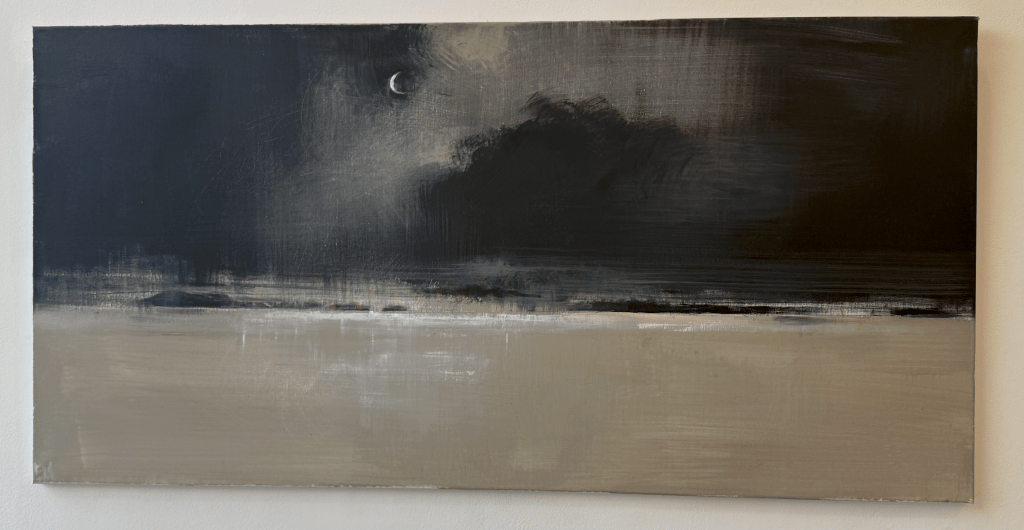
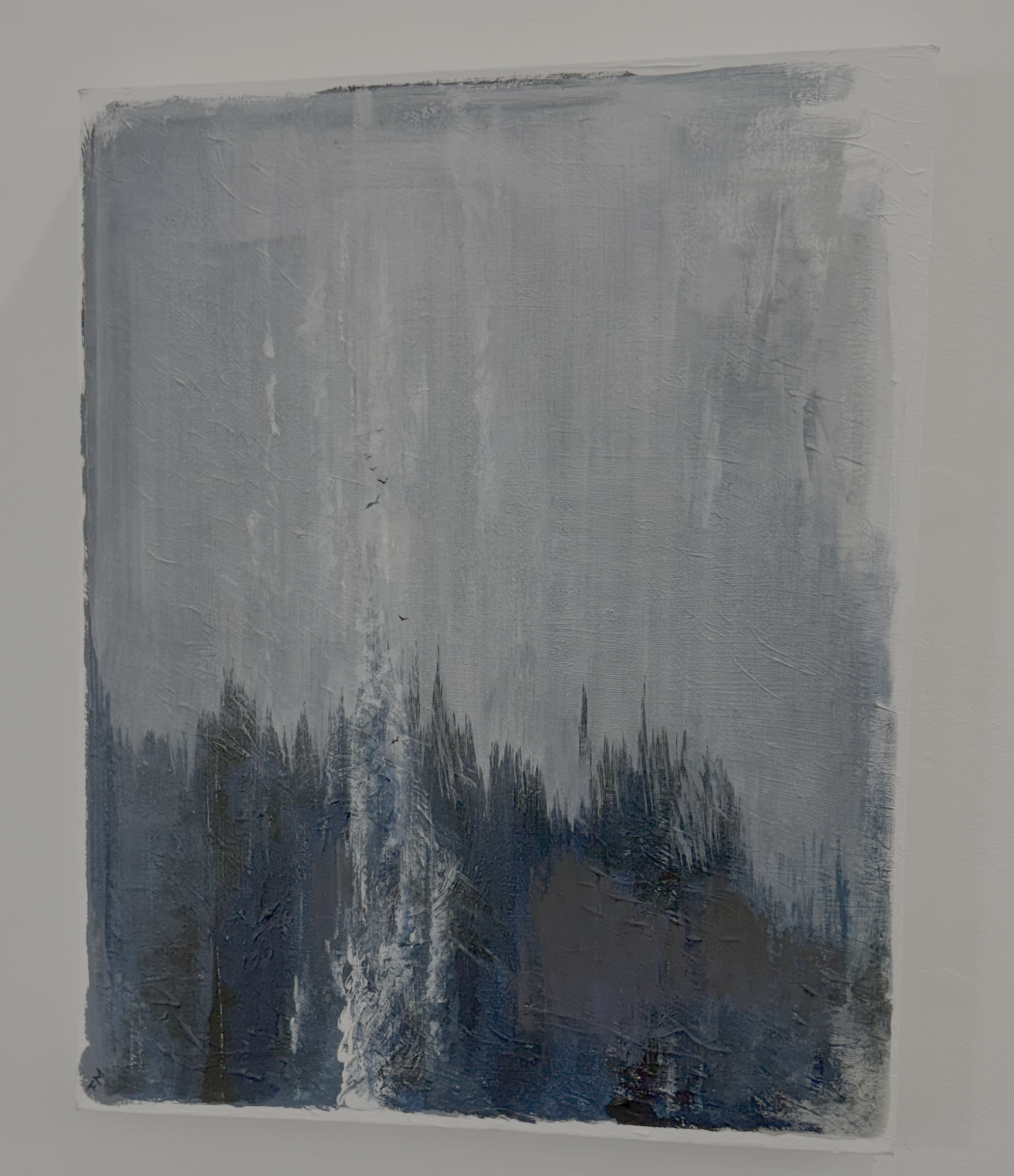
On a large canvas, a crescent moon peeks from the sky, shrouding the landscape in a mystical gauze of soft moonlight. The darkness of the sky contrasts with the stillness of the water, which reflects the light, shimmering in the dark. This is Crescent Moon over Minch, the first painting you see upon entering the Highland Print Studio, and it immediately immerses you in the feeling of reverence.
Fiona Mackenzie, Crescent Moon over Minch
In her exhibition, nature takes the forefront — Fiona honours creatures large and small, as well as the landscapes of the Highlands, showcasing the special, awe-inspiring places, whilst still making space for the Sacred Heart and the Crown of Thorns, and other religious imagery. Her votives, two-sided brass-framed drawings, contain birds and swans, rather than saints, with small words pasted onto them: ‘love’, ‘harmony’, ‘nature, pure and simple’. It’s an interesting twist on the religious devotional images, but rather than used to subvert, she uses them to elevate those that don’t have a voice — little birds in the sky. They are still paired thoughtfully with devotional themes. The birds are paired with the Sacred Heart, and the swans are paired with the Hindu swan goddess, Saraswati.
As you walk through the abundance of wood engravings, photogravures, and sketches, you immediately realise that Fiona Mackenzie doesn’t just execute art with cold precision – far from it. Her works, even with the restrictive perfection of wood engravings, show movement and a sense of airiness, so rare in this type of medium. She takes inspiration from the greats such as Dürer and Goya, whose wood engravings are both meticulous and dynamic.
Every item in the exhibition is rich in symbolism, which we can learn from the sketchbook that is also on display and available to the public. As you flick through the preparatory sketches, you dive into the depths of each wood engraving, filled with fragments of poetry, small statements, and deliberate detail.
Too late, a drypoint prepared using a copper plate, shows a swallow returning to a dying tree. The piece was inspired by Oscar Wilde’s The Happy Prince and the phrase ‘one swallow does not a summer make.’ The trees are slowly dying, and so are the birds. However, if we examine the symbolism further, the swallow is also a prefiguration of Christ’s suffering on the cross, so the swallow flying towards the tree isn’t only a commentary on ecology but also has a deeper, Christian significance.
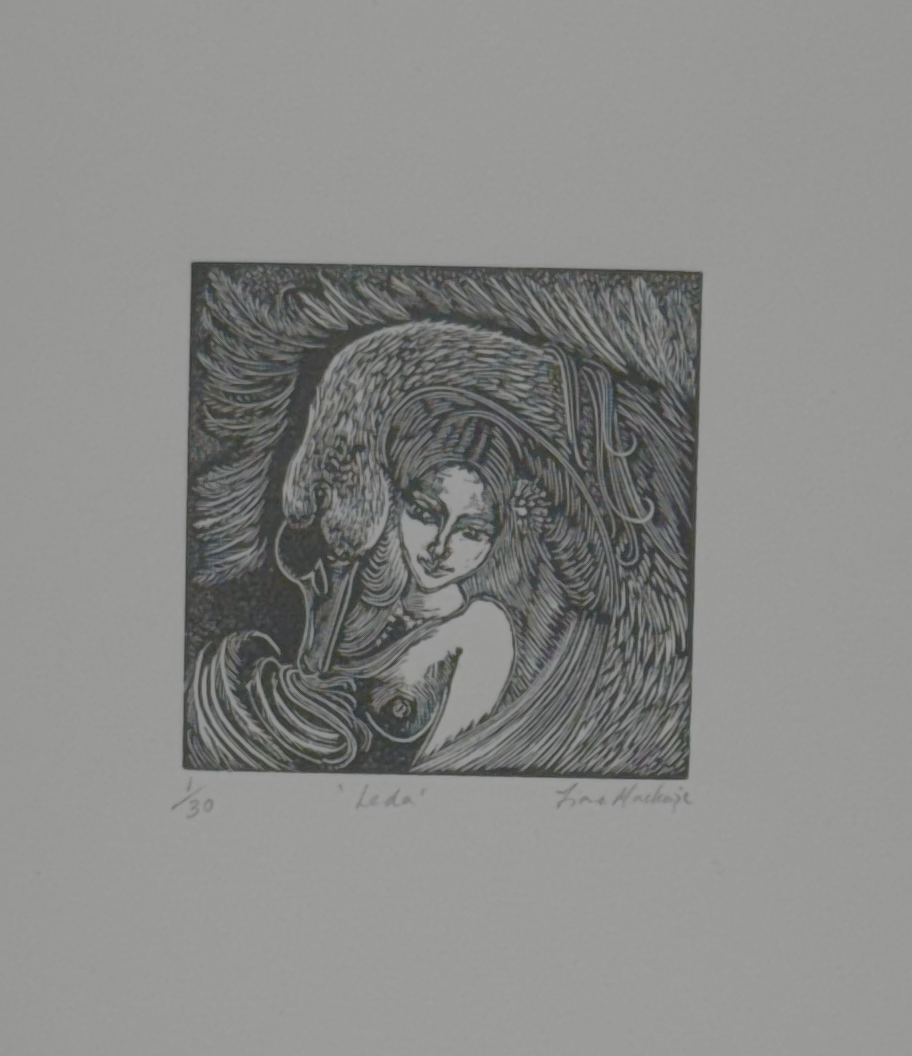
We also have Leda and the Swan, proudly taking its space within the Leda and the Swan tradition, next to Eric Gill and Correggio or Cezanne. But Fiona’s Leda is almost mystical, with the swan all around her, with the long, perfect lines encapsulating it.
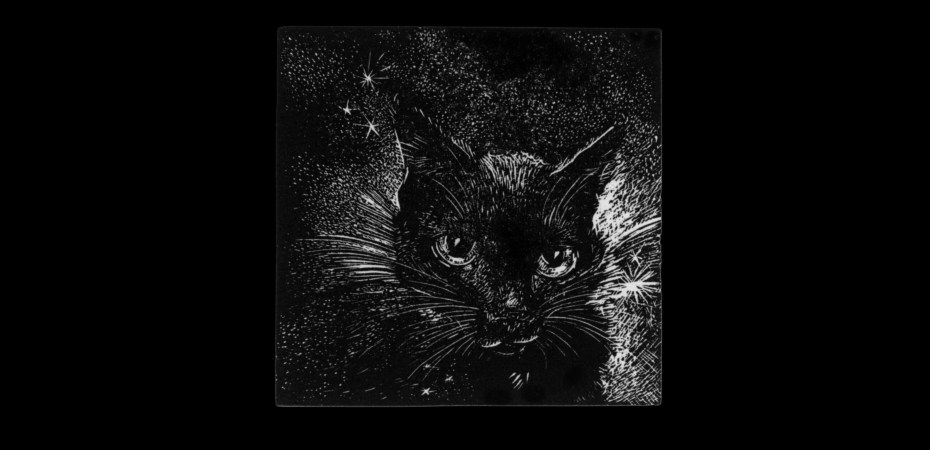
Creatures here are abundant: a little hedgehog, a wren in the buttercups, an expressive woodpecker, a little owl grimacing wryly. But the landscape also finds its honourable mention, — with Slioch, a prominent mountain near Loch Maree and Where the Skylark Sings with the beautiful moorland. There is a Victorian feel to some of Fiona’s works. Many resemble the engravings often found in the old, leather-bound books. This Victorian feel is so unusual in the era where a lot of art is focused on reinventing and burying the old, that Fiona’s works, in comparison, unintentionally serve to reclaim the meaning and the importance of this style. Fiona isn’t scared of playing with the medium. She is an artist first, a wood-engraver and painter second. She moulds the medium to her needs, and the result is unusual and piercing.
The exhibition opening attracted many people, with the room immediately crowded the moment the clock struck 6:30 pm. The wood engravings were grouped downstairs with the votives and the sketchbook on the little ledge underneath. Then, another selection was run up the staircase, with delights such as the poster Little Goddess, a wood engraving, and the Walpurgisnacht inspired by the witches’ night from German folklore right next to the accompanying crows piece.
The Highland Print Studio is a pleasant and casual space, although quite small. The Crescent Moon over Minch would have benefited from a little more space; however, the placement allowed for the light to seep into the studio, casting its rays onto the painting. The industrial feel of the studio allowed for an immersive experience, with a large print press in the middle. One could also look at the original copper plates used for drypoint set on the side, which gave an insight into the full printing process. As such, the studio itself added depth to the exhibition, as one realises the full scale of how much work goes into the final product.
There was also an accompanying introduction from Brian Devlin, an author, which captured the essence of the exhibition:
‘Fiona Mackenzie takes the inner sense of what religion teaches and focuses not on basilicas or cathedrals. Rather, she draws our eyes and our ears to the sacredness and simple beauty of nature.’
My favourite item, however, wasn’t found on any of the walls. It wasn’t the sprawling crescent moon or the impressive delicacy of the wood engravings. In the sketchbook, on one of the pages, there was a sketch of a mummified ibis from Egypt. The inscription read:
‘Ancient Egypt. Sad little twisted body – mummified ibis. [It] Was a sacred bird in Ancient Egypt representing the god Thoth. With other sacred animals, mummified ibises were buried in dedicated cemeteries. 1894.40.1 Donated by Frederic Thomas Elworthy 1884.’ On the other side, it read ‘IBIS. You were once so beautiful.’
Fiona saw horror in the needless killing of the small creatures. The ‘sacred’ label has doomed them and led them to their premature death. And thus, with this small mention, Fiona returns the sense of eternity and another life to them. The honour of a truly sacred being. I found the exhibition to be loaded with meaning and authenticity. The sheer number and variety of exhibits, all well-thought-out and tied together through the one single thread of thought, astounded me. Normally, I would add some level of criticism, some balancing thought; but in this instance, I can’t bring myself to criticise. I genuinely loved this exhibition, and I recommend this to anyone who has an appreciation for anything transcendental. Be it God or nature.
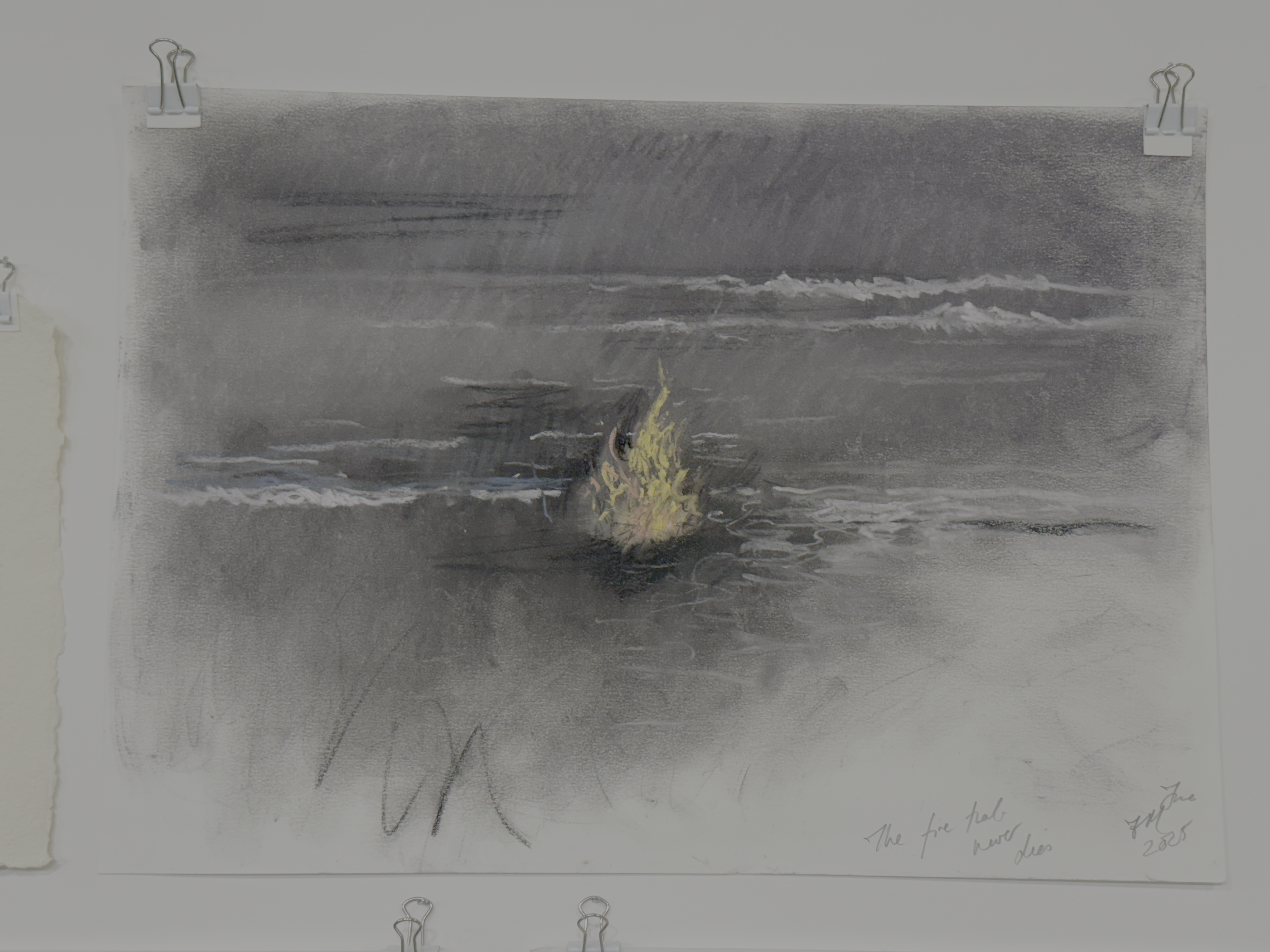
‘Sacred’ is a devotional act. It echoes the New England transcendentalist thought of the divine meaning of nature. It is comparable to John Muir’s appreciation for everything small. Fiona naturally incorporates this into the richness and diversity of her work. She gives a voice to those unheard, the little wrens perched in the bushes, the hedgehog on the side of the road, wary of crossing it. The moors stretch across the valley, worshipping the looming mountains. And what felt almost like a conclusion — the pastel work The Fire that Never Dies — echoes the tenacity of nature, the everlasting glory of the natural world that will continue, despite the human touch that is causing harm.
As John Muir once said, “At the touch of this divine light, the mountains seemed to kindle to a rapt, religious consciousness, and stood hushed like devout worshippers waiting to be blessed.” Where Muir brings the divinity to the mountain peaks, Fiona takes the naturalist torch from him and guides us to all the surprising places the religious consciousness can still be found.