
Author: Henry Cocteau
“Never try to corrupt the person you love: it may go further than you think!”
— Marquis de Sade, Florville and Courval
It was Summer, when the days begin to burn away into cold, blue evenings. Days that nearly allow us to forget death, that make immortality seem attainable through their blustery almost-eternity. The hedgerows had once again grown tall and green and thick. They hung heavy with foliage. Rabbits and deer appeared in the corners of our eyes, white tails bumping away into a swimming green distance. Sweet grass in meadows stood high and the horses refuse to be bridled, all mane and gallop and flickering shoulder muscle. Pastureland needed to be topped, so the tractors went back and forth like ships on oceans of meadow. In their wake they left behind little landscapes of nauseating heat and unfilled space. Towards the South, the valleys wound and fell into the Sea, waves of fields meeting their tidal cousins. The beaches were filled with bathers, the shallows with paddleboards, further out the sportsmen on their white power boats. Ruined familial churches, orchards, woods that once belonged — or still do, depending on who you ask — to witches’ covens.
Amongst this brilliance was a little car, taking the corners by the hedges and the pig farms and the flat fields just slightly too fast. It moved jerkily — he’d always been told that he drove slightly nervously.
He was on his way to pick up Grace — the girl who had, in just 3 months, burnt her way into the centre of his life, throwing aside all his other cares until there was only her and him and the rest of the world were just shadowy figures.
The phone call surprised him so much he nearly wrapped himself round a tree.
“Hello? Henry? I’m at the station”
“Okay, darling. I’m coming. I’m coming”. He told her to wait outside the station for him. That way, there’d be no need to mess around with parking. The car leapt forward like a racehorse from its box, gnashing and tugging at the bit.
But when he arrived, Grace was nowhere to be seen. Clearly, she hadn’t waited outside liked he said. Where was this woman? Leaving the car, he walked round the corner of the red-brick outbuilding and then onto the platform to check if she was there. Nobody there, apart from the weak figures across the tracks who bent double and gripped to their walking frames for dear life. No Grace there.
Leaving the platform, Henry turned towards the high street and the bridge. She could have gone into town. But why wouldn’t she tell him?
And then he caught sight of her, sat alone under a shelter on the other side of the road. Grace had her head down, reading some book or other. She was wearing a navy quarter zip and her curls were pinned back over her small ears. Then, as if warned by a mischievous god, she looked up and directly at him. A moment’s pause, a momentary smile and then they were rushing towards each other. She barely stopped to look as she crossed the road.
Desire, fantasy, memory all swirled above their heads and came crashing down to earth around them. She beamed at him with those low eyes, the cow eyes, the love look.
“Grace,” he said, and then her warm cheeks were against his and her thin brown arms were around his neck. “Hello Grace. Hello”. But now there came the kisses and they came hard and fast like rain on a barn roof. These tight hugs she’d learnt from him.
“I love you. I love you. My man,” she repeated, still holding him so tight, clearly with the intention of fusing their two bodies together.
“I love you too Grace.” Kiss.
“But I can’t breathe.”
“Enough. I tap out, I tap out!” Several kisses now, rapid-fire. Grace released him now and stood back. They appraised each other. Young man and young woman.
Around her mouth were dimples where her makeup flaked slightly. There was a red mirage on her cheeks that was now becoming a full and deep blush.
But the eyes still looked at him and now Henry became aware of the entirety of her face, and now her face was seen on a body that he recognised and knew and loved.
The little car pulled out, swung into a U-turn, and turned back onto the high street. A flash of red brick wall and then the town appeared again as a grey vignette of our England. A flabby, sterile road of shops — all that is solid melts into air. An elderly church on life support — all that is sacred is profaned. This was a dead place, as barren and hateful as a hospital room. But they were out the town, and now there were villages with hedgerows as tall as Roman walls and fat ponies grazing on long grass.
Now on the flat plateau, Henry drove fast and straight and smooth. He rolled down the driver’s window so he could smoke. The landscape was a blotchy and hard brown, with ripe green valleys in the distance. Pig farms and lonely cottages came and went, and now there was the airfield. Eighty years ago, during the war, hordes of American bombers would have taken off from this highland, headed for Normandy. How exciting it must have been for the plateau-people, to have America arrive young and in uniform. Grace took his hand and placed it on her knee. A quick squeeze and then Henry’s hand was back on the gearstick.
Up in the heavens, a few white gliders floated, propped up by thermals. Thousands of feet in the air, the pilots of these fragile aircraft could see England, lying out flat before them, a battered shield of green and bronze and gold. They continued flying in slow, breathless circles.
But now they were on the top road, with not another car in sight. The speedometer crept up, and he was just hitting 75 miles per hour when she told him to slow down (“You’re driving as if we have multiple lives”) and slapped his wrist. The car came down to a reasonable speed.
Moments later, a magpie flashed across the windshield, and he stuck out his wrist and yelled at her to slap his hand again.
*
They worked their way through the lanes, down into the pine plantation, before swinging into the gravel drive. It was wonderfully hot and the sun was the only thing in the sky. The house, long and tall and thatched, rose up in front of them. It was something from an earlier age, his golden Heorot, with wattle and daub walls surviving in some places and peeling remains of 18th century wallpaper.
“Here we are again,” Henry announced, and they exchanged a glance-smile that practically foamed with desire.
She broke away to look up at the mossy thatched roof and the high wood beams. Grace had only visited once before, and then only for the day.
“It’s as beautiful as I remember. And you’re sure your family aren’t home?”
He had told her that his mother and father and brothers were all away, gone to see an ailing relative, but they’d just wanted to give him some space. Henry’s parents, who saw all love as a joyous roll in the hay, were more than happy to facilitate their little tryst. They’d the house to themselves, the sky was clear of clouds and the Sun had followed his way westward. An alignment in the stars clearly.
After taking her bags inside they went for a walk across the land. Henry told her about the oak trees they’d planted and the great forest that had once covered all of England, torn down bit by bit by successive waves of ignorance. Gesturing up the hill, he pointed out each new sapling, some almost hidden by long brittle grass and brambles.
The couple climbed a stile and here was the family orchard, where the trees in autumn would bend double in abundance. Henry’s family would take a bottle of freshly pressed juice and pour it over the roots of the eldest tree. Only through offerings of molten gold would the genius of the place be placated.
*
At suppertime Henry and Grace sat out under the white canopy. The night was blue and hazy. Branches on the shadowy pine plantation next door were lifted gently by the breeze. Gravel paths, a fig tree, and a rose push bent double with flowers. Grace lit candles and Henry disappeared inside the house. He appeared again a moment later, pursued by a rising music.
Adrift and lost in the kitchen wasteland she found a bottle of something red and covered in dust. Henry’s parents hadn’t drunk in years. The red they cracked open and ate alongside their food.
As the night grew an even darker shade of blue, Grace’s face and eyes seemed to light up to compensate.
Henry stared.
“You’re gorgeous.” And she was, with her face all supple and red and brown. Grace lent forward.
“Thank you mi vida”
He felt that quick rush that he always felt when she called him that.
Her eyes flashed and she cocked her head and said something else he didn’t hear.
*
The blue dark crowded round them and the wine was in their blood. The heat of the day was over, and the night lay ahead, a terra incognita, malleable to their desires and ready for the taking. Blowing the few candles out, Henry cleared the plates whilst she lit a cigarette and looked up into the white, plastic eaves of the canopy. As he cleaned and put things away he looked over his shoulder several times and saw the red flame and smoke amongst all the dark blue.
After washing up he came back and took her by the arm and she came with him across the gravel path, up the steps which were reused railway sleepers and into the house. They went through the kitchen and then to the stairs that led up to the bedrooms. He told her to run and then chased her all the way to his bed.
*
Afterwards, they lay in bed and stared at the walls and watched a film on Henry’s laptop. Their minds were still and almost satisfied.
He asked if she wanted a cup of tea and she said yes. In the darkness there was a flash of white as he threw away the covers. Another as his pale and naked body moves round the bed and across the bedroom. At some point he pulled his pyjamas on. Soft thumps whilst Henry descends the stairs and into the kitchen. Bare feet on the dark red tiles.
A click, and the kettle begins to shudder and heat. The young man stands there, leaning on the counter with both hands, staring at nothing but the white of the wall. And then, as if he were on the cliffs watching black sails of grief appear on the horizon, blown ever closer by the winds and the will of the meddling gods, Henry realised.
There are times when we grow aware of wills and presences that are not our own, when fate — amongst other things — hangs heavy in the air. Passivity or focused and singular action is the choice presented to us. Is it at all possible to still act, truly and heroically?
His phone was upstairs. How he wished he could smash the ridiculous object. Take a hammer to it, shattering its distorting mirror of a screen into a thousand black pieces. Too late. She could be on it already. What to do?
The kettle shuddered and boiled over with a lamenting wail. Henry tore at his hair and pulled at his face. What was there to do, except make the tea and bring it to her. It felt as if there was a balloon about to burst in his chest, or a set of malevolent fingers, splayed and placed upon his heart.
She sat on the bed, crossed-legged, wearing one his graphic t-shirts she had claimed as her own months ago. There was the treacherous machine, gazing out of the world through its brilliant surface. And there were the little green boxes of text that substantiated his crime.
Grace stared at him, the green of her eyes now stinging with red and smudged with tears. There was nothing to say.
“Did you?” she asked
Then they held each other and cried and cried, and all of a sudden Grace knew how one could die of a broken heart. Such a wound normally only heals on the deathbed, and sometimes even that is too little too soon. Something had been lost, cast away, jettisoned into the crashing waves. She would continue to reach for him — that was all she really knew to do — and each time she would stop herself, realising once again that irrevocable change.
At some point during the night, Henry was certain he heard someone sneeze on the landing. At another she slapped him in an unconscious spasm.
*
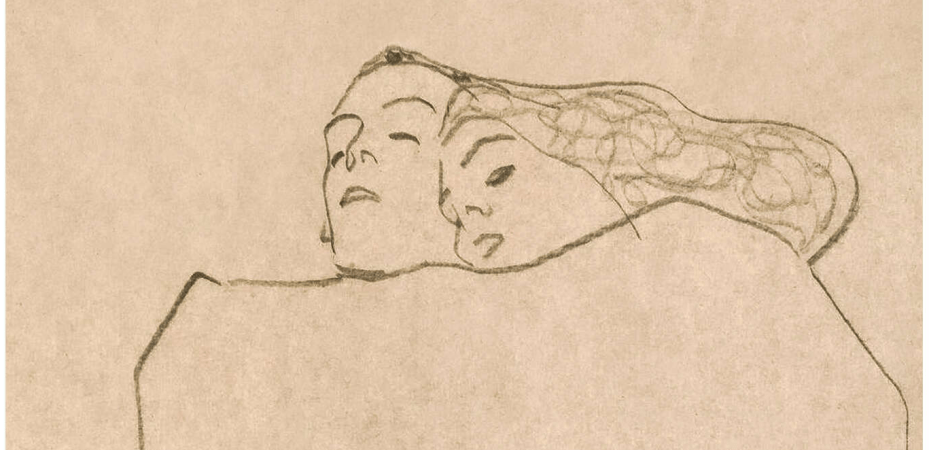
By this point she was asleep. Whilst her soft face relaxed into the pillow stained blue by her bonnet; her eyelids and mouth were tight and faintly moving. There was no sound, except somewhere, perhaps underneath, there was the beating of her heart. No pipes sneezing now. Slowly he moved himself out from under the covers — her hand reached for him! — and took his black notebook from the small shelf beside the bed. The soft click of a pen. Opening to a blank page, he began to write down little shards of truth, experiences that were already washing away into memories. A book can’t contain all of life, but here was a moment, a gorgeous second which he could truly see it running away from him, better preserved.
— Wet, teary wounds of kisses.
He filled a page with these gnomic scribbles. It was all babble, of course, but it came fast and it needed to be done. Grace could never see them, not as they were. This was raw material, and it was quietly hot and vital. To hold it in his hands was like carrying nuclear waste, and all of him said to lock it away. Too dangerous to touch.
Maybe someday, when the memories had cooled, and his epigrams had become chapters and a blurb and a nice cover. Maybe then would she read them and see. But not yet. There was a soft little thud as he closed the notebook.
There were no words spoken that morning, no utterance either to console or provoke. As he watched the sun rise through the gap in the curtains, she phoned a friend to come pick her up. By the time the sound of tractors and machinery had started deep in the valley she was gone, and, despite the muggy warmth and the vital pounding of his heart, he felt as if all his body’s heat and been snatched away.
He went for a walk. But now he was not just ‘he’ anymore: he had to be Henry. There were other men in the world now, other women. The night have never happened, apart from those few scratchings in his notebook.
Discover more from Decadent Serpent
Subscribe to get the latest posts sent to your email.
