
Author: Dinah Kolka
It is really hard being an émigré in a country that has no summer, where the smell of bonfire and dew isn’t a norm. It is difficult in the wintry months when it’s dark and overcast; no snow to envelop it with a blanket of relief. It gets worse when the spring comes late; the flowers are rare and scattered. It’s concrete when I wake up and pull apart my curtains, it is concrete when I fall asleep. When I go to the shop, all I ever see is an ocean of black North Face jackets and terrible, terrible uniformity. The cacophony of sounds on the radio hurts my ears, and the postmodern art brings no respite. The buildings are high, but they offer nothing to my eyes. All I am left with are the small glimpses of respite when I’m out in nature, fighting against the weather to see the waves crashing against the cliffs, or to see a mountain high and sharp against the overcast Scottish skies.
There is so much conversation in academic circles about the aestheticisation of politics and how it contributes to the shallowness of thought. I don’t have time or desire to consider or challenge these arguments, as I fundamentally believe that beauty is a value in itself that should be upheld no matter the political belief. The point of this feature is to argue for the universal value of beauty and why we need more of it in our lives. I have argued the importance of Ugliness in the past (feel free to read my article for the Mallard), but today, I am making my statement about beauty.
What we see out in the world and how we perceive ourselves has a direct impact on our behaviour and appreciation of things. If we lack beauty in our own lives, we fail to appreciate it in other places. It is easy to get lost in the sea of disgust and the everyday. Lefebvre argued how the everyday is the norm and it is revolutionary to stray from it. It is through straying from the ordinariness of life that we can harness beauty. Heidegger, on the other hand, mentioned the importance of seizing the everyday, as that’s when you find the Dasein:
Authentic existence is not something which floats above falling everydayness; existentially, it is only a modified way in which such everydayness is seized upon.
Heidegger claims that everydayness in the context of meaningless pursuits does not necessarily make authentic existence impossible — they aren’t at odds; rather, they are intertwined, and the everydayness is interpreted via the authentic existence. But this everydayness pulls us away from authenticity. Thus, I’d argue, that by enforcing beauty in our life we allow this contemplation of the elements outside of the everyday, which in turn makes it more authentic, as it brings us closer to reaching Dasein. If we modify the everydayness to suit our own needs, to make it worth our while, it no longer becomes the grey sludge of mundane, but rather, becomes authentic and legitimate. As such, beauty legitimises existence.
Similarly, we see it in Plato, as confirmed by Grube:
Such then is the Platonic idea of beauty: it is the harmony of the world which is the result of the introduction of measure or number by intelligence; it is inseparable from Good, and is perhaps best described as the cause of it, though the two are but aspects of Ultimate Truth, and the contemplation of it gives the most real pleasure, because the most lasting and the most “pure”
This harmony of the world, which directly correlates with the concept of Good signifies that beauty is a higher value in itself, it brings pleasure and leads to the Ultimate Truth.
There are a few elements that we must consider here. Firstly, beauty makes our personal lives better, it helps us strive to improve. Secondly, a collective attempt to beautify the world contributes to maintaining a cohesive structure of society and country and helps unity. Thirdly, the aim for beauty is transcendental and rises higher above any other needs. The step to self-fulfilment requires an act of creation of beauty.
Let’s focus on my initial point. The attempt to make your surroundings beautiful goes as far as the earliest civilisations — ornamental elements in houses, clothing, make-up, and others, date as far back as hundreds of thousands of years. To this day, we strive to improve and personalise what we own, thus turning it into our own, turning it from a regular, pristine item into something that clearly has a belonging. This is an important aspect of beauty per se — with it, we create a belonging, both for ourselves and the item in question, which ties us together in unity with the item. It creates a home for us. This is perhaps why when couples move in together, the concept of compromise is so fraught. With each compromise, we lose a little bit of ourselves and that scares us. We know that if we yield, the place will no longer be ours alone, it will have to be shared. The trick is in this merging of tastes to together create something beautiful by that mutual act of sharing. But that’s not all. Even in our personal lives — we dress better for job interviews, knowing that that way, we become someone else, someone better. A professional, an intellectual, a teacher, et cetera. The clothing defines us. If we let this definition be a positive, beautiful one, it in turn enriches us to become what we espouse. The pretence becomes truth just by sheer act of force. Some may argue that you cannot put pearls on a pig. I would argue that a pig would be happier with pearls. And this is not a classist statement in itself. I used to work with a grumpy Polish lady in one of my first silly jobs. I will never forget how she said to me ‘always pay attention to people’s nails and shoes. That tells you everything you need to know about a person. Always make sure that these two things are taken care of, as they always tell the full story.’ And it was interesting to hear that, as she made a good point — regardless of your position in the world, you should always take care of yourself. Even more so, as it helps you get better employment, better opportunities, and better options in life. The second you choose to make an active choice of beautifying your own space, body, clothing, and life in general, you enjoy your life more. And that leads to better things and outcomes in life.
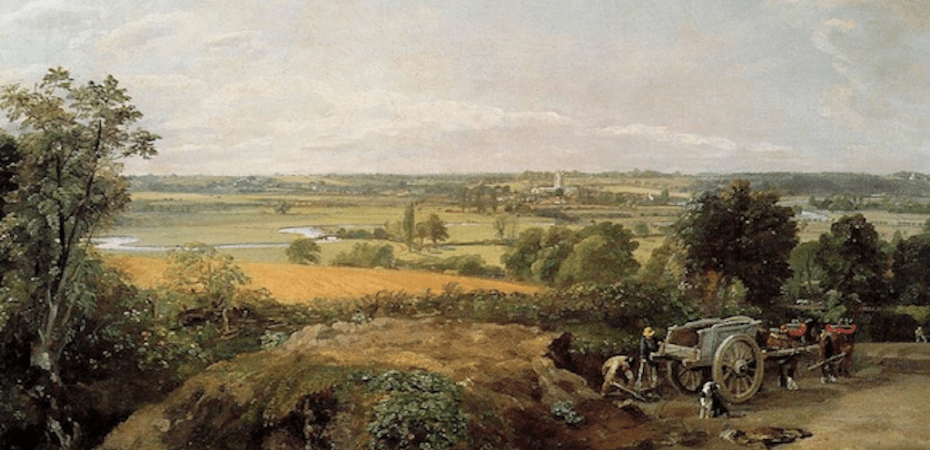
Secondly, the strife towards beauty is the highest goal one may ever choose to pursue. Cathedrals we so venerate now for the way they look are only so gorgeous due to two key elements: glory to God, and the collective appreciation for something greater than ourselves. When we think of a country, we think of culture, achievements, and beauty. Britain can pride itself on its picturesque countryside, stone cottages, imposing cathedrals, and idyllic views. The countryside remains beautiful only through the action of opposing destruction thereof, whereas the cathedrals are manmade and created in the glory of something greater than ourselves.
But I wanted to specifically bring up the example of Poland. The country has disappeared off the map multiple times, yet retained its cohesion, language, and sense of unity. It was during the time when the country did not exist, that Polish intelligentsia created the most patriotic and beautiful works in Polish history. ‘The Forefathers Eve’ or ‘With Fire and Sword’ strongly contributed to this imagery, but also the remembrance of artists such as Malczewski, Matejko, and others. The language was learnt in secret when it was illegal to speak Polish. Religion kept the Polish nation together, no matter what. It was the culture and the beauty of it that brought people together to keep fighting for what they had.
Similarly these days, we see plenty of social media accounts promoting beauty and focusing on the aesthetics of their country as this is the key element that leads to unity. This unity is paramount in creating societal cohesion — if it becomes fragmented, it destroys the fabric of the society. If everyone contributes to making the world more beautiful, by working hard to ensure their surroundings are clean and looked after, by erecting buildings that bring glory to the nation, the country will stand on its own, knowing its own value. If there is beauty, there is no need to explain or argue ‘what is Britain’ as everyone knows the answer within. The aesthetisation of society is not something that can ever be argued — it is necessary to achieve a healthy nation that is proud of itself. This is not and should never be a controversial statement. Belonging to a country is an essential part of one’s identity, one that should be fostered and valued.
And thirdly, beauty is transcendental. It’s a value in itself that cannot be disputed. Burnham claims:
Kant argues that beauty is equivalent neither to utility nor perfection, but is still purposive. Beauty in nature, then, will appear as purposive with respect to our faculty of judgment, but its beauty will have no ascertainable purpose — that is, it is not purposive with respect to determinate cognition. Indeed, this is why beauty is pleasurable since, Kant argues, pleasure is defined as a feeling that arises on the achievement of a purpose, or at least the recognition of a purposiveness
As such, Kant claims that beauty has no intrinsic utilitarian value; rather, it offers something higher, a purpose within itself, as a value, the sublime.
By contributing to creating and fostering the atmosphere of beauty, we contribute to a greater goal. And I’d argue that the problem with today’s society is a complete lack of transcendence. We are still continuously stuck in the rational age where science is worshipped as the only god. I am not trying to argue against rationalism, rather, in a world where reason triumphs over transcendence, we lose many great things that wouldn’t be possible without it. This goes for the beautiful cathedrals: how can they ever be created now if we don’t believe in things that are bigger than ourselves!
Edmund Burke mentioned this himself in A Philosophical Enquiry into the Origin of Our Ideas of the Sublime and Beautiful:
I should imagine, that the influence of reason in producing our passions is nothing near so extensive as it is commonly believed.
I would argue even further. It is this reason that often stops us from achieving the highest levels of beauty as we are constrained by what is rather than what could be. If we no longer attempt to reach the sublime, we thus reject the possibility to ever rise above the everyday. The substance triumphs with no form. Where is the transcendence in contemporary art? We must accept the transcendental, the divine, the sublime, the mystical, and the dream-like. David Lynch was an example of someone who understood it and he rose above any other director in the quality of his works. If there is an element, a drive towards something we don’t fully understand, we create timeless things. This was fully understood by those who pursued the sublime. We must pursue the unknown in order to truly harness the concept of beauty.
In conclusion, beauty is a value of the highest importance. Each one of us, no matter the socioeconomic status can do our bit to contribute to its flourishing. It helps us on the road to self-improvement. It helps the society to remain cohesive. It allows us to communicate with the unknown and the mystical in our lives. The pursuit of beauty is a lifelong goal and each time we put it above all else, we contribute to making the world the way it should be. Let’s close it with the quote from Hegel: ‘Artistic representation is tied not to some visible thing imitated by the artist but to some invisible ideas, emotions, attitudes, values, or spirit.’
Dinah is the founder of Decadent Serpent and a graduate of Edinburgh Napier University with a BA(Hons) in English Literature. Her work has been featured in publications such as The Salisbury Review and The Mallard. She was also published in the Scottish Book Trust’s 2018 anthology Rebel. In 2023, Dinah self-published her own collection of short stories, The Search and Other Stories.
Discover more from Decadent Serpent
Subscribe to get the latest posts sent to your email.
