
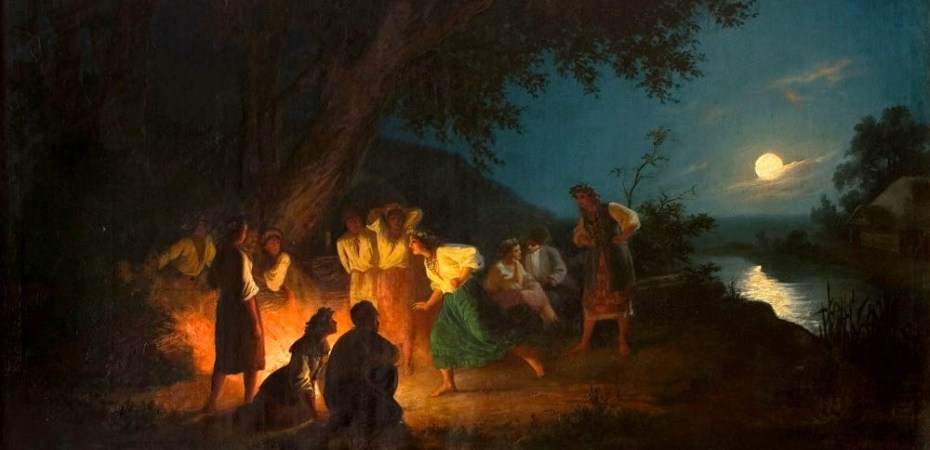
Author: Dinah Kolka
I still remember the allure and mysticism of stories about the Solstice in Poland. This Eastern European country, always living at the crossroads of Christianity and paganism found a way to incorporate many old Slavic rituals into their daily lives. Solstice was often called ‘St John’s Night’ to christianise it. The night involved making large bonfires and jumping through them for purification purposes. Women would wear flower crowns and wreaths to celebrate the night which would incorporate marital fortune-telling. There were stories about the Fern Flower that would only bloom on that one night only and finding it would lead to immense riches and good fortune. To this day, people celebrate the Solstice, through the Kracovian Wreath Festival, or still making bonfires to celebrate the night. In this article, I wanted to showcase some of the Polish Solstice-themed paintings.
Franciszek Kostrzewski, ‘Sobótka’
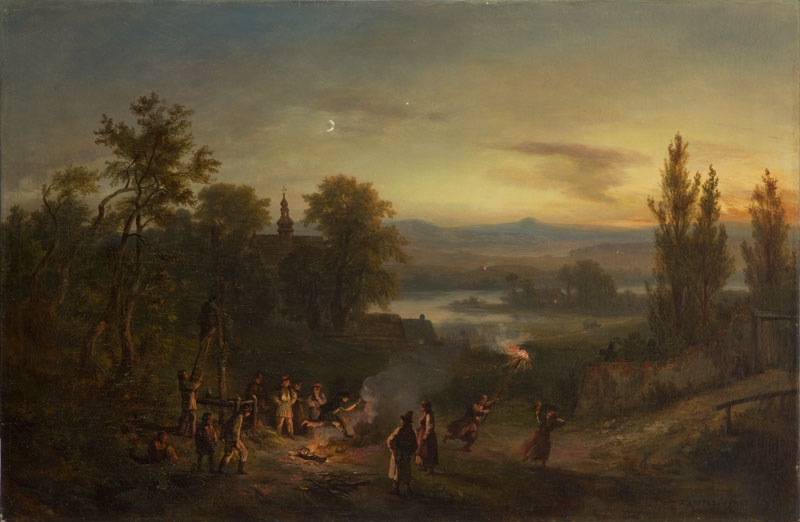
Kostrzewski was also the author of the earliest Polish comic books from 1859. Kostrzewski would often focus on the realistic representation of peasant life, not sanitised in any way, which was part of an important cultural movement at fin de sicle of 19th century.
Seweryn Bieszczad, ‘Noc Swietojanska’ (St John’s Night)
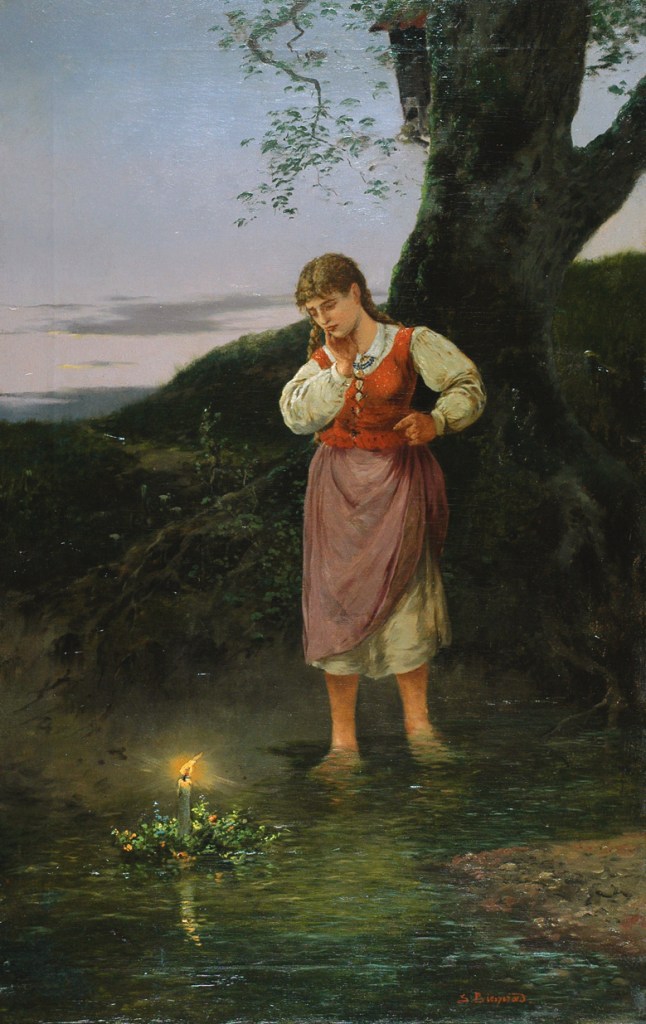
Bieszczad was also known for his realist depictions, particularly in watercolour. He studied with Jan Matejko, and he lived between 1852-1923.
Zofia Stryjeńska (1894-1976), ‘Sobótka – puszczanie wianków’
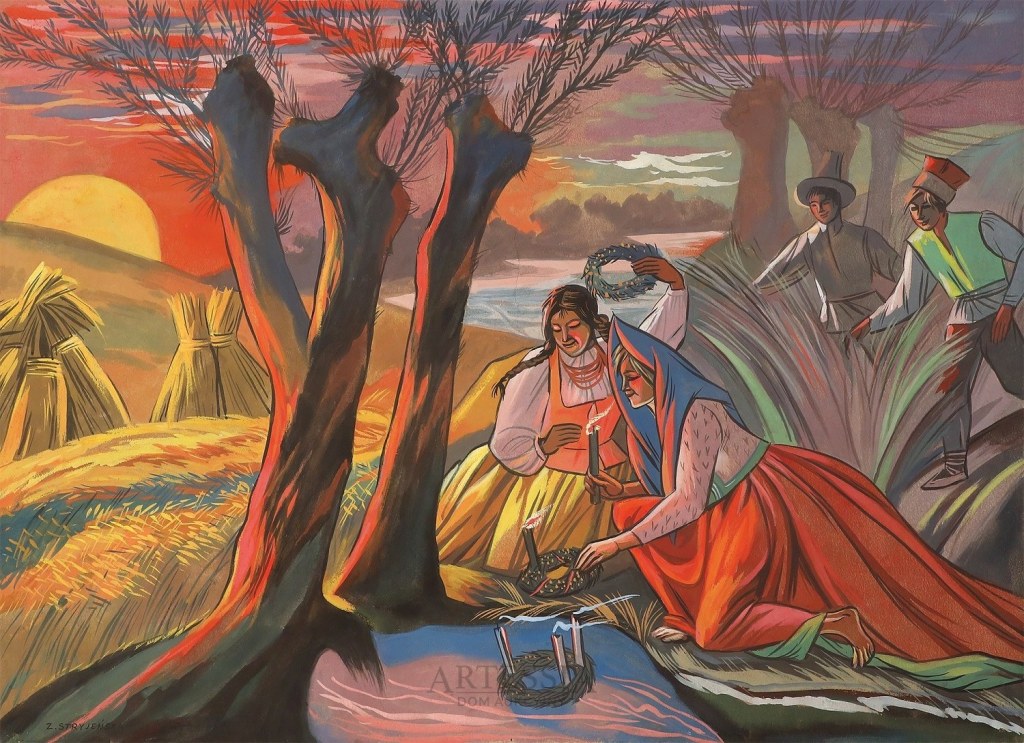
Zofia Stryjenska was famous for her depictions of Polish traditions and astonishing graphic design influenced by Art Deco. She also decorated two Polish passenger ships, ‘Batory’ and ‘Pilsudzki’. Unfortunately, after the war, she caught syphilis and lost sight.
Ludwik Stasiak, Sobótki
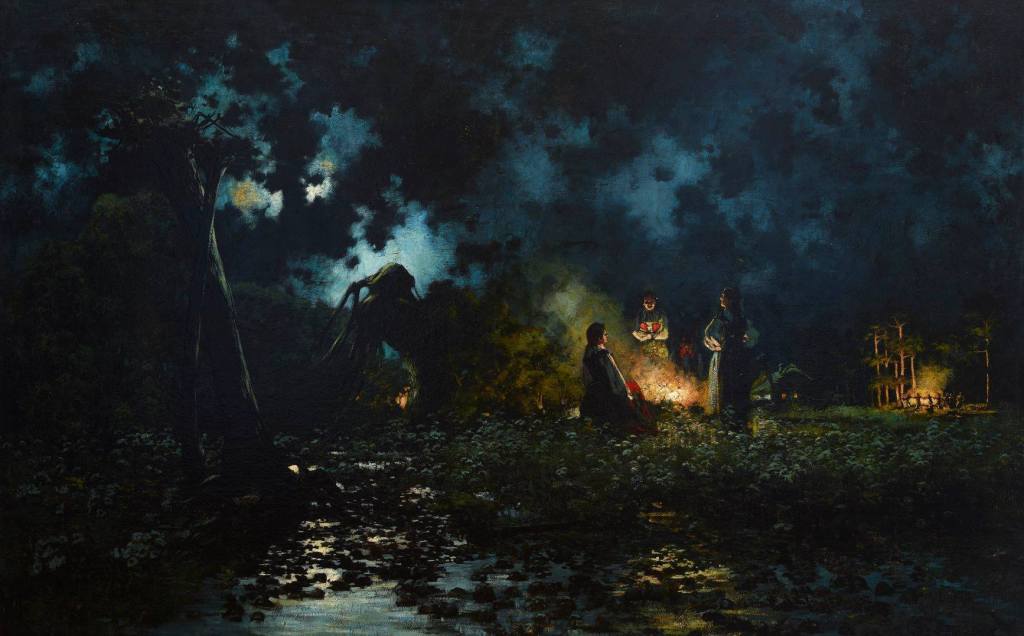
Stasiak was an illustrator for multiple Polish magazines in the 19th century. He was mostly occupied with capturing rural life and Polish traditions, later moving on to writing novels.
Ferdynand Ruszczyc, Sobótki, 1898
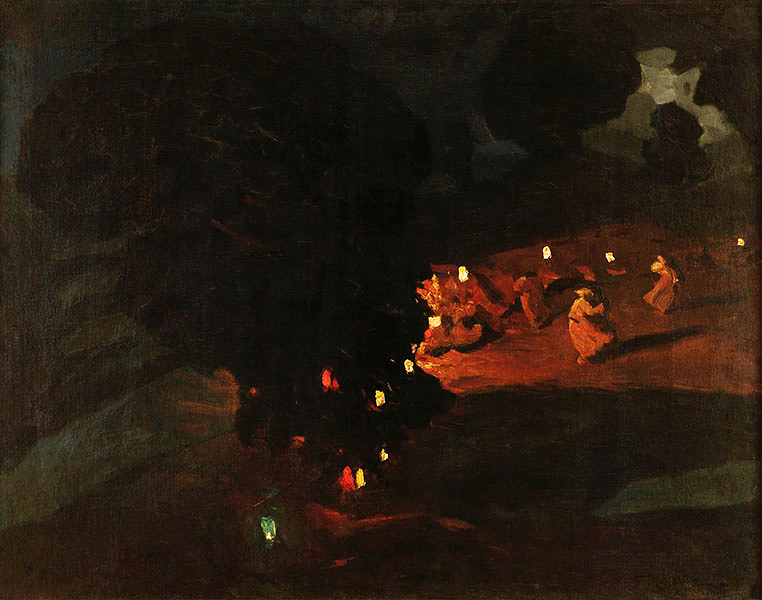
This gorgeous painting, often dubbed neo-romantic was painted by a man who most certainly deserves a mention. Part of the Young Poland movement, Ruszczyc was well educated and travelled to study art in Berlin, Dresden and Paris among many others. He came from a military family and joined the military at some point to defend his homeland.
Wladyslaw Podkowinski, Sobótki – studium
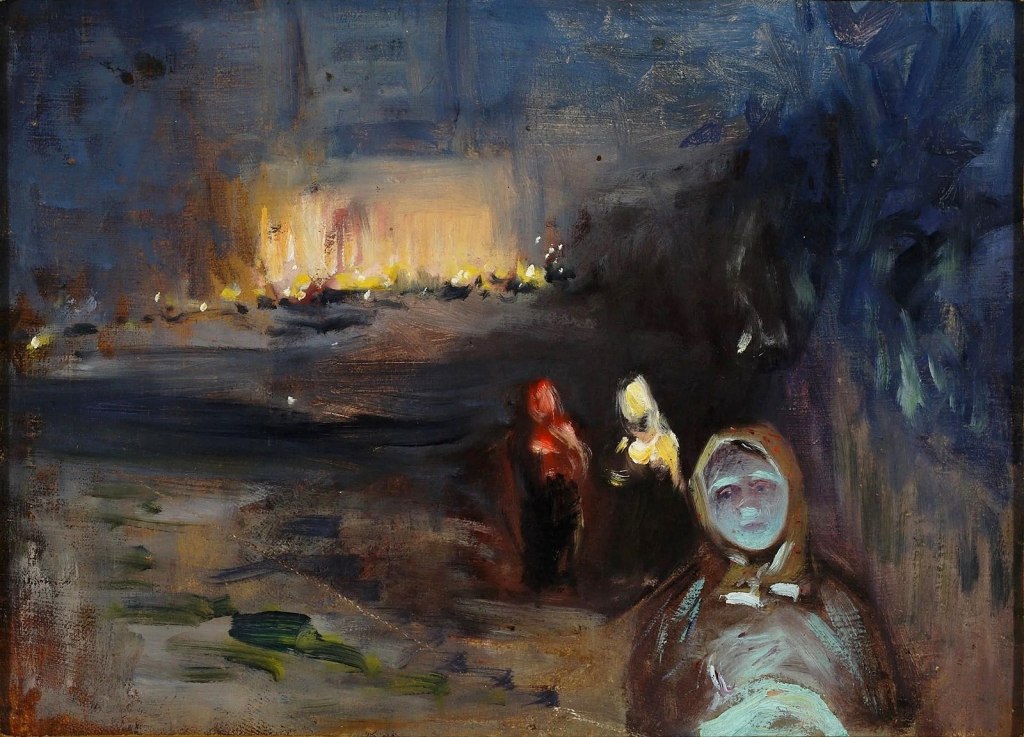
This eerie painting deserves a definite mention, as he was also the author of my favourite painting, ‘Frenzy of Exultation’. His work is incredibly expressive with a rich use of colour. Inspired by early impressionism, his work offers a fusion of symbolism and Young Poland movement. Frenzy of Exultation caused such an uproar that Podkowinski ended up slashing with a knife his own painting.
Apoloniusz Kedzierski, Sobótki
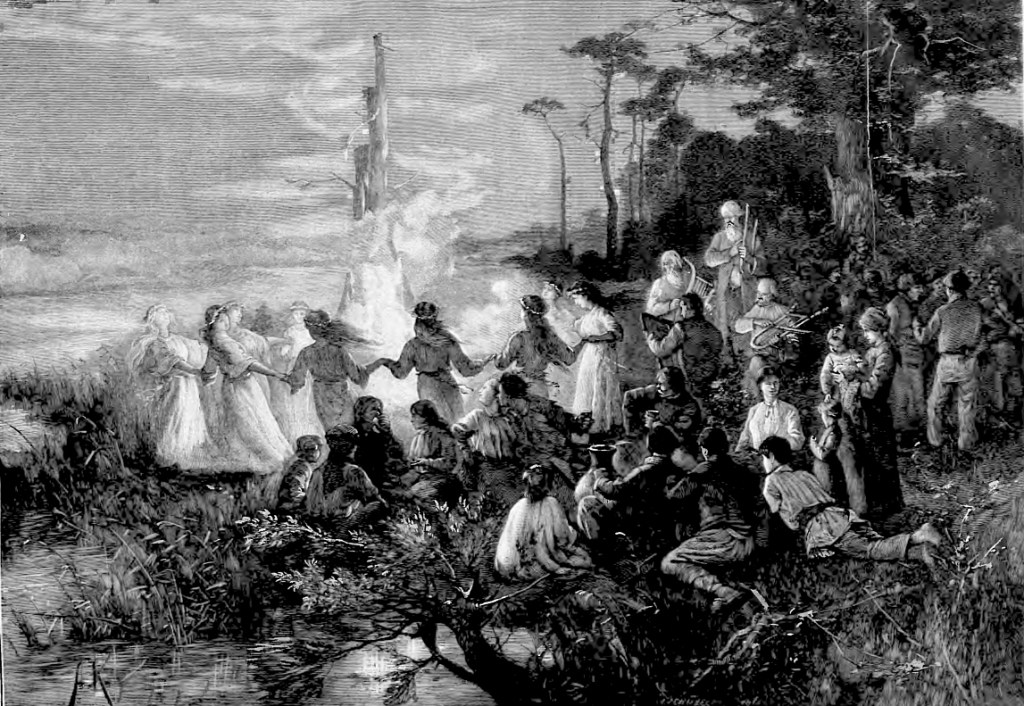
This drawing was featured in one of the Polish magazines, ‘Tygodnik Ilustrowany’ in 1884. It illustrated a poem by Kochanowski, a famous poet known for his poems about his dead daughter, a bane of every Polish student. Kedzierski focused on rural life and Polish traditions in his art and also embraced impressionism later in life.
There is an absolute wealth of Solstice-themed art in Polish art history and it is difficult to decide which ones should get the honourable mention. I picked these few highlights to hopefully start a wider conversation on these depictions, and I hope there could be more discussion of Polish art in Western academic circles as it deserves notice.
Dinah is the founder of Decadent Serpent and a graduate of Edinburgh Napier University with a BA(Hons) in English Literature. Her work has been featured in publications such as The Salisbury Review and The Mallard. She was also published in the Scottish Book Trust’s 2018 anthology Rebel. In 2023, Dinah self-published her own collection of short stories, The Search and Other Stories.
Discover more from Decadent Serpent
Subscribe to get the latest posts sent to your email.
