
Author: Eva McFarlane
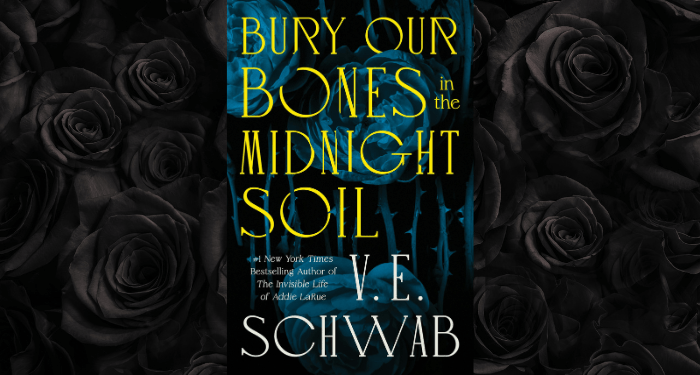
In Bury our Bones in the Midnight Soil by V. E. Schwab, we journey through the centuries and read how three women, Maria/Sabine, Charlotte (Lottie), and Alice are all intertwined in their own ways. What struck me most about this novel was how well Schwab explores the themes of grief, loneliness, freedom, greed, identity, and love, watching as the three women break away from societal norms and embrace their lesbian desires. I went into this novel not knowing what it was about, and so, although I could sense the supernatural tone the story held, how the three women became vampires was something I found greatly interesting.
When we think of vampires, our minds often wander to Twilight, The Vampire Diaries, Dracula and Interview with the Vampire, though Schwab has created a story about a supernatural being and made it her own, giving it an air of originality that hooked me instantly. Each woman has been oppressed in her own way, with Sabine forced into marriage and control, Lottie made to feel guilt for loving a woman, and Alice, struggling to embrace herself unapologetically. Instead of lingering on one area of history, I enjoyed how masterfully Schwab showcases the differing ways that women have been oppressed, making the novel stand out to me, as well as show how although women have come so far in terms of their rights and power, under the surface, more could be done.
There is something lyrical about the way Schwab writes, with the novel’s dark subject matter, filled with beautiful descriptions and haunting characters, it was easy to become lost in the pages. This was a fun story to read, given that anything dark and poetically written draws me in, with the title alone being a testament to Schwab’s writing style. The way the vampires are explained in a poem is also something I found refreshing, without going into too much detail and getting too bogged down in the supernatural creation of them:
“Bury our bones in the midnight soil.
Plant them shallow and water them deep.
And in my place will grow a feral rose.
Soft red petals hiding sharp white teeth.”
The continuous mention of the vampires being ‘the midnight soil’ had a sophisticated, original feel to it, with the idea of them as feral roses instantly making me think of Sabine’s character in particular, as she is both dangerous and beautiful.
I was personally drawn to Maria/Sabine the most, as she has this strength about her that seems to jump off the page. All at once, I felt both sorry and enticed by her. She is cunning even before her transformation, using her looks as a way to draw in her eventual husband, in hopes of seeing more of the world. She starts the novel off as Maria, hating the supposed plainness of her name, soon renouncing it and taking up the name of Sabine after transitioning into a vampire. The act of changing her name after leaving her old life was something I found to be impactful, acting as a way to shed her former life and take up her true identity as a vampire and a strong woman. During her transformation, there is one description of Maria which I believe summed her up perfectly:
“A small flame, smothered before it has a chance to burn.”
This haunting imagery beautifully depicts the fall of Maria, but with her death, Sabine rises and takes her place. This put me in mind of Sabine being like a phoenix rising from the ashes, with her new vampire self having the power to secure her freedom and embrace being alone, living as she pleases before meeting Lottie.
Lottie is a character who wears her heart on her sleeve, that is what drew Sabine towards her, but it is also what gets her into trouble in her story. Due to Lottie’s love for her best friend, a woman, she is punished, sent off to London. During the era in which Lottie’s story begins, there was so much pressure placed on young women to marry, and yet, to truly love someone when it goes against what society deemed acceptable was looked down upon. When she was proposed to, the main things the man listed weren’t what drew him to her, but that she would make a good wife, mother, and that they would be happy together. I found this frustrating, as Lottie is overlooked simply because she is a woman, when we think about Sabine, she actually got to know Lottie and saw her as a woman who cannot hide her true feelings, who wants to love and be loved without being punished. It felt like this took away the importance of marriage, which should be an act of love, not of simply choosing someone you believe will suit your needs.
As for Alice, the past and the present are areas her narrative dances between, showcasing her grief through flashbacks. She is an awkward character with a lack of confidence, but as she grapples with her newfound vampire identity, she becomes more sure of herself, bold in her pursuit of finding Lottie. The way that Schwab dealt with Alice’s character development was well done to me, as we see her transition at a gradual enough pace, her confidence not being an overnight growth, but like the knowledge of her vampire self, it grows over time.
There is much to enjoy in Bury our Bones in the Midnight Soil, being a history lover, the exploration of the centuries was something that enticed me. This is not the first time that Schwab has written a novel going through different periods of time, as her other book, The Secret Invisible Life of Addie LaRue is also set in different time periods, thus, it seems that this is something that Schwab enjoys writing about.
In terms of the multiple narratives, Schwab has structured this in a way that is easy to follow and not overwhelm the reader. I enjoyed how every story was linked to one another, creating a cohesive tale. Additionally, looking into the vampire theme of the novel, it was refreshing how certain traditional expectations of vampires were tweaked to fit into how Schwab wanted, with the sun, garlic, hypnotism all being refined.
One thing however that I wish the novel had done more of is linger on certain subplots, give for example Sabine’s time with Hector and Renata. I personally would have liked to have seen more of Sabine’s relationships with others throughout the centuries, though I know that as Schwab had three narratives in total to jump between, some condensing may have been needed to stop the story from dragging, so this, I can overlook.
Overall, Bury our Bones in the Midnight Soil is one I would highly recommend to readers that enjoy all things darkly gothic and with a lesbian romantic twist. The characters are well developed, making them feel believable, as well as relatable, and the pace is steady and does not rush or stick too long in one area. Yes, I wish that we could have gotten to know more about the people Sabine met on her centuries long travels, but this can be overlooked. As I put down this novel, I feel sad having to say goodbye to the characters that I have come to know and love, but I look forward to delving into another of Schwab’s many great creations.
Eva McFarlane is a graduate of Edinburgh Napier University with a BA (Hons) degree in English, she is a current student in the MA Creative Writing programme. Originally from Edinburgh, she enjoys all writing with a Gothic twist, primarily within the dark fantasy and horror genres. An aspiring journalist, she has completed a two-month internship at Thesocialtalks and is eager to combine her love for literature and her journalistic skills. She is also a poet, with her first poem The Men they could have been published in summer 2024 in the Whitburn Gala Programme. Additionally, Eva has recently completed her first poetry manuscript and is eager to get published while she also works on her novel The Corpse Road.
Discover more from Decadent Serpent
Subscribe to get the latest posts sent to your email.
