
Author: Sarah Stook
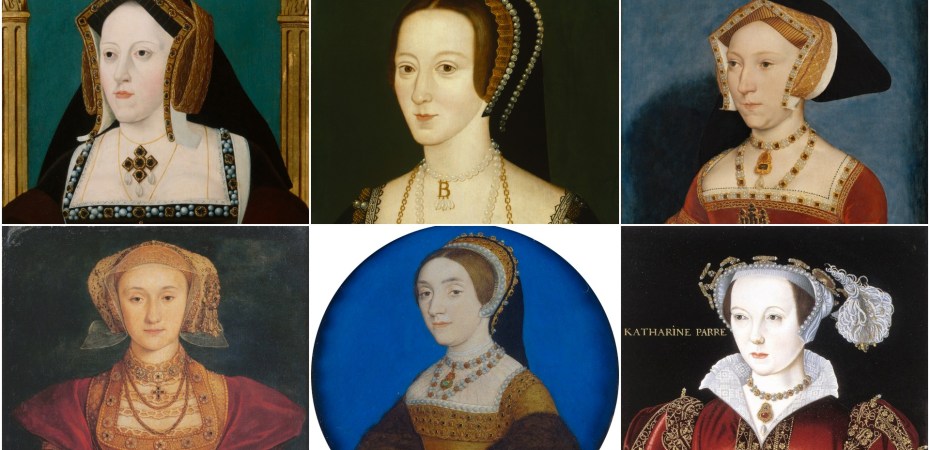
The story of Henry VIII’s six wives- in order: divorced, beheaded, died, divorced, beheaded, survived – has captivated people ever since the 16th century. Six women, none of them who had a truly happy life, were bound together by being married to one of the most infamous English monarchs.
Many people seem to have strong opinions on the wives. Should Catherine of Aragon have folded? Was Anne Boleyn acting independently? Did Jane Seymour know what she was doing? Was Anne of Cleves the smartest one? How guilty was Catherine Howard? Was Catherine Parr truly a survivor?
The question I am seeking to answer, however, is – who was the best?
Here, I rank the queens from not the best to the absolute, well, queen.
6. Catherine Howard
Poor Catherine. Derided in history as the clueless, flirtatious young teen whose affair led to her downfall, Catherine often got the short end of the stick. Whilst I rank her dead bottom of the list, I don’t quite think so little of her as history does.
In short, Catherine was a victim. Her family was noble but not wealthy, indeed, her father mismanaged the family finances, and they were forced to rely on the charity of others. Unlike the other wives of Henry, Catherine was poorly educated and showed no interest in academics. She joined the other daughters of poor nobles at the home of her step-grandmother, the Dowager Duchess of Norfolk. The Dowager was often away at court which meant that the girls were barely watched. They would drink, sneak boys in and stay up late. It was here that at about the age of thirteen, Catherine entered a ‘relationship’ with her music tutor Henry Mannox. Mannox was between his mid-twenties and mid-thirties, so to our modern eyes, this could be considered grooming. The idea of marriage was never really likely, as Mannox was of a lower status.
Catherine then entered a relationship with Francis Dereham. This relationship was much more serious, and could have been considered a genuine marriage in the eyes of the church. The Dowager was tipped off about this by a disgruntled member of the household and discovered the two together, late at night. She told poor Catherine that sex outside of marriage would ruin her looks.
Her third, and likely true love, was Thomas Culpeper. Initial flirtations were regarded as youthful fun, and nothing serious came of it. Any chance of it going further was prevented by Catherine catching Henry’s eyes. After annulling his marriage to Anne of Cleves, Henry regarded Catherine as a young, beautiful thing, showering her with attention and gifts.
Henry married Catherine on the 28th of July 1540, when she was between seventeen and nineteen. Catherine enjoyed the frivolity of life as queen, but her lack of education and experience put her at a disadvantage, for she was unsuited to the more formal parts of queenship. The fact that she had not fallen pregnant yet also did not help, though Henry was likely impotent by this point. Still, she showed some promise. Catherine was a genuinely kind and sweet young woman who pleaded for the lives of prisoners and got warm clothing brought to the elderly Countess of Salisbury. She also adored dogs.
The reason I rank Catherine at the bottom, despite the hardships of her early life, was her foolishness. Months into her marriage, Catherine restarted her relationship with Thomas Culpeper. On one occasion, Catherine and Jane Rochford (Anne Boleyn’s sister-in-law) had to hide for hours when a servant closed a door they’d kept open to sneak out of. This was a dangerous game for any queen, especially one who was married to Henry VIII. Even more unfortunately, she had not made care to keep her history with Dereham quiet. When news of Catherine’s past relations reached Thomas Cranmer, he investigated it, and slipped an anonymous note into Henry’s church pew.
Catherine, when interrogated, admitted it all. She denied sleeping with Mannox but admitted the other affairs. Had she been considered pre-contracted to Derehem, then the marriage between Henry and Catherine could have been annulled. Even then, her relationship with Culpeper sealed her fate. On the 13th of February 1542, Catherine Howard was beheaded. She was likely not yet even twenty years old.
Whilst Catherine Howard did have her virtues, her own foolishness, as well as her lack of impact as queen, sent her straight to the bottom of the list. Had she been educated better or protected from men, things could have been different.
5. Jane Seymour
The single most sensible thing Jane Seymour ever did was give birth to a son and then die before Henry could ever get mad at her. History portrays Jane as staid and plain, but one could argue that she had some steel. Firstly, she beat Anne Boleyn at her own game by installing herself as mistress and then wife, perhaps without any sympathy for her beheaded foe. Secondly, Jane knew how to keep on Henry’s good side. After a genuinely brave attempt to plead for the lives of those involved in the Pilgrimage of Grace. When Henry coldly reminded her of Anne’s fate, Jane shut up. It might have been nice if she’d got involved in affairs, but you also can’t blame her for, you know, not wanting to get beheaded. Jane had likely seen that Anne’s outspokenness had angered Henry, who liked his women to be submissive, so she was smart enough to learn from her mistakes. She also made a great effort to include Princess/Lady Mary, having been an admirer of Catherine of Aragon, so points for kindness.
Sadly, Jane didn’t really leave much of a legacy- though that’s not her fault. She was queen for eighteen months before dying in childbirth. Her son, the one that Henry had so wanted, died as a teenager. The Protestant Reformation was led not by Edward, but by Elizabeth, perhaps Henry’s least desired child. It’s number five for Jane.
4. Anne Boleyn
This might be a controversial one, as she’s a fan favourite, but I have my reasons. Firstly, let’s start with the good stuff. She was smart enough to supplant a beloved incumbent queen, so morally not fantastic but it showed her ambition. Secondly, she actually did a heck of a lot for the Reformation, though views on that might depend on your religion. Anne supported banned books, which she bravely showed Henry before they were even married, and encouraged reformers. The fact that her daughter Elizabeth also sealed England’s fate as a Protestant nation and became one of our best monarchs certainly helps. Third, Anne was a very cultured woman who brought many new ideas to court. Unfortunately, I had to knock marks off of her for the same reason I did her with cousin Catherine- foolishness.
Henry was a bit traditional when it came to gender roles. He liked his wives submissive and his mistresses wild. When Anne’s position changed, she failed to settle into the submissive role expected of a Tudor queen. Instead of controlling her tongue and knowing when to pick her battles, Anne inserted herself into the conversation. Henry and his courtiers, especially Thomas Cromwell, were horrified by Anne’s brazenness. She argued with said courtiers, this kind of behaviour was really not welcomed at such a time.
She also forgot just how she got her position. Whilst Catherine had done what queens since time memorial had done and looked the other way when it came to Henry’s adultery, Anne was not so forgiving. She seemed to think that Henry would be faithful to her when that wasn’t his style. It is said that she flew into a great rage when she saw Jane Seymour on Henry’s lap, tore off a locket and bled trying to open it. Things got worse when Henry told her that she should be more accepting like Catherine. Ouch. Some historians even blame this encounter for one of her miscarriages.
On a personal level, she also treated poor Mary quite horribly. Whilst Mary wasn’t exactly a friend to Anne, she was still a teenage girl who lost her position, her father’s favour and then her mother. She was also known for being rude and abrasive to her ladies, contrasting with the gentle and kind Catherine of Aragon.
Anne’s biggest mistake was her loose tongue. She was on thin ice following Catherine’s death and her own miscarriage on the day of her predecessor’s funeral. Not long after, Anne made a casual remark to Henry Norris about waiting for the king to die so that he could marry her. Such words were treason. Soon enough, Thomas Cromwell had started investigating Anne. Soon, musician Mark Smeaton was arrested and tortured, which saw him confess to being Anne’s lover. Not long later, Anne was arrested and accused along with Norris, Francis Weston, Francis Brereton, Thomas Wyatt, Richard Page and her brother George.
The trial was a sham, especially as it had been proven that Anne hadn’t even been in the same location as the men on the dates she’d alleged to have slept with them. Still, Cromwell was determined to get rid of her and Henry seemed disillusioned with the woman he’d broken from Rome for. Anne was found guilty and executed on the 19th of May 1536.
Of course, it’s unfair to put this entirely on Anne. Birthing a daughter but losing sons in the womb was not her fault. She couldn’t help Henry being a tyrant or wanting rid of her in the end. Unfortunately, she didn’t learn from her mistakes and continued aggravating her husband. Henry could afford to get away with a slip of the tongue, but Anne could not. Still, maybe it’s because I’m biased towards Catherine of Aragon, but it’s #4 for Anne.
3. Anne of Cleves
Anne of Cleves, derided by history as the ‘Flanders mare’ too ugly even for Henry VIII. The truth, however, is different.
Firstly, it wasn’t really Anne’s fault that the marriage ended. In fact, it was all Henry. When Anne arrived in England, Henry had this grand romantic idea to greet her in disguise. He thought that Anne would recognise him instantly and they would fall in love. Unfortunately, nobody thought to tip Anne off, and she brushed this mysterious man off as soon as she saw him. Henry was immediately soured. Their relationship never really got off the ground, as Henry constantly mocked Anne as ugly and wondered if she was really a virgin. Meanwhile, he treated Anne as though nothing was wrong. When the time for the annulment came around, Anne decided not to fight it.
In return, Anne made out like a bandit. She received land, palaces, a pension and the title of ‘the King’s Beloved Sister.’ This gave her precedence over every other woman in the land besides the Queen and any daughters. Interestingly, Henry and Anne got on extremely well as friends- perhaps they could have had a great marriage had Henry not been so awful. Still, it all went swimmingly for Anne. She hosted extravagant parties, played cards and was beloved by her servants as a benevolent mistress. Catherine Howard found a great friend in her. Whilst Edward’s council took a lot of money from her, Mary restored it, and included Anne in her court. Whilst Anne did fall out with Mary eventually, the now-queen allowed her a new home. Anne died in 1557, and was kind to her last breath, asking in her will that her former stepdaughters either employ her own servants or at least find them jobs.
Anne of Cleves was a true survivor, a kind woman and a lot of fun. She gets the bronze for that.
2. Catherine Parr
The most married-queen in English history, Catherine Parr had been dubbed ‘the Survivor,’ an older nursemaid to Henry in his last years. She, like Anne of Cleves, is so much more than that.
The twice-widowed Catherine had hoped to marry Thomas Seymour before Henry’s eyes fell upon her. A jealous Henry sent Seymour away, and Catherine resigned herself to her fate. Still, Catherine was a pretty remarkable woman. Let us count the ways:
Whilst history has dubbed her ‘just’ a nursemaid, she was in truth a very good carer to Henry. She cleaned his sores instead of the physicians, soothed him when he was in pain and had an excellent knowledge of medicine apparently.
Catherine was an incredibly intelligent woman who created a ‘school’ for young noblewomen such as the bookish Lady Jane Grey. She was a scholar who was the first woman to publish a book in the English language in her own name and wrote three overall. Anne also ensured that Prince Edward and Princess Elizabeth had an excellent education, which contributed to the great intelligence and academic zeal that they both showed.
Speaking of which, Catherine was also an excellent and loving stepmother to Henry’s children. She was the longest-serving, most consistent and most devoted to all of them, and probably the closest thing Edward had to a mother. Catherine ensured that they were all included at court.
Catherine was also trusted as Henry’s regent, a task he hadn’t given to any of his wives since Catherine of Aragon (who was actually her namesake).
Catherine was a religious reformer who terrified traditional Catholics with her intelligence and influence on Henry. She promoted the use of English in religious texts, patronised religious scholars and created a sort of book club for ladies at court to discuss religion.
Her most outstanding moment was when she saved her own life. Religious opponents at the court attempted to have Henry turn against her, helped by the fact that Catherine liked to debate religion with her husband. Luckily, Catherine was forewarned by the spies she’d placed in court. She entered her husband’s rooms, threw herself on her knees and at his mercy. Catherine proclaimed to be a simple woman who did not think herself more intelligent than her husband and that she was simply learning from him, as well as trying to distract him from his pain. Henry joyfully said all was forgiven. The next day, a courtier who hadn’t heard about the reconciliation, attempted to arrest her. That didn’t end well.
The one black mark against Catherine came from Thomas Seymour. She married him very quickly after she’d been widowed, something that many talked about- but who could blame her? Elizabeth soon came to live with them. Whilst there, Seymour started making incredibly inappropriate actions towards Elizabeth, such as climbing into bed with her. Elizabeth was incredibly uncomfortable, but Catherine thought it a jape. It was only when she saw Thomas and Elizabeth embracing that Catherine sent Elizabeth away. Whether Catherine was jealous or trying to protect Elizabeth is questionable, but the princess was safe for now. Catherine unexpectedly fell pregnant but died giving birth to a daughter, named Princess Mary.
Despite a sad end, Catherine Parr proved to be an incredible scholar and intelligent woman who survived Henry’s court in a way no others could. Silver for her.
1. Catherine of Aragon
It’s time for the GOAT of Henry VIII’s wives, Catherine of Aragon. I’ve already written a bit about why I love her, but let’s get into some real detail:
When Catherine was widowed by Prince Arthur, she didn’t give up. After all, she was a daughter of the legendary Isabella of Castile. She’d also been raised from childhood to be the future Queen of England. For years, she was left in limbo, especially after her mother died. Her father refused to pay the dowry, and Henry VII put her in poor living conditions. As a way to give her some money, her father made her Ambassador to England. She was the first female European ambassador. Instead of being pliable, Catherine proved a brilliant diplomat who served her country’s interests and navigated the court. She finally won out in the end, as she married Henry VIII after he became king.
Catherine was absolutely beloved by the people and was generous to charity and to her servants. Her popularity was so great that upon her removal, the population sided with her over Anne Boleyn.
Raised by the Catholic Monarchs and given a great education, Catherine was extremely intelligent and academic. She commissioned a book that was dedicated to her. ‘The Education of a Christian Women’ was controversial in that it spoke of the importance of educating women to an almost equal degree to men.
Catherine was a capable ruler alone, trusted by Henry to be his regent. She rode into Warwick, as near as she could be to the Battle of Flodden Field, whilst heavily pregnant. Catherine rallied troops and upon the English victory, she wanted to send the deceased Scottish king’s head as a gift to her husband. She did have to settle on a bloodied shirt, but it’s the thought that counts.
She raised her daughter Mary to be a ruler. Whilst Henry sulked over not having a son, Catherine, who came from a line of queens regnant, took a more proactive approach. Mary was schooled as a queen, learning everything a ruler should be expected to know. Whilst Catherine was clearly disappointed in not having a son, she made the best of it and treated her daughter better than many would have back in the day.
It was Catherine’s sheer determination that delayed her annulment by years. Henry and his advisors expected his queen to be pliable, but they were incredibly wrong. Catherine dug her heels in, hard. Helped by her sympathetic and powerful nephew, the Holy Roman Emperor, Catherine outmanoeuvred Henry at every turn. When Henry charged that she’d consummated her marriage with Arthur, Catherine denied it, but also produced a document from THE POPE saying that it was alright if she had. When brought to the courtroom to speak, Catherine approached the king, kneeled and begged for his mercy as a poor foreign bride. This embarrassed Henry but it was a brilliant move as it played into the role of a queen acting as a mediator. Whilst Catherine was brilliant, there was unfortunately nothing she could do. Henry annulled the marriage and wed Anne Boleyn.
Catherine refused to acknowledge Anne’s status, even if it meant not seeing Mary ever again. For what it’s worth, Mary did the same. Whilst some think that things could have been easier had Catherine bent the knee, you have to respect her. After all, she was a devout Catholic who believed she was predestined to be queen and that she couldn’t agree to her marriage not being legitimate. Catherine died in 1536, believing herself to be queen until the end.
Even her enemies admired and respected Catherine. It was nothing personal, it was just what she represented and the fact that she stood in Anne’s way. Thomas Cromwell said ‘If not for her sex, she could have defied all the heroes of History.’ Anne often felt like she was in Catherine’s shadow, especially when Henry praised his first wife for ignoring his mistresses and sewing his shirts, something she continued to do even during their separation. When Catherine died, courtiers were horrified by Henry and Anne’s lavish displays.
People still leave flowers and pomegranates (Catherine’s symbol) at her grave at Peterborough Cathedral. Even in death, she is still remembered. I’m therefore honoured to give Catherine of Aragon the gold medal.
Sarah is a writer for Elections Daily, The Mallard and other publications. She enjoys history, reading and fashion.
Discover more from Decadent Serpent
Subscribe to get the latest posts sent to your email.
