

Author: Sarah Stook
Elizabeth I, given her sobriquet the Virgin Queen, was famous for her reluctance, even refusal, to marry. Still she had many suitors, each of whom had varying degrees of enthusiasm and motive. These, then, are the men who vied for her eligible hand.
Foreign Suitors:
Philip II of Spain
Nationality: Spanish
Religion: Roman Catholic
Age Gap: Philip was six years older

Philip II of Spain was perhaps the most powerful man in Europe. Having inherited the Spanish Empire from his father Charles V, he was also Elizabeth’s former brother-in-law, having been married to her half-sister Mary I until her death. Despite his deep Catholic faith, Philip had supported Elizabeth as Mary’s heir and even backed her when she ascended to the throne. The intention was to continue this support in the form of marriage. Marrying Elizabeth would then have given both Catholicism and Spain a foothold in England, as it was Philip’s intention that Elizabeth would and should convert to his religion. All the while the perennial problem of children remained. Philip only had one at this point, a son named Carlos with his first wife Maria of Portugal. Where Mary had been much older than Philip, and considered by him unattractive (hence his dislike in marrying her) Elizabeth on the other hand was six years younger than himself. Presumably this would have made the conceiving and bearing of children both more likely and more amenable to the King of Spain.
In the end, Elizabeth strategically kept the offer open until it became clear that it wasn’t going to happen. Parliament and the people had already pitched a fit at Philip marrying Mary, so marrying Elizabeth was off the cards. Besides, Henry VIII had seen his marriage to Catherine of Aragon annulled on the basis that she was his brother’s widowed.
What Happened to Philip? Philip would attempt his notorious invasion of England in 1588, but the brave soldiers and sailors of England acquitted themselves admirably in their repulsion of the Spanish Armada. By then he had married twice more. His third wife was Elisabeth of Valois, who died in 1568 after giving birth to two daughters. His fourth, Anna of Austria, bore him three sons. Philip had a bit of a thing for incest as all Habsburgs did: Maria was his double first-cousin, Mary was his first cousin once removed, Elisabeth was a distant cousin, and Anna was his niece/first cousin once removed. Philip II died in 1598 and was succeeded by his son Philip III.
Don Carlos of Spain
Nationality: Spanish
Religion: Roman Catholic
Age Gap: Carlos was nearly twelve years younger
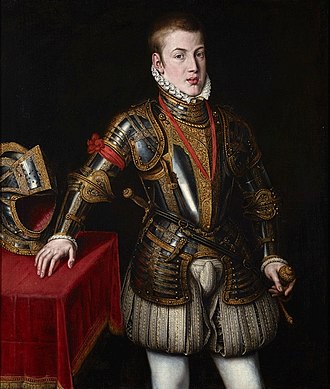
Elizabeth clearly wasn’t going to marry her half-sister’s husband, but her stepson may have been an option. Don Carlos of Spain, Prince of the Asturias was Philip’s only living child and heir to the throne. Unfortunately, likely due to being the product of generations of incest, Carlos was physically and mentally disabled. It would become very clear that he was in no fit state to be heir or rule the country. He was initially engaged to Elisabeth of Valois but his father married her instead. Carlos became a potential suitor for Elizabeth I of England but the proposal was never serious, unlike that of his father.
What Happened to Carlos? Carlos was the subject of several more matches before he became engaged to Anna of Austria. Both his physical and mental state became worse, to the point where he attempted to shoot his own uncle. Philip was then forced to have Carlos imprisoned. Court and condado gossip was wild as Philip never admitted his son’s mental state. Carlos died in 1568, leading to rumours of murder. Philip would later marry Anna, his own son’s fiancée.
Charles II, Archduke of Austria
Nationality: Austrian
Religion: Roman Catholic
Age Gap: Charles was nearly seven years younger
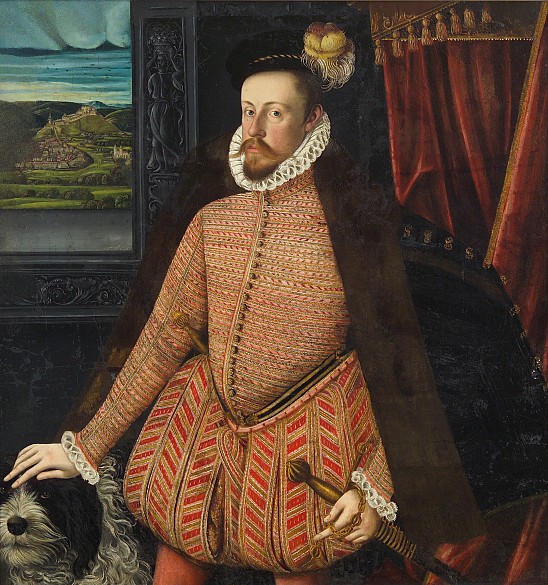
The Habsburgs seemed to want a foothold in England and thus suggested Charles II, Archduke of Austria and son of the Holy Roman Emperor. Like the rest of the Habsburgs, Charles was a Catholic, but known to be tolerant of Protestants. Over several years, there were marriage negotiations between the nations. It was expected, however, that Charles would inherit the English throne should Elizabeth die without an heir. Elizabeth continued to negotiate as she had with Philip, but she never wanted to marry a Catholic. In 1568, the proposals fell through.
What happened to Charles? Charles ended up marrying his niece Maria Anna of Bavaria (Habsburgs, am I right)? They had twelve children who lived to adulthood. His son Ferdinand would become Holy Roman Emperor after his cousin died childless.
Frederick II of Denmark
Nationality: Danish
Religion: Lutheran
Age Gap: Frederick was nine months younger
The Catholic Habsburgs were not the only royal suitors for Elizabeth’s hand. Frederick II of Denmark was a Lutheran who came to the throne soon after Elizabeth. Like her, he was intelligent with a zeal for learning. Frederick, according to Danish State Archives, proposed to Elizabeth, who rejected him. Whilst his religion was more palatable, even if Elizabeth had wanted to marry, another reigning monarch would have made things trickier.
What happened to Frederick? Frederick eventually married his cousin Sophie of Mecklenburg-Güstrow in 1572. They enjoyed a rare perfectly arranged marriage and had a number of children before his death in 1588. Frederick and Sophie’s daughter Anne married Elizabeth’s successor James.
Charles IX of France
Nationality: French
Religion: Roman Catholic
Age Gap: Charles was seven years younger
Another Catholic suitor was Charles IX of France. A manuscript from 1563 exists that discusses a possible marriage between the pair. Whilst Charles was a Catholic, he was also tolerant, having granted Huguenots special privileges. Nothing serious came of it though.
What happened to Charles? Charles eventually married Elisabeth of Austria, daughter of the Holy Roman Emperor. Elizabeth was the godmother to their daughter Marie Elisabeth. Unfortunately, religious issues intensified in France. Charles betrothed his sister Margaret to the Protestant Henry of Navarre (later to be King Henry IV of France) in order to quell tensions. This led to the infamous St. Bartholomew’s Day Massacre a few days after the wedding. It was the attempted assassination of Gaspard de Coligny along with other prominent Huguenots (under Charles’s orders) that set alight burgeoning discontent. Over several weeks, Catholics murdered thousands of Huguenots. Elizabeth famously decried the event. Charles’ sanity slipped afterwards and he died in 1574, aged only twenty-three and without a male heir. His brother Henry took the throne but was assassinated in 1589, which is when Henry of Navarre became Henry IV of France.
Henry III of France (then Duke of Anjou)
Nationality: French
Religion: Roman Catholic
Age Gap: Henry was eighteen years younger
Charles IX was not the only member of his family to be considered, and the second was his brother Henry, Duke of Anjou and later Henry III. There were discussions about a marriage in the early 1570s but they never materialised, and the pair never even met.
What Happened to Henry? Henry was elected as King of Poland-Lithuania in 1573, as it was not expected that he would become King of France. That changed a year later, when his brother died aged only 23. Henry abdicated from the Polish throne to lead France. He married a French noblewoman named Louise of Lorraine, but the marriage was childless. Henry was assassinated in 1589 by a fanatical Catholic monk. Interestingly, his successor Henry III, talked about above, was also assassinated in 1610 by a fanatical Catholic.
Francis, Duke of Anjou
Nationality: French
Religion: Roman Catholic
Age Gap: Francis was nearly twenty-two years younger
Francis, Duke of Anjou was the younger brother of Charles IX. He began a courtship of Elizabeth in 1579, despite being twenty-two years her junior. Elizabeth probably truly never meant to marry him, but was fond of him as a pet of sorts, and the two got on well. Even if she had wanted to marry, there was great opposition to her marrying a Frenchman, Catholic, and the son of the infamous Catherine de’ Medici. Elizabeth formally ended any courtship in 1583.
What Happened to Francis? Francis died of malaria in 1584, having been shamed by his failed attempts to capture Antwerp.
Ivan IV of Russia
Nationality: Russian
Religion: Russian Orthodox
Age Gap: Ivan was three years older

Ivan IV, first Tsar of Russia, might be an unfamiliar name, but Ivan the Terrible is not. Ivan had been twice married prior to 1570. He’d loved his first wife Anastasia deeply and it was her death that drove him mad. His second marriage to a woman named Maria was, unsurprisingly, less successful. Though the father of two living sons, Ivan proposed to Elizabeth in around 1570. This was highly unusual, as all Russian consorts until this point had been Russian themselves, and had to be Orthodox. Elizabeth rejected the proposal.
What Happened to Ivan? Ivan got over it in his usual bloodthirsty way. He married four more times, each unsuccessfully, until his last bride was widowed by him. Ivan’s most infamous episode occurred in 1581, when he is believed to have killed his son and heir Ivan in a fit of rage. His daughter-in-law then miscarried. Ivan IV died in 1584, succeeded by his incompetent second son Feodor.
Erik XIV of Sweden, then Prince Eric
Nationality: Swedish
Religion: Lutheran
Age Gap: Erik was three months younger
Erik of Sweden was still prince and heir when he made an offer for Elizabeth’s hand. In 1559, Elizabeth sent a very polite but very firm rejection. Erik was about to head to England in 1560 when news came of his father’s death and his subsequent ascension to the throne. He continued to pursue Elizabeth for years but failed. Whilst Elizabeth had contended not to marry, his status as a ruling monarch would have made things difficult.
What Happened to Erik? Erik eventually married Karin Månsdotter in 1568. Unfortunately, he was deposed by his half brother John, on account of his own mental instability (Erik had even stabbed a nobleman to death). He spent the rest of his life imprisoned and died in 1577, most likely murdered.
Alfonso II d’Este, Duke of Ferrera
Nationality: Italian
Religion: Roman Catholic
Age Gap: Alfonso was two months younger
Alfonso II de’Este was Duke of Ferrera, Chartres, and Modena and Reggio. He had been twice married before. His first wife was Lucrezia, a member of the Medici clan, whom he was suspected of poisoning. His second bride was Barbara of Austria, a Habsburg. Alfonso proposed to Elizabeth in 1579, but she rejected him, citing his Catholic faith.
What Happened to Alfonso? Alfonso married Margherita Gonzaga, the niece of his previous wife Barbara. He had no children with her either, and died in 1597.
Adolf, Duke of Holstein-Gottorp
Nationality: Danish
Religion: Lutheran
Age Gap: Adolf was seven years older
Adolf, Duke of Holstein-Gifford was a Danish royal, a younger son of Frederick I of Denmark. As a younger Lutheran son who was not going to rule he was probably a more palatable match for England. He’d also been given vast lands and responsibilities. He had been proposed as a match whilst Henry VIII was still alive. Adolf proposed again in her adult years but was rejected.
What Happened To Adolf? Despite her rejection, Elizabeth was impressed by Adolf’s military talents and made him a Knight of the Order of the Garter. He married Christine of Hesse in 1564 and had seven children live to adulthood. Adolf died in 1568 and was succeeded by his son Frederick.
Emmanuel Philibert, Duke of Savoy
Nationality: Italian
Religion: Roman Catholic
Age Gap: Emmanuel was five years older
Emmanuel Philibert was an early suitor of Elizabeth, having been put forward by Philip II. Elizabeth was nominal heir to the throne at this point, as it looked as though Mary wouldn’t conceive a child. Emmanuel was a distinguished veteran, and ruler in his own right, though not of a kingdom. Elizabeth nevertheless refused the match and Mary didn’t push it.
What Happened To Emmanuel? Emmanuel had a storied political career and was a competent ruler. He married Margaret of Valois in 1559 and they had a son named Charles Emmanuel. Emmanuel died in 1580 and was succeeded by his son.
James Hamilton, 3rd Earl of Arran (then Lord James Hamilton)
Nationality: Scottish
Religion: Protestant
Age Gap: Hamilton was four years younger
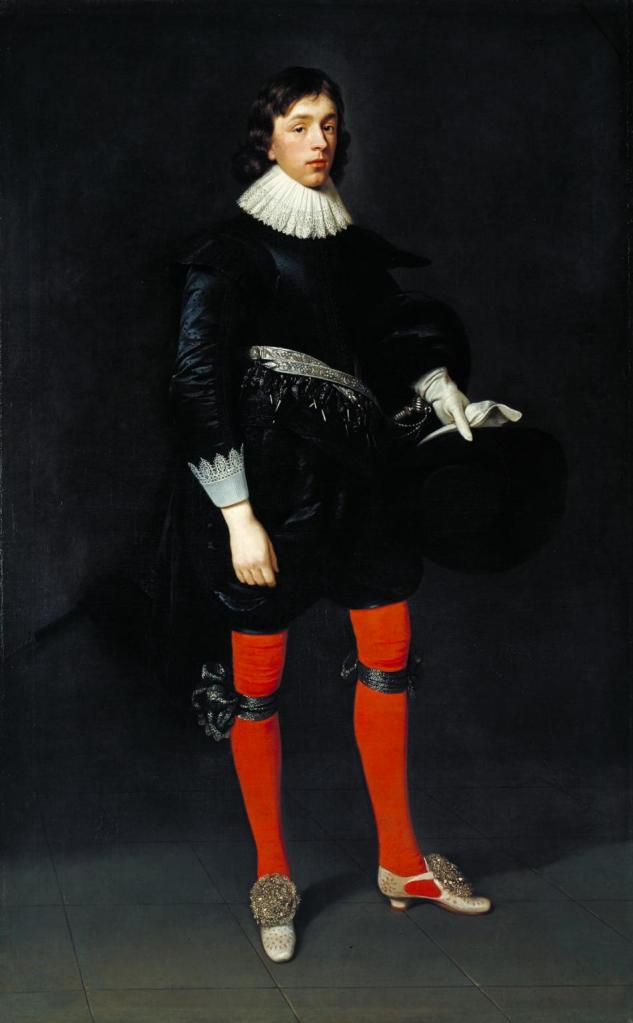
Upon Elizabeth I’s ascension in 1558, an Anglo-Scottish alliance was suggested through a match with Lord James Hamilton, son of the Earl of Arran. Hamilton had previously been a potential suitor for Mary, Queen of Scots. Elizabeth rejected the proposal.
What Happened to Hamilton? Hamilton would pursue Mary in later years, as well as Lady Catherine Grey. He was a prominent member of the Scottish government, but was declared insane in 1562. Hamilton spent the rest of his life in luxurious confinement, even after ascending to the earldom in 1575. He died in 1609.
English Suitors:
Robert Dudley, 1st Earl of Leicester
Nationality: English
Religion: Church of England
Age Gap: Dudley was a year older

We start with Robert Dudley, the man most likely to be called the love of Elizabeth I’s life and the one she would have likely married had it been an option. Robert Dudley was an old friend of Elizabeth’s and son of the Duke of Northumberland and brother of Lord Guildford Dudley, both of whom had been executed for treason. Dudley had wed Amy Robsart in 1550 but had been imprisoned following his family’s actions. He was returned to favour following Elizabeth’s ascension. Dudley became close to Elizabeth and many believed that they were in love. Amy did not stay with Dudley in London but this was usual, as most courtier’s wives lived away unless they were ladies-in-waiting. Gossip was rife but the catalyst came when Amy died suddenly in 1560. Amy was suffering from a severe case of breast cancer, so it’s believed that she fell down the stairs due to brittle bones. Even so, rumours swirled that she had been murdered or killed herself out of jealousy. If she had committed suicide, it would have been due to her severe depression. Elizabeth and Dudley waited, but he had a poor reputation beyond his wife’s death. After several years, Elizabeth was forced to give up any chance of marrying Dudley.
What Happened To Dudley? Elizabeth kept Dudley close to her. Despite not planning to marry him, Elizabeth expected him to stay unmarried too. In 1578, Dudley secretly married Lettice Knollys, Dowager Countess of Essex and first cousin once removed of Elizabeth, after allegedly having an affair with her whilst her husband was still alive. Elizabeth was furious, banishing the new Countess of Leicester from court. Dudley died in 1588, having lost his treasured heir four years earlier.
Thomas Seymour, 1st Baron Seymour of Sudeley
Nationality: English
Religion: Church of England
Age Gap: Seymour was twenty-five years older
Thomas Seymour, 1st Baron Seymour of Sudeley, was a powerful Tudor figure and early suitor of Elizabeth. The maternal uncle of Edward VI, Seymour and his family had enjoyed great prominence ever since Jane became Queen, and continued to do so after her death in 1537. Prior to Catherine Parr’s marriage to Henry VIII, she and Thomas Seymour enjoyed a somewhat romantic relationship. A jealous Henry sent Seymour away and Catherine, clearly unable to reject him, married Henry. Seymour returned to court a few weeks before Henry’s death in January 1547. His reputation as an ambitious power seeker was seen only a month later, when he proposed to Elizabeth. Elizabeth rejected him, citing her age — thirteen — and the fact that she was mourning her father.
What Happened To Seymour? Seymour would remain part of Elizabeth’s life for some time to come. In April or May 1547, Seymour secretly married Catherine Parr. Whilst a chance for Catherine to finally marry for love, it seemed to have been more a power play for Seymour, as Catherine was not only the dowager Queen of England, but also one of the wealthiest women in the land. When the marriage was suspected, it was seen as scandalous, not least because Catherine Parr was barely a widow (not that it ever stopped Henry VIII). Catherine’s beloved stepdaughter Mary was horrified and the court snubbed the pair. Things only got worse. Elizabeth lived with the pair, and Thomas enjoyed playing inappropriate games with her, games that today would likely be described as child sexual abuse. Catherine initially dismissed it, but when she walked in on the two embracing whilst pregnant, she sent Elizabeth away, either for the girl’s safety or her own peace of mind. In September 1548, Catherine gave birth to a daughter named Mary after her stepdaughter, but died days later. Thomas is then suspected to have wanted to marry Elizabeth again. Whatever the case, his constant power plays concerned the government. It all came to a head on the 16th January 1549, when he attempted to kidnap the king, even killing the boy’s dog to stop the barking. Seymour was arrested, charged with treason, and executed on the 20th March 1549.
Edward Courtenay, 1st Earl of Devon
Nationality: English
Religion: Roman Catholic
Age Gap: Courtenay was seven years older
Edward Courtenay, 1st Earl of Devon, was a nobleman whose great-grandfather was Edward IV, thus making him of royal blood. His early life was troubled, as his parents were accused of treason. Courtenay’s father was executed, whilst he and his mother remained imprisoned. Whilst his mother was released in 1540, Courtenay was too much of a threat to be released. He was not freed by Edward VI, but by Mary I, of whom his mother was a close friend. Courtenay was considered a suitor for Mary, by whom he was favoured, but this never materialised. Things got worse for Courtenay, however, when he was implicated in Wyatt’s Rebellion. The Rebellion was led by Sir Thomas Wyatt and stemmed from a dislike of Mary’s marriage to Philip II. Courtenay and Elizabeth were both imprisoned. Courtenay was eventually freed, sent to Europe as a diplomat and stayed there in essential exile. Elizabeth had no intention of marrying him whatever the case, as she blamed him for her imprisonment. When he was abroad, Courtenay was central to a plot to overthrow Mary and install Elizabeth, as he would be married to the latter.
What Happened To Courtenay? Elizabeth refused to marry Courtenay anyway, so she wouldn’t have approved of the plot. Either way, the plan was cut short by Courtenay’s death on the 18th September 1556.
Sir William Pickering
Nationality: English
Religion: Church of England
Age Gap: Pickering was twenty-seven years older
Whilst Edward Courtenay had no involvement in Wyatt’s Rebellion and was punished for it, Sir William Pickering was involved and wasn’t. An English nobleman, Pickering had also been associated with the fated Duke of Northumberland and Earl of Surrey. Under Edward VI, he was made a Knight of the Carpet and given diplomatic missions. He managed to flee to France following Wyatt’s Rebellion but changed sides and was thus pardoned. Upon Elizabeth’s ascension, Pickering was considered a match for her. Elizabeth, however, never truly considered him, and Pickering himself never considered himself a suitor.
What Happened To Pickering? Pickering continued to enjoy prominence in Elizabeth’s court, acting as a royal lieutenant in the Northern Rebellion and a member of the commission that tried Catholic Martyr John Felton. Sir William Pickering died a wealthy man on the 4th January 1575. He was unmarried but had an illegitimate daughter named Hester. Pickering left a jewel to the Queen and bequeathed money to Hester, friends, and the poor of his parish.
Robert Devereux, 2nd Earl of Essex
Nationality: English
Religion: Church of England
Age Gap: Devereux was thirty-two years younger

We finish with the suitor with the most shocking end. Following Robert Dudley’s death in 1588, a new favourite rose: Robert Devereux, the queen’s first cousin twice-removed. He had managed to charm her before then, but Dudley’s death allowed Devereux the top job. Despite his proximity to the Queen, Devereux showed her disregard, such as turning his back to her, and was known to be power hungry. In 1599, the Queen sent Devereux to Ireland. He failed and returned early, much to the Queen’s surprise. Devereux lost his political offices as a result.
What Happened To Devereux? On the 8th February 1601, angered and impoverished, Devereux led a group of armed nobles from Essex House into London. He called on Londoners to support him and his group demanded an audience with the Queen. The Londoners refused him, and Devereux was arrested. Essex’s Rebellion failed. Robert Devereux, Earl of Essex, was subsequently found guilty of treason and executed in a shoddy manner on the 25th February 1601.
Sarah is a writer for Elections Daily, The Mallard and other publications. She enjoys history, reading and fashion.
Discover more from Decadent Serpent
Subscribe to get the latest posts sent to your email.
