
Author: Tyler Hummel
Our modern interactions with the past are as fascinating as they are frustrating. Modern man is overwhelmed by, as the Christian apologist C.S. Lewis once put it, a chronological snobbery that principally prefers modern thought to ancient. Conversely, traditionalists and classicists prefer the old over the new, believing it to be a less corrupted and more rarified glimpse into the transcendent.
This dialog means that modern adaptations of classical material are going to be fraught with the proverbial minefield’s worth of problems. Which side makes the concessions? Which side is most believable?
This conversation came up recently with the announcement that Christopher Nolan—director of The Dark Knight, Tenet, Inception, and Oppenheimer—would be writing and directing an adaptation of Homer’s Odyssey, with a release date of July 2026.
Nolan is a modernist by temperament, a stoic Englishman whose work is defined by dialogues between reality and fantasy, underlined by screamingly adolescent subtexts about the horrors of time and death. The supernatural rarely interacts with his work beyond deluded characters allowing themselves to be consumed by fantasy, dreams, egos, and emotions.
This raised an interesting question: how is a director indebted to modernity going to adapt a story about mythical gods and monsters? Will the supernatural coexist with the mundane or will it be fully excised?
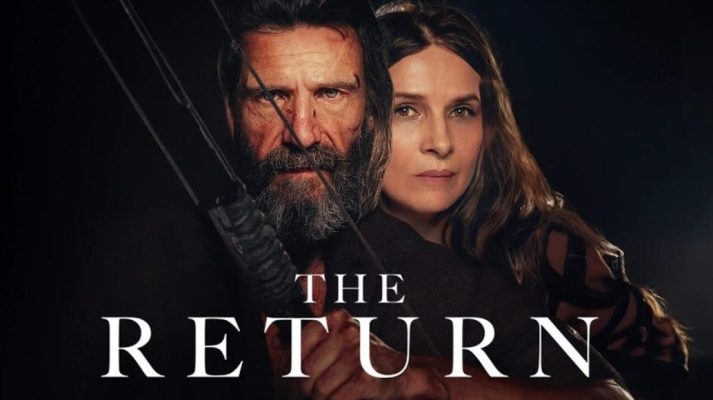
Audiences were recently treated to a look at the latter possibility with another recent adaptation of The Odyssey that passed in and out of theatres this winter with minimal interest. The Return—starring Ralph Fiennes and written/directed/produced by Still Life director Uberto Pasolini—is a highly modernist adaptation of The Odyssey that hollows out the final chapters of the poem for a modern story about war trauma.
The Return’s major mistakes come in its divergences from the source material, particularly in the ways that it awkwardly upholds the structure of the poem while completely rewriting everybody’s character motivations. The film picks up late in the poem, following the mythical aspects of the story where Odysseus is caught up dealing with witches, gods, sirens, and sea monsters as his naval vessel attempts to return to Ithaca after the conclusion of the Trojan War. An elderly Odysseus has washed up on the shores of his home, discovering that his wife is struggling to hold off the advances of dozens of poor suitors who want to kill his son and marry the queen for her wealth.
While the poetic Odysseus is driven by a metaphysical calling for home, Fiennes isn’t driven at all. His war experience has left him an empty, cowardly man who cannot bring himself to face his family, bringing ruin to Ithaca. Similarly, his wife Penelope is driven by a confused motivation of wanting the man she lost 20 years prior back. She keeps waiting for a man she believes to be dead, but when she meets him much earlier than in Homer’s story, she rejects her husband for being hollow and weak. This isn’t her husband, or at least he’s not who he used to be.
Bizarrely, the film spends most of its time going through the motions of the poem. All the major moments that need to be there are there, but they’re decontextualised. The suitors are far more violent and hostile than the poem, which makes cathartic and meaningful moments feel needlessly bleak and sad. The hyperreality of the poem proves to be poorly suited to a modern story about shallow and broken people hesitating to do what’s right.
All of this can be attributed to a very modern understanding of war being applied to the poem. Odysseus dismisses most of the legends of the Trojan War and the Odyssey as just-so stories and legends untethered from the reality of murder and evil that his troops unleashed upon Troy. There’s no glory or myths, just death and power. As a result, the legend of Odysseus is just that, a hollow representation of the truth of human depravity.
A story of this sort misses the core appeal of The Odyssey, what JRR Tolkien once described as a “holiday” to experience the “atmosphere” of the barbarous past—the “fantasies of fallen men.”
Stories like this are valuable as mythological explorations of human strife and emotion within the realm of this life, where death is an inevitability and hope is fleeting. The grotesque and mythical elements are inextricably linked to these realities, particularly in the realm of the ancient Greeks, where theology and philosophy were unbound and mutually hostile subjects. The gods did whatever they wanted to, and we in turn were obliged to find rationalisations for our travails within the world of man.
Indeed, this is reflected by my favourite line from the poem, as Zeus laments, “Ah how shameless – the way these mortals blame the gods. From us alone, they say, come all their miseries, yes, but they themselves, with their own reckless ways, compound their pains beyond their proper share.”
The inclusion of the gods and monsters is what makes The Odyssey great. It is not incidental. It cannot be cleanly carved out to favour the human tragedy. It is essential to the world and worldview of the poem, both in its plot and in how it is to be interpreted.
The Return’s cynical attitude reflects a very modern idea of warfare, that there is no glory to be had in it and that it only traumatises everybody involved. Odysseus doesn’t have PTSD in the poem, despite the poem’s meta-narrative itself reflecting the emotional challenges of a warrior returning home. The yearning, and the pain of that yearning, is there, but there is catharsis that comes in its fulfilment, with the goddess Athena herself stepping in to prevent further cycles of violence from spiralling on Ithaca in its final moments.
“Hold back, you men of Ithaca, back from brutal war! Break off — shed no more blood — make peace at once… don’t court the rage of Zeus who rules the world!” So she commanded. He obeyed her, glad at heart. And Athena handed down her pacts of peace between both sides for all the years to come — the daughter of Zeus whose shield is storm and thunder, yes, but the goddess still kept Mentor’s build and voice.”
Is it possible that Nolan’s Odyssey could escape these challenges and produce a great adaptation? Anything is possible. The Lord of the Rings and Dune were said to be unadaptable, and yet they produced great blockbusters. Nolan is certainly capable of miracles, as the astounding success of Oppenheimer and Dunkirk shows. Regardless, this may be one of his greatest challenges. Any modern filmmaker is going to be fighting the impulse to modernise Homer’s poem, thus removing the elements of it that make it compelling and meaningful.
And sadly, no sincere adaptation is likely to do better than the Coen Brothers’ wonderful comedy O Brother, Where Art Thou?
Tyler is a Wisconsin-based freelance critic and journalist, a member of the Music City Film Critics Association, a regular film and literature contributor at Geeks Under Grace, and was the 2021 College Fix Fellow at Main Street Nashville.
Discover more from Decadent Serpent
Subscribe to get the latest posts sent to your email.
