
Author: Tyler Hummel
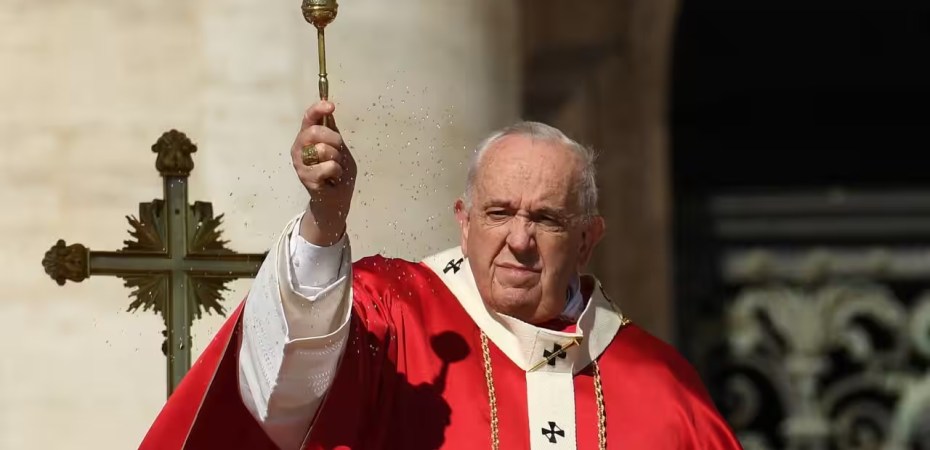
I admire the late Pope Francis. That’s a controversial statement nowadays, particularly for an Anglican who regularly breaks bread with the Chesterton Society. Regardless, the recently passed Roman Bishop was a good man, placed in the hardest job in the world, who sought to change the world and address prickly issues like poverty, refugees, and climate change. He largely failed, becoming one of the most complicated figures to hold the office in recent memory, but billions have mourned his passing and will continue to hold him in high esteem.
To this day, he remains perpetually misunderstood. The mainstream media repeatedly misrepresented his agenda, regularly misquoting him, to make it sound more extreme than it ever was, while RadTrads have all but celebrated his death with jubilation as the collapse of liberal modernism within the church, having long berated their own Pope with accusations of heresy and abuse against the traditional rites of the church.
In short, most outspoken partisan factions were disappointed by Pope Francis. I, as an outsider, saw him as a somewhat tragic figure who nonetheless dedicated the final 12 years of his life to the painful task of guiding the Roman church through stress and division. He had to oversee 1.3 billion Catholics, and largely failed to rein in many of the church’s worst tendencies during that time, but still took the role of evangelizing the gospel seriously.
Two very interesting films have been made about Vatican politics during his papacy: The Two Popes (2019) and Conclave (2024). It is remarkable just how different the tones of such films are. However, contrasting them is a great representation of how the media has interacted with the Catholic faith during the past decade and offers some insight into how his reputation has evolved.
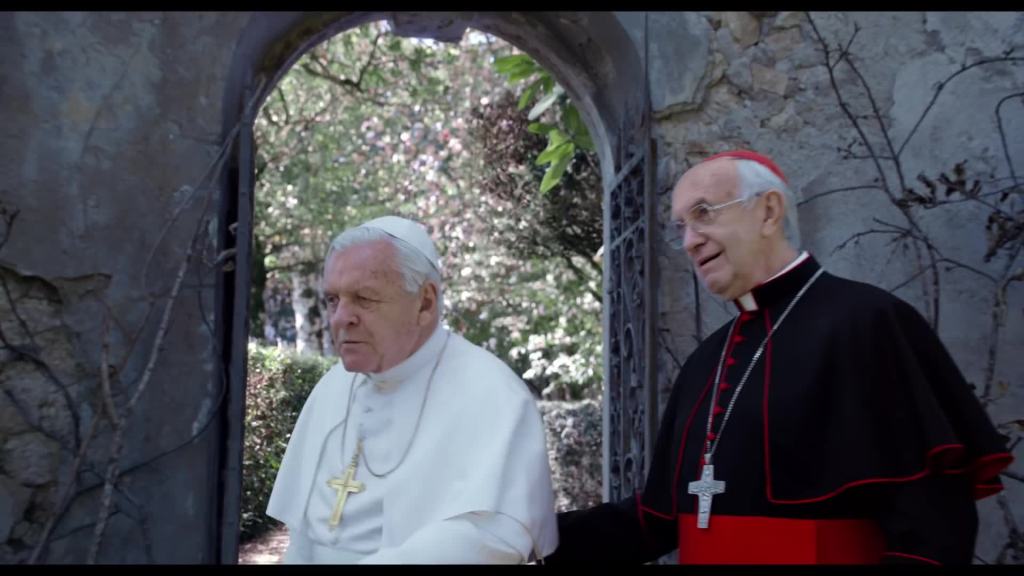
The first film came out six years into Francis’s papacy, and it is an entirely optimistic Netflix biopic about the prospects of the Roman church to reform and embrace the modern world, whereas the latter is a bitter, gossipy drama about the liberal factions in the church conspiring to plant a subversive candidate in the See of Peter against the whims and knowledge of the outside world.
So much media about the modern Catholic Church is fundamentally hostile, with films like Doubt, Spotlight, Calvary, and Immaculate depicting the church in incredibly hostile terms (and becoming award-season darlings in the process). Long gone are the days of Bing Crosby’s lovable singing priest in films like Going My Way and The Bells of St. Mary’s. Celebrities like Audrey Hepburn and Vincent Price used to line up to star in Catholic films like The Nun’s Story and The Song of Bernadette, but no longer (Mark Wahlberg notwithstanding).
The Two Popes is fascinating in this regard, given how much it builds up Pope Francis as a cure to the problems that the outside world saw within the church. It casts Anthony Hopkins’ Pope Benedict XVI as a dull holding pattern that failed to adequately address the needs of the church. The film-length dialogue between these two figures covers everything from Francis’s desire to give communion to divorced Catholics to his disdain for hierarchy, with Pope Benedict all but admitting that he’s been forsaken by God for his sins and choosing to resign. Conversely, Francis’s only sin is that he fled underground amid a right-wing coup in Argentina and left the liberal Jesuit Order to be persecuted, which the film views as a mere forgivable insufficiency.
The film is fundamentally a work of celebratory propaganda for liberal Catholicism, rooting for that particular internal faction within the church to take power. By the film’s end, his papacy is working amongst the people, feeding the poor, helping refugees, and laying the groundwork for a new Catholic Church.
This optimism is nowhere to be seen half a decade later in Conclave. The film, which was nominated for eight Oscars and won Best Adapted Screenplay at the 97th Academy Awards, is quite salacious in its unflinchingly cynical view of internecine church politics. From the outset, Ralph Fiennes’s Vatican Dean, Lawrence, is already exhausted and spiritually depleted. The death of the prior liberal pope has resulted in the College of Cardinals struggling to elect a new candidate, with the existing candidates proving either corrupt or overtly partisan.
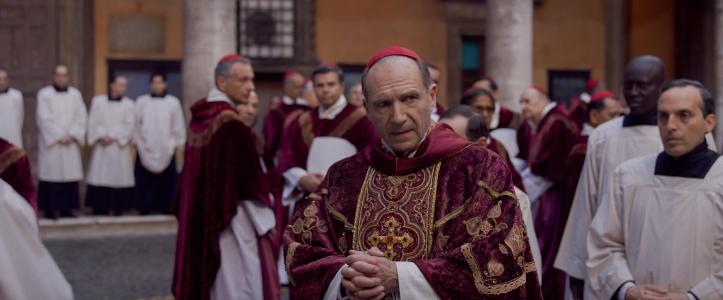
In the end, Lawrence stands behind the election of a radical young Cardinal who takes the name of Pope Innocent, who is later discovered to be a secret intersex individual who believes that God made him rightly who he is. Lawrence ultimately looks the other way on this discovery, prying the doors of the church open by allowing for the election of an LGBTQ+ individual to subversively become the leader of the Catholic world.
It’s hard to fully explain this cynicism. Maybe it is because Pope Francis endured many scandals during his tenure as pontiff, but more likely, it seems that the media is losing hope in the ability of liberal Catholics to develop new theologies that advance the causes of gay Catholics, divorcees, socialists, pro-abortion, and social justice movements within the church. He certainly did nudge in that direction, as his final public address shows, but never far enough.
As The Washington Post put it, “He was more broadly embraced by liberals, even if they felt his personal ecumenism never translated into the radical reform they sought, especially on the role of women. … Though LGBTQ+ outreach became a hallmark of his papacy, Francis did not fundamentally change church doctrine or its official teachings that homosexuality is ‘intrinsically disordered.’”
Francis was generally shielded from criticism during his papacy by the media that wanted him to nudge him further towards modernity, and it hasn’t paid off. He’s too pro-life and uncommitted. Regardless, they’re now exhausted and rooting for something more radical and subversive.
It is fascinating, though, that films so curiously optimistic and pessimistic would so thoroughly capture the media zeitgeist at both ends of Francis’s papacy. The Two Popes is funny, colorful, and feels like an adventurous garden party, while Conclave is moody, Sepia-toned, and visually brutalistic. It isn’t surprising that a biopic would be made about the election of a seemingly radical new pope, but that a film about a Papal Conclave would release in theaters just six months before a Papal Conclave is unsettlingly creepy.
These films bookend the extremes of the way the media struggles to understand and manipulate the Roman church. And just as the world now sits in suspense as it awaits the election of a new pope, one wonders if Hollywood will ever again find the optimism to celebrate the church again or when it will return to polemicizing it.
Tyler is a Wisconsin-based freelance critic and journalist, a member of the Music City Film Critics Association, a regular film and literature contributor at Geeks Under Grace, and was the 2021 College Fix Fellow at Main Street Nashville.
Discover more from Decadent Serpent
Subscribe to get the latest posts sent to your email.
