

Author: Sarah Stook
Women’s History Month may have gone but there is always time to celebrate great women from history. Therefore, I’m telling you all about thirty-one of my favourite historical and contemporary women, from a Byzantine empress to a Malawian politician.
1. Empress Theodora (c.499/500- 28th June 548)- Empress Consort

The Empress Theodora started life as an actress, dancer and prostitute, and ended it as a beloved Empress Consort. She met the future Emperor Justinian as a young woman, who was so in love with her that he had the law changed so that they could marry. This proved to be a shrewd decision. Theodora was a brilliant, intelligent and shrewd Empress known for her political acumen. Her husband trusted her fully, and it was her role in convincing him to stay that quelled the deadly Nika Riots. Theodora also helped bring about laws that protected women and children, such as making rape punishable by death and equal divorce laws. She rescued girls who were being trafficked and prostituted, giving them money to help them and a place to live. Justinian was so heartbroken by her death that he never remarried, despite the need for an heir.
2. Wu Zetian (624-16th December 705)- Empress Regnant
Wu Zetian is not a moral hero, but one must admire how she rose to the top. She started as an educated teenage concubine who then worked her way to the top by potentially vicious means such as murder. Wu became the first and only Empress of China and oversaw a largely prosperous reign that encouraged education and meritocracy. Whilst she did overstep the mark sometimes and was eventually forced out in a coup, she remains a fascinating figure who furthered China for the better.
3. Æthelflæd of Mercia (c.870-12th June 918)- Leader
Being the daughter of Alfred the Great may be a help, but Æthelflæd didn’t always need the help. A princess of Wessex, she was married off to Æthelred of Mercia. Æthelflæd proved so capable that upon her husband’s death in 911, the people of Mercia took the extraordinary step of asking her to rule. She did so, providing a fierce defender against Viking raids. Her death in 918 was widely mourned, and her brother Edward later deposed her daughter as Lady of the Mercians. Æthelflæd’s accession to the throne was extraordinary, and she proved that she was more than just Alfred the Great’s daughter.
4. Olga of Kiev (c.890-925-11th July 969) Princess Regent

Some women on this list used words instead of actions. Olga of Kiev is not one of them. When her dear husband Igor, Prince of Kiev, was killed, the men who did it dared ask for her hand in marriage. Olga wasn’t taking this. She pretended to agree and invited a delegation to dinner, proceeding to have them buried alive. She then had another delegation burned alive. Then she had more killed at a wedding feast. Finally, Olga had the city of her enemies burned down. She did all this whilst acting as a capable regent for her young son. Olga later converted to Christianity and was venerated as a saint. You can’t say that Olga of Kiev didn’t know how to take revenge.
5. Eleanor of Aquitaine (c.1124-1st April 1204)- Queen Consort and Regent
Eleanor of Aquitaine is hands down one of the most interesting consorts ever. The wealthiest heiress in Europe, she was married off to the Dauphin Louis of France so that the country could have her money. Barely weeks after the wedding, they became King and Queen of France. Despite two daughters being born, their marriage was a disaster and an annulment was procured. Eleanor then angered her former husband by marrying his enemy, the young and handsome Henry II of England. They had many children together, and Eleanor was a trusted regent. Things did come to a head though, and Eleanor attempted to overthrow Henry. He had her locked up for the rest of his life, but she was freed by her son Richard I. As Richard spent nearly the entirety of his reign abroad, she acted as regent. Eleanor was also influential in literature and the arts. She died at the grand age of eighty, having spent her final years crossing Europe to marry off her relatives. Eleanor of Aquitaine remains one of the strongest and most worthy consorts in English history.
6. Lady Margaret Beaufort (31st May 1443-29th June 1509)- King’s Mother
Lady Margaret Beaufort had a rough early life. Her first marriage was annulled on the grounds of her age when she was ten. She was married for the second time aged twelve. Consummation would usually wait until the girl was more mature, but her unscrupulous husband wanted an heir to gain her fortune. He died whilst she was pregnant. At only thirteen, the undeveloped Lady Margaret nearly died giving birth. From then on, she was no one’s victim. She took a third husband, whom she actually loved and who loved her in return. She then went about pushing for her son Henry’s right to the English throne. Actions included betrothing him to Elizabeth of York, who had a better claim but was a woman. Henry won at the Battle of Bosworth and became Henry VIII. Lady Margaret was honoured in his court and had great influence. She lived long enough to marry for a fourth time and see her grandson Henry VIII take the throne. From a child bride and mother to the matriarch of the Tudor dynasty, Lady Margaret really won the Wars of the Roses.
7. Catherine of Aragon- 16th December 1485-7th January 1536)- Queen Consort and Regent

Catherine of Aragon is seen as the poor, cast-off Queen, but she was so much more. The daughter of the legendary Ferdinand and Isabella, Catherine was groomed to be Queen of England. She married Prince Arthur first, but was widowed months later. For years, Catherine stayed in political limbo, unable to marry but unable to go home. To counter this, her father made her the first female ambassador of Europe, a role in which she shone. Finally, Henry VIII wanted to take her as his bride. She swore that she was a virgin and the marriage proceeded. Despite what history might tell you, the marriage was mainly happy. Catherine was a universally adored queen for her piety, intelligence, charity and warmth. She was one of two of Henry’s wives to act as Regent, helping win the battle that killed James IV of Scotland. Catherine wanted to send his head, but that was deemed too much.
After many years, Henry grew tired of Catherine after being unable to have a son. He planned for an annulment, but Catherine wasn’t giving in so easily. She dragged the arrangement on for years in order to protect herself and her daughter Mary. In one famous scene, she dropped to her knees in front of Henry in church, acting as the wronged wife. She then got up and walked out as the judges called her back in. Whilst Catherine eventually lost and suffered a tragic end, she remained beloved, something that her successor Anne Boleyn learned the hard way.
Catherine was underestimated by all around her, a fateful mistake. Her daughter did get to be queen and Catherine is fondly remembered.
8. Abigail Adams (22nd January 1744-28th October 1818)- First Lady
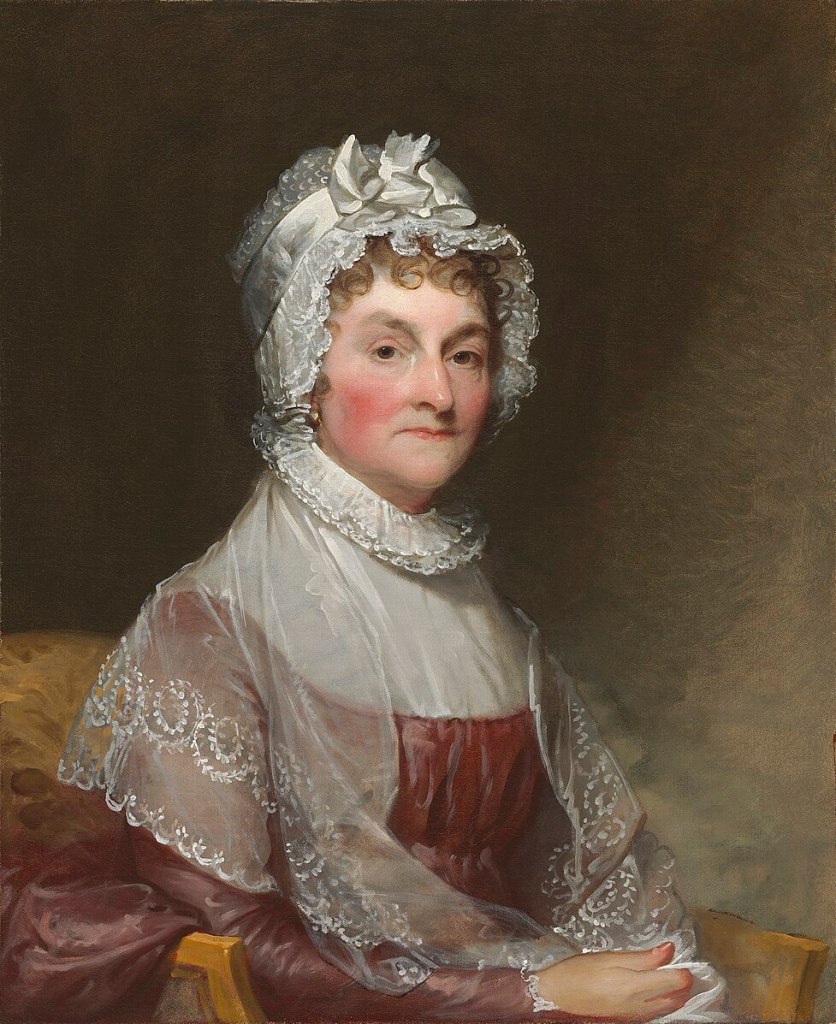
The Founding Fathers were great men, and the Founding Mothers were great women too. Abigail Adams is one of the most beloved First Ladies in US history, and for good reason. Intelligent and forthright, she served as her husband’s sounding board on every major issue. Their letters are a treasure trove for historians, and show Abigail’s views. She was a strong proponent of women’s rights and an opponent of slavery. Her famous quote ‘remember the ladies[…]all men would be tyrants if they could’ is symbolic of her views. The Adamses enjoyed a famously loving marriage and Abigail’s influence saw her receive the nickname Mrs. President.’ She also showed her kindness by caring for Polly Jefferson when both families were abroad and triggered the reconciliation between her husband Thomas Jefferson following the girl’s death. Abigail showed herself to be the perfect combination of intelligent, shrewd, warm and supportive.
9. Olympe de Gouges (7th May 1748-3rd November 1793)- Activist

Olympe de Gouges was a victim of the French Revolution, but she was so much more. The young Marie Gouze was aged seventeen, she was married to a man she didn’t care for and was widowed a year later, now a mother of a son. Following this, she changed her name to Olympe de Gouges. As Olympe de Gouges, she became a well-known playwright and activist. She supported gender equality, help for unwed mothers and illegitimate children and maternity hospitals, whilst opposing the death penalty and slavery. In 1791, she wrote the infamous ‘Declaration of the Rights of Woman and of the Female Citizen,’ one of the best-known treaties on gender equality. Olympe was a constitutional monarchist who opposed the death penalty and thus disagreed with the execution of Louis XVI. Because of this, those in charge of the French Revolutionary government had her tried and executed. Despite her name being besmirched, she remains one of the most famous names of the early feminist movement. Her ‘Declaration’ was also the direct inspiration for Mary Wollstonecraft’s ‘A Vindication on the Rights of Women.’
10. Zheng Yi Sao (c.1775-1844)- Pirate

Not many pirates died of old age in their beds surrounded by family, but those pirates weren’t Zheng Yi Sao. Much of Sao’s early life is unknown but she may have been a prostitute before she married a pirate leader in 1801. They worked as business partners until her husband died in 1807. She then got to work, taking over the family business of 800 ships and seventy thousand men. For the next several years, Sao was the bane of merchant ships and national navies. Her men plundered thousands and thousands of tonnes of cargo. Sao was a strict leader who demanded competence and absolute loyalty from her men, but also protected captured women from harassment and rape. In 1810, Sao sailed into a harbour and announced she wanted to stop. In return for her retirement, Sao received money, land and a pardon. For the next thirty-four years, Sao ran a successful gambling operation and died in her bed aged around 68/69. Sao is one of the most successful pirates of all time, a woman who proved both capable and fierce.
11. Táhirih (1814/1817-16-27th August 1852)- Activist
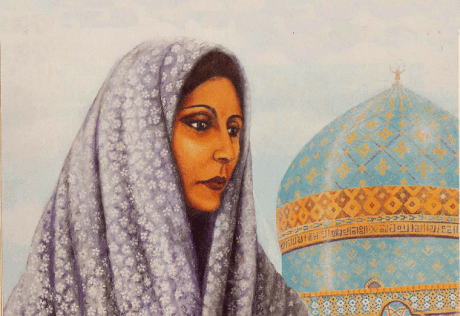
Whilst many of the women listed have operated in environments that were generally against them, Táhirih of Persia probably suffered from this the most. Born into a prominent family, the gender segregation of the time meant that she had to hide whilst her father taught male students. She was known for her beauty and extraordinary intelligence, but had to marry a cousin when she was just fourteen. In 1844, she converted to the Bábí faith. Táhirih became one of the most well-known proponents of the faith, as well as a poet, scholar and women’s rights activist. Her advocacy and faith made her a controversial woman, and she was arrested in 1848. She remained a prisoner for four years, refusing to convert and continually opposing polygamy and other forms of oppression. Sometime in August 1852, she was executed, strangled with her own scarf. Her last words were “You can kill me as soon as you like, but you cannot stop the emancipation of women.” In a time when being a woman and against the state religion was a great risk, Táhirih proved herself to be a rule-breaker in the best possible way.
12. Ada Lovelace (10th December 1815-27th November 1852)- Mathematician

Æthelflæd of Mercia had a famous father and so did Ada Lovelace, Countess of Lovelace who was the daughter of the infamous Lord Byron. Her mother encouraged an interest in mathematics and logic, something the Countess Lovelace picked up. She soon became a talented mathematician, befriending and corresponding with some of the most brilliant minds of the time. Her translations and notes were key to understanding computers as we know them today. The Countess Lovelace sadly died aged only thirty-six, but her work lives on in today’s technology.
13. Savitribai Phule (3rd January 1831-10th March 1897)- Activist
There are still lots of issues regarding gender and caste in India, but Savitribai Phule tried her hardest to change things. Married aged nine to a thirteen-year-old boy, Phule’s husband, who had been educated, was impressed by his wife’s zeal for learning. He educated her himself and encouraged her to continue schooling. Together with her sister-in-law, she created the first school for girls in India. Phule taught girls of all ages and castes, and extended education to boys too. She also noticed the problem of infanticide, especially of girls, in the area, and created a place for newborns to be dropped off safely. When a plague swept the area, Phule died after caring for the sick. Phule remains a revered figure in India for her activism in regards to gender, education and caste, as well as her involvement in the arts.
14. Elizabeth Garrett Anderson (9th June 1836-17th December 1917)- Doctor
The 19th Century was a changing time for women, and many took new opportunities. Born into a respectable family, Garrett Anderson enjoyed education, but bemoaned a lack of ‘masculine’ subjects and university options. She attempted to enroll in a number of medical schools, but was denied and had to join the Worshipful Society of Apothecaries. After graduating with the highest marks in her class, Garrett Anderson nevertheless struggled to find work. She opened a clinic for the poor and wealthy alike, specialising in women and children. Garrett Anderson eventually joined the London School Board and was admitted to the British Medical Association. She supported her sister Millicent’s suffrage campaign and her own daughter Louisa would be a doctor and suffragist. Garrett Anderson was also the first female Mayor in England. It was the hardships that Elizabeth Garrett Anderson fought against that helped to allow women to become doctors.
15. Millicent Fawcett (11th June 1847-5th August 1929)- Suffragist
The Garrett family clearly had a history of creating pioneering women, and Millicent Fawcett, formerly Garrett was one of them. Introduced to Emily Davies as a young woman, she became deeply involved in women’s voting rights. She married the sympathetic Henry Fawcett and the pair enjoyed a loving marriage, their daughter Philippa became a top mathematician. In the 1890s, Fawcett became leader of the National Union of Women’s Suffrage Societies (NUWSS). When not campaigning peacefully for suffrage, Fawcett fought against child marriage, raising the age of consent and making child abuse a crime among other things. Fawcett got to see some women get the vote in 1918. When the Representation of the People (Equal Franchise) Act 1928 gave women votes in the same way as men, Fawcett was in the gallery. She died a year later. Millicent Fawcett was one of the women who helped us gain the vote, all through courage and quiet conviction.
16. Eleanor Roosevelt (11th October 1884-7th November 1962)- First Lady

Franklin D. Roosevelt is considered by many as one of the greatest US presidents, but even more, might consider Eleanor Roosevelt the greatest First Lady. Born into a wealthy and prominent family, Roosevelt was raised by a loving but absent father and a verbally abusive mother. Orphaned young, she enjoyed life at a London boarding school and was devastated by being recalled to make her debut. Her marriage to distant cousin Franklin D. Roosevelt was delayed by his overbearing mother Sara. Married life wasn’t easy, as Sara made life difficult and Eleanor struggled with motherhood. Following a near divorce over her husband’s infidelity and his near-death experience, Roosevelt gained more power. She became a prominent advocate for civil and labour rights. When her husband became president, Roosevelt became the most active First Lady ever seen. Her husband opposed an anti-lynching law and supported the internment of Japanese-Americans, but Roosevelt fought for the first and opposed the latter. She encouraged the inclusion of women and minorities in the war and in her husband’s domestic programmes. Following President Roosevelt’s death, Eleanor Roosevelt was made Chair of the UN Commission on Human Rights and helped to draft the Universal Declaration on Human Rights. She continued her political advocacy into old age, chairing John F. Kennedy’s Presidential Commission on the Status of Women. Eleanor Roosevelt died in 1962 and was dubbed ‘First Lady of the World.’ That is certainly true.
17. Virginia Hall (6th April 1906-8th July 1982)- Spy
You might not know that the Germans dubbed a woman ‘the most dangerous of the Allied spies.’ That woman was Virginia Hall. A journalist and amputee, Hall made numerous attempts to serve her country but failed until WW2. After serving as an ambulance driver, Hall was recruited to the Special Operations Executive (SOE). As an SOE spy, Hall showed intelligence, wit and an ability to think on her feet. She broke prisoners out of Nazi jails, disguised herself as an old woman to smuggle documents and transmitted messages among other things. Hall joined the fledgling Central Intelligence Agency (CIA) after the war but was discriminated against due to her age and gender. Hall died in 1982, remaining modest about her achievements. I’m opposed to making a female James Bond but if they ever create a famous fictional female spy, I hope she’s like Virginia Hall.
18. Grace Hopper (9th December 1906-1st January 1992)- Computer Scientist
There was a woman nicknamed ‘Amazing Grace,’ and her name was Grace Hopper. Hopper received numerous degrees- an AB from Vassar and a Master’s and PhD from Yale, but initially failed to enlist in the Navy during WW2 due to her size and her valuable profession. She joined the Naval Reserves instead. Following the war, Hopper became a pioneer in computing. Her work in language and code remains influential in the subject today. Despite most people in the Navy having to retire aged sixty, Hopper was permitted to stay much longer due to Congressional approval. She retired as a Rear Admiral (Lower Half). In her retirement, Hopper continued working on computers and as a public speaker. Grace Hopper died in 1992 and is buried at Arlington National Cemetery. ‘Amazing Grace’ leaves an incredible legacy behind, including a college at Yale and a posthumous Medal of Freedom.
19. Krystyna Skarbek (1st May 1908-15th June 1952)- Spy
The Polish were very brave during WW2, and one of their finest was a spy named Krystyna Skarbek. Born into a noble family, she nevertheless had tough times and a bad first marriage by the time WW2 rolled around. She jumped at the call and eventually became a British agent. Skarbek’s adventures took her around Europe and Northern Africa. Her film of German buildup at the Soviet border helped to convince Winston Churchill that an invasion would occur. Skarbek’s missions were incredibly dangerous yet she managed to survive. Following the war, she was given no restitution or honours. She worked in a variety of roles before becoming a stewardess. It was this role that would preclude her tragic end. Whilst working there, she met a man named Dennis Muldowney. He became obsessed with her and eventually stabbed her to death in a rage. Muldowney was hanged for the crime. Thanks to the work of old friends, Skarbek’s legacy lived on. She proved one of the best examples of women who jumped at the call and helped the Allies during WW2. Some readers may also know her as Christine Granville.
20. Martha Gellhorn (8th November 1908-15th February 1998)- Journalist
War has historically been the remit of men, but Martha Gellhorn didn’t see it that way. Born to a suffragist mother, Gellhorn studied journalism before becoming a government investigator. She later moved to Europe and followed the Spanish Civil War. Gellhorn became a war correspondent during WW2. She was barred from covering the Normandy Landings, so lied her way onto a ship. Whilst she had her credentials stripped, she became the only woman to report from Normandy. Gellhorn was also one of the first on the scene at the liberation of Dachau, and her reports filled many in on the horrors of the camp. After WW2, she continued her work as a war correspondent, covering Vietnam to Panama. Gellhorn committed suicide after being virtually blind and ridden with cancer. Martha Gellhorn revolutionised the game for war correspondents and showed incredible bravery throughout.
21. Beatrice Shilling (8th March 1909-18th November 1990)- Engineer
Many amazing women contributed to science and engineering during WW2, and Beatrice Shilling was one of them. She showed an aptitude for engineering from a young age and got two degrees. Shilling was recruited by the RAF in the 1930s and became a technical officer. Her greatest achievement came during WW2. There was a problem with the engines of several planes such as Spitfires. Shilling created an orifice that fixed this problem, allowing safe flights for the pilots. This became known as ‘Miss Shilling’s orifice.’ She continued both her engineering work and motorsports racing after the war. Beatrice Shilling died in 1990. Her work undoubtedly saved lives and advanced the war effort. She also has a Wetherspoons named after her.
22. Nancy Wake (30th August 1912-7th August 2011) – Spy

The Commonwealth was instrumental in the war effort, and one of the best spies came from there. Nancy Wake was born with an adventurous spirit, having worked as a nurse and a journalist before marrying a wealthy French industrialist. When France fell, Wake became an active member of the resistance. After fleeing France in 1943, Wake became a member of the legendary Special Operations Executive (SOE). She returned to France, where she rescued girls who had been forced into prostitution, shot spies and travelled through occupied areas among other things. Following the war, Wake learned that she had been widowed. She was a political candidate and intelligence agent in the post-war years. Nancy Wake died aged 98 and left a remarkable legacy. The Gestapo nicknamed her ‘The White Mouse’ due to her uncanny ability to escape.
23. Noor Inayat Khan (1st January 1914-13th September 1944)- Spy
Another Commonwealth legend was Indian noblewoman Noor Inayat Khan. Born into a wealthy family, Khan lived around the world and was in France when the country fell to the Nazis. Her family escaped, but Khan wanted to do more. After training to become a wireless operator, Khan was recruited to the SOE. Her speed, accuracy and prior experience saw her become the first woman to be dropped into France as an operator. Khan was a very feminine and gentle young woman, but nobody could deny her skills. Unfortunately, she was betrayed in 1943. Despite months of torture and harsh interrogation, the Germans never once broke her, which protected other operatives. She was considered so dangerous that she was constantly shackled following an escape attempt. Sadly, she and three other operatives were executed at Dachau in September 1944. Her last words were ‘liberté.’ Whilst many had worried about Khan’s feminine nature and lack of fieldwork, she proved to be an incredible woman who withstood torture and protected the secrets of the Allies.
24. Hedy Lamarr (9th November 1914-19th January 2000)- Inventor

Few can say they truly have beauty and brains, but Hedy Lamarr certainly could. She became an infamous actress following the controversial film Ecstasy. Lamarr married a fascist sympathiser in 1933, but escaped from him in 1937. She then arrived in America and soon became a top film star, noted for her beauty and sensual nature. During WW2, she helped sell war bonds. However, she was more than just a beautiful actress. Lamarr had been interested in inventing from a young age and was intelligent. She created the concept of frequency hopping, which would be used to secure and cloak communications. Lamarr is the co-patent of it, along with composer George Antheil. Her work was also the precursor to WiFi and Bluetooth. Lamarr’s post-war life was difficult, and she ended up being married six times and estranged from her oldest son. Hedy Lamarr died in 2000. She remains known for both her acting, and her inventing, and is a member of the National Inventors Hall of Fame. Remember to thank her when you’re using your WiFi
25. Rosalind Franklin (25th July 1920-16th April 1958)- Chemist
Science has produced a number of incredible minds, and one of them was Rosalind Franklin. Born into a prominent family, Franklin was very bright and well-educated, getting two degrees from Cambridge, all whilst helping the war effort. After working for a spell in Paris, Franklin returned to England where she worked in London. It was at this time that Franklin did some of her most famous work. She was crucial to working out the correct molecular structure of the DNA, her data famously recorded in a notebook. Whilst the idea that Watson and Crick stole Franklin’s work is a myth, it is fair to say that she did not get proper credit. Following her DNA work, Franklin researched polio. Sadly, Rosalind Franklin passed away on the 16th of April 1958 from cancer. Watson and Crick won the Nobel Prize for their DNA discovery, and many believe that Franklin was wrongly snubbed (the rule against posthumous wins was not implemented properly until later). Nevertheless, Rosalind Franklin is now revered as one of the female pioneers in Science.
26. Audrey Hepburn (4th May 1929-20th January 1993)- Actress
The Hollywood Golden Age gave us a bevy of fantastic stars, but few shone quite as bright as Audrey Hepburn. Born Audrey Ruston in Belgium, Hepburn was the daughter of a Baroness. WW2 was a hard time for the family, as her father had left them. Now living in the Netherlands, Hepburn danced to raise funds for the resistance and nearly starved to death. She attempted to become a ballerina but failed, and thus entered acting. In 1953, she got her first leading role alongside Roman Holiday alongside Gregory Peck. The role netted her an Academy Award and made her a household name. For the next several decades, Hepburn starred in a number of classic films. Her collaborations with Hubert de Givenchy made her a fashion icon. In her later years, inspired by her own misery during WW2, she undertook humanitarian work and was especially interested in helping starving children. Audrey Hepburn died in 1993. Despite being primarily known as an actress and fashion icon, Audrey Hepburn was also a humanitarian and loving human being.
27. Jacqueline Kennedy (28th July 1929-19th May 1994)- First Lady
Jacqueline Kennedy is often remembered as a style icon with a tragic life, but she was so much more. Like Eleanor Roosevelt, she was born into a wealthy family with a kind but alcoholic father and a verbally abusive mother. She felt like an outsider from a young age due to being the daughter of divorced Catholics. The then-Jackie Bouvier was a talented equestrienne and a bright student. She studied at Vassar but then graduated from George Washington, and took a year abroad in France. Following graduation, she won a prestigious internship at Vogue. Whilst working as a journalist, she was introduced to rising political star John F. Kennedy. Jackie Bouvier was covering Queen Elizabeth II’s coronation when Kennedy proposed. She agreed, and they married in September 1953. Whilst Jackie believed that men generally cheated, she was shocked at the lengths of Kennedy’s adultery. She also suffered through miscarriages and a stillbirth. In 1960, Kennedy was elected. Jackie took some time off to give birth, but went in swinging after the inauguration. As First Lady, Jackie took a great interest in the arts and renovated the White House. She persuaded owners to lend or give their artwork to the White House and even got the Mona Lisa displayed in the US. In the diplomatic quarter, Jackie famously charmed Charles de Gaulle and Nikita Khrushchev, both of whom preferred her to her husband. Those who worked for her also noted her genuine kindness and fierce maternal energy. Jackie was sadly widowed for the first time in November 1963. She spent several years out of the political eye before surprising everyone by marrying Aristotle Onassis following Robert Kennedy’s assassination. The public was outraged, expecting her to be the mourning Kennedy widow forever. Following Onassis’ 1975 death, Jackie returned to America. She became a book editor and focused on cultural preservation- she is to be thanked for Grand Central Station remaining. By her 1994 death, she had regained public favour. Jacqueline Kennedy remains one of the most beloved First Lady and for good reason.
28. Princess Grace of Monaco (12th November 1929-14th September 1982)- Princess Consort
A lot of girls dream of being a princess, but one really did it- Grace Kelly. Born into a prominent family, Kelly went against their wishes and became an actress. Her beauty and class captured the hearts of millions, and she won an Academy Award. In 1956, she quit acting to marry Prince Rainier III of Monaco. Now, Princess Grace of Monaco, she set about helping her new home. Her advocacy and popularity helped bring about a renaissance for the microstate. Her early death in 1982 devastated her husband and she was widely mourned. Princess Grace’s beauty, elegance and diplomacy have seen her remain a beloved figure.
29. Margaret Hamilton (17th August 1936-)- Computer Scientist

The Space Race was a prominent part of the Cold War and was composed of many wonderful figures, not least Margaret Hamilton. After an early career in mathematics, Hamilton eagerly joined NASA. She wrote much of the code by hand and was an expert in a number of fields. It was her forethought that assisted the astronauts in landing Apollo 11. Hamilton left NASA and co-founded her own software company. Hamilton has been an in-demand speaker and lecturer for years, and is the recipient of many awards that include the Presidential Medal of Freedom.
30. Sally Ride (26th May 1951-23rd July 2012)- Astronaut
From a woman behind the scenes at NASA to one on the frontline, this is Sally Ride’s time. Ride got into college on a tennis scholarship, and earned an impressive four degrees. Ride was just finishing her PhD when she applied to become an astronaut. She passed the exhaustive training that saw others wash out. During press conferences, she was asked questions about menstruation and makeup. Finally, in 1983, Ride became the third woman and the first American woman to enter space. She was part of two missions. Ride was part of the commission investigating the Challenger disaster but left NASA soon after. She was a professor and lecturer, but also part of the Columbia Investigative Commission. Sally Ride died of cancer aged only sixty-one, and it was only then that she was revealed to be LGBT. Ride was a pioneer of women in space and was one of NASA’s greatest.
31. Theresa Kachindamoto (1959-)- Politician
Many of the women on this list sought power, but one didn’t- Theresa Kachindamoto. Kachindamoto was a wife, secretary and mother of five when in 2003, she was told that she had been chosen as the Inkosi (Senior Chief) of Dedza, Malawi. Kachindamoto had no choice in this matter and had not even pushed for the role. She nevertheless jumped into the deep end. Disturbed by the rate of child marriage in Malawai, Kachindamoto has set about ending marriages where one or both participants are underage. She has encouraged changes in laws that permit child marriage and encourages children of both sexes to go to school. Kachindamoto has also pushed against practices such as old men sleeping with young girls to get them ‘prepared’ for marriage. It doesn’t look like she’s stopping anytime soon, and that’s certainly a good thing.
Discover more from Decadent Serpent
Subscribe to get the latest posts sent to your email.

[…] time for the GOAT of Henry VIII’s wives, Catherine of Aragon. I’ve already written a bit about why I love her, but let’s get into some real […]
LikeLike