
Author: Eva McFarlane. Eva is a graduate of Edinburgh Napier University with a BA (Hons) degree in English, she is a current student in the MA Creative Writing programme. Originally from Edinburgh, she enjoys all writing with a Gothic twist, primarily within the dark fantasy and horror genres. She is also a poet, with her first poem The Men they could have been published in summer 2024 in the Whitburn Gala Programme. Additionally, Eva has recently completed her first poetry manuscript and is eager to get published while she also works on her novel The Corpse Road.
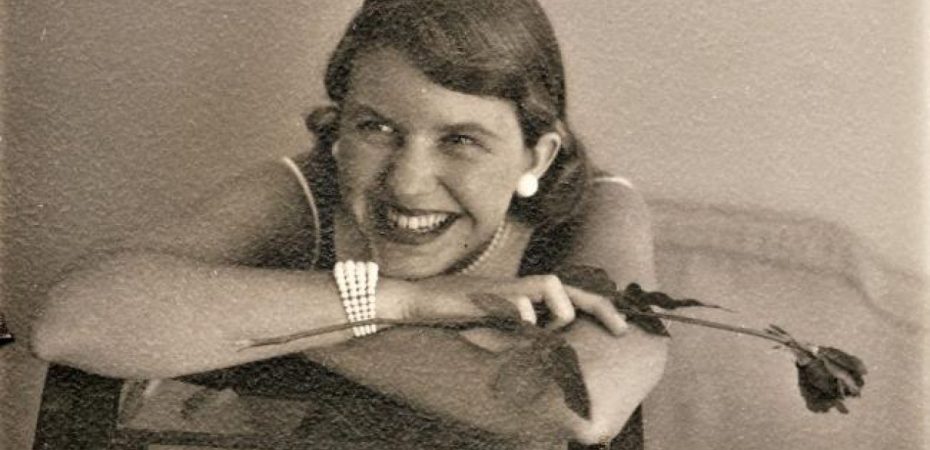
The creative worlds of Sylvia Plath are dark ones, indeed. Often speaking about depression, identity, and isolation, her work is truly haunting in its raw portrayal of her mental health, especially when one knows the circumstances of her death. Born on the 27th of October, 1932, she was an American-born poet whose works, such as Lady Lazarus, The Bell Jar, and Medusa, have become renowned within the literary community.
This poet holds a very special place in my own writing journey, being one of the first I was introduced to. When you discover a writer, whose voice is so honest, so desperate to be heard, you find it difficult to ignore them. Such was the case for me upon my discovery of Sylvia Plath.
My first reading of her work was through her poem Cut, a vivid tale about the narrator accidentally slicing into their thumb. With striking imagery and a (surprisingly) humorous tone, Plath details the running of blood and thumping pain that ensues, giving a nod to her mental instability. She begins the poem with ‘What a thrill.’ This opening creates anticipation for the reader, with the juxtaposition of the light, comedic word choice working against the action of her cutting off her thumb. Throughout, the speaker’s self-loathing and detachment from her body are clear, with the imagery personifying the injured thumb as a ‘little pilgrim’ having their scalp axed by Indians. This creates a grotesque scene, making the damage of the cut apparent. Describing the event later on in the poem as a ‘celebration’ also suggests her familiarity with pain. What is striking throughout is the violent descriptions of ‘soldiers,’ ‘pilgrims,’ and the way that her white bandage is likened to members of the ‘Ku Klux Klan,’ as if to symbolise the invasion of pain and injury. By the end of the poem, the narrator’s familiarity with pain, and her detachment from her own body are apparent.
Meanwhile, in her poem Thalidomide, Plath depicts the emotional turmoil that the narrator, the mother feels, having a deformed baby thanks to the titular drug. Written in short, but punchy lines, two per stanza, with dashes scattered at the end of certain lines, this setup could signify the emotional turmoil of the mother— her mind racing, feeling torn between love and disgust for a disabled child she likely did not expect. The text opens by describing the disfigurement of the child: ‘O half moon—.’ This is an interesting line to open with, portraying how incomplete the baby is, and as the poem progresses, this becomes heightened through the line ‘Negro, masked like a white,’ depicting not only its disfigurement but also how alienated it will become through society. As African Americans were viewed as lesser during the period in which Plath wrote this, her describing the baby, a white baby, in this manner further drives in how judged and mistreated it will be, not receiving the same privileges as the majority of the white populous. Using words such as ‘crawl,’ ‘appall,’ ‘spidery, unsafe,’ creates the image of not a child, but , in fact, a thing. We do not think of just a baby crawling, but something disturbing, with thin legs that, instead of spreading delight, disgusts. The mother of this child understands these feelings, she knows that others will have negative reactions towards her child, and yet she states how, ‘all night I carpenter a space for the thing I am given, a love,’ this shows her fighting to find a place in her heart for her disfigured child, clearly torn between societal views towards those considered different, and the love she feels, or is supposed to feel for her child. Even after such vivid descriptions of the child’s disability and the mother’s struggle, the poem fails to end on a positive note, concluding with a ‘glass crack[ing],’ depicting not only the horror of the child but the fragmentation of the notion of a normal, happy family. This shows how difficult the child’s life will be, and the internal struggle the mother will grapple with throughout raising it, as the challenges and judgement they will face are apparent.
As I mentioned briefly, Sylvia Plath’s work is often bleak and confessional in explaining her own struggles with mental health and trauma, but one must wonder where this trauma ties back to. Her poem titled Daddy offers insight into her life, her relationship (or lack thereof) with her father, and how this shaped the way she was. Her father died when she was only eight years old due to diabetes, and in her poem, we see how she initially idolised him, though as the poem goes on, her views of him darken, as she compares her father to a swastika and a Nazi. Beginning with ‘You do not do, you do not do any more, black shoe in which I have lived like a foot for thirty years.’ This repetition emphasises the speaker’s former entrapment in the memory of her father, as well as creates a sort of sing-song rhythm that contrasts her age. The mention of the narrator living in a shoe for thirty years makes evident her failure to move on, possibly even suggesting her attempt to fill her father’s shoes, which, as a result, drives her deeper into depression. Further into the poem, we see her childhood views of him remain, mentioning how she ‘used to pray’ to recover him, yet has now killed him. Writing this piece was arguably Plath’s attempt to gain closure from her past, as she wrote this poem only a month after leaving her husband, Ted Hughes, and only four months before committing suicide. As we read on, we begin to see her father as this oppressive, even predatory figure. As I touched on previously, she likens him to a Nazi, meanwhile, Plath imagines herself as a Jew, describing the German language as ‘an engine, an engine chuffing me off like a Jew. A Jew to Dachau, Auschwitz, Belsen.’ I interpret this as further emphasising Plath’s mental struggles, with the listing of the most well-known concentration camps meant to signify how trapped she has been by her father’s memory. Her father, described as the ‘Aryan eye’ Nazi, is undoubtedly the oppressor in her life, the trauma of his death churning around in her mind, picking away at her until she is as frail emotionally as a Jew put to these camps. Though with the mention of Plath’s former husband, Ted Hughes, and how he and her father are alike, we can see this through the way she likens her husband and him to a vampire: ‘If I’ve killed one man, I’ve killed two— the vampire who said he was you and drank my blood for a year.’ This shows how Plath set out to find a man like her father, she idolised him and loved him. But when like a vampire, he sucked the joy out of her and made clear his true self, she saw how much she had searched for a man similar to her father in order to feel the connection lost early in childhood. Essentially, this poem could be Plath’s way of renouncing her father’s control over her mind, offering herself a sense of solace and the opportunity to move on.
Moreover, Lady Lazarus is the poem by Plath that I find the most hauntingly enchanting. She begins by announcing that she has killed herself and came back to life once again, a once-a-decade occurrence, happening when she was ten, twenty, and thirty. It is described how she is covered up by a napkin so to hide the grotesque image of her dead body, but soon, she will be restored to ‘a smiling woman.’ She details how a crowd files in to gawk at her as she is revealed as if it were a ‘big strip tease.’ This conveys the lack of empathy society had for suffering women, as they sought to view her ‘scars.’ Addressing those who brought her back from death as ‘Herr Doctor,’ ‘Herr Enemy,’ we see the lack of agency she is given, as her death is something she desires, something akin to a destiny that those around her don’t grant. These figures bring her back, calling it ‘a miracle,’ but as she is reborn ‘out of the ashes,’ like a phoenix, she declares that she will eat up these men like air. This is a poem that makes clear the speaker’s pain, which she tries to overcome through the act of suicide, but continually fails. Throughout, the reader feels sympathy and worry for the narrator, with Plath’s emotional distress and frustration apparent. Knowing what we know now about Plath, her life, and her death, the poem becomes all the more upsetting, as we see how many times she was failed and pushed to breaking point, constantly suffering with the demons of her past.
Overall, Plath’s work sheds light on a woman crying out for help, using her writing as an outlet. She was a poetic genius from an early age, having her first poem published at just eight years old, and going on to experience further success before graduating high school, selling a poem to The Christian Science Monitor. She went to Smith College through a scholarship in 1951, having notable success there, though her mental health also struggled, and she dealt with depression and a failed suicide attempt before being sent away for psychiatric treatment. After graduating, she studied in England, where she met her husband, Ted Hughes. The couple had two children together before separating in 1962 after it came to light that Hughes was having an affair. The last few months of her life proved to be challenging, wrought with depression due to the separation from her husband, as well as taking care of her children. She poured everything she had into her writing, reaching out to friends for support. Her final letter was to Beuscher on the 4th of February, 1963, where her desire for a divorce and to shed control of her husband was apparent: ‘Now I shall grow out of his shadow, I thought, I shall be me.’ However, her wish to be herself and to start afresh came undone, as on the 11th of February, after putting her children to bed, she turned on her gas oven and let the carbon monoxide poison her. Her life ended tragically, with the end of her abusive marriage to Ted Hughes becoming too much on top of Plath’s rocky mental health.
Although her life was not an entirely happy one, Plath’s memory has lived on in her work. She has inspired many (me included) to take an interest in poetry, whether it be through reading, or writing. Her novel, The Bell Jar,is also an interesting read in allowing a deeper understanding of the writer’s mind and struggles, allowing people in a similar mindset to her to connect with her writing, feel heard, and not as isolated as she once felt. I recommend that readers take a chance on her work, as her compelling imagery does more than display a pretty picture; it tells a story of a struggling woman offering access to her troubled, but brilliant mind.
Discover more from Decadent Serpent
Subscribe to get the latest posts sent to your email.
