
The interview was conducted by Giulia Prodiguerra.
Emma Ramsay – Writer /Director
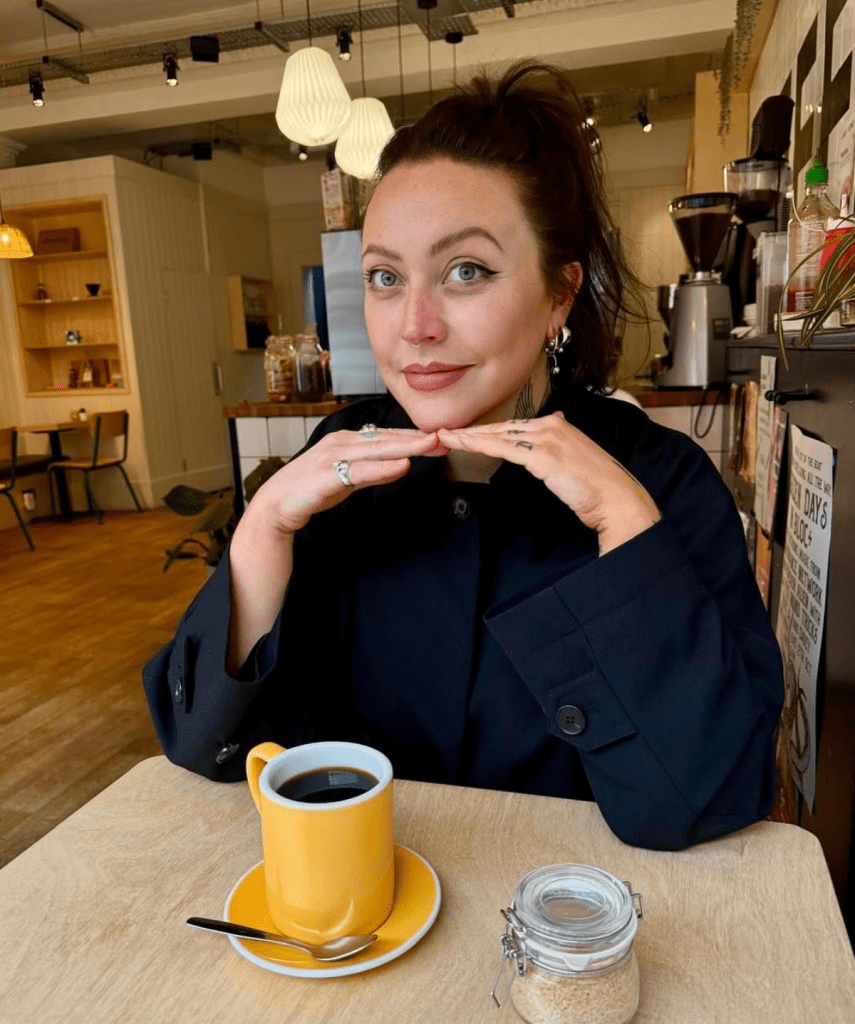
Emma is a screenwriter/director represented by Independent Talent. She has worked in television drama development for a number of years before turning to writing and directing full time. She’s developing original comedy/horror ideas with various production companies. TV writing credits include CBBC sitcom NOVA JONES and BBC’s RIVER CITY. Her short work includes micro musical ‘DONNA’, screened at EIFF and GSFF and her directorial debut short film ’IN HER CORNER’ which premiered at the British Shorts festival in Berlin. She was a BBC Scottish Voice of ‘23 and is currently on their PILOT scheme for 2024 working with SYNCHRONICITY.
Hi Emma, thanks for being with us! Let’s talk about Poly Baggage, your latest work where cutting your heart out takes the most literal meaning. What is it about and what can we expect?
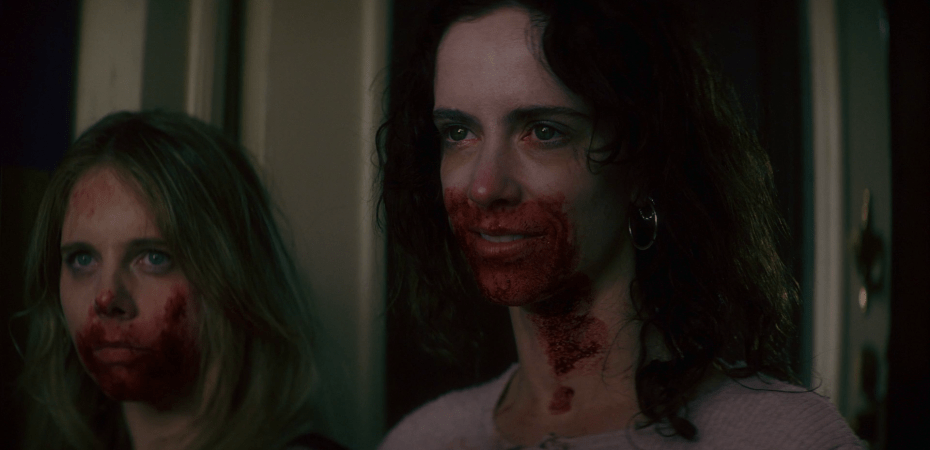
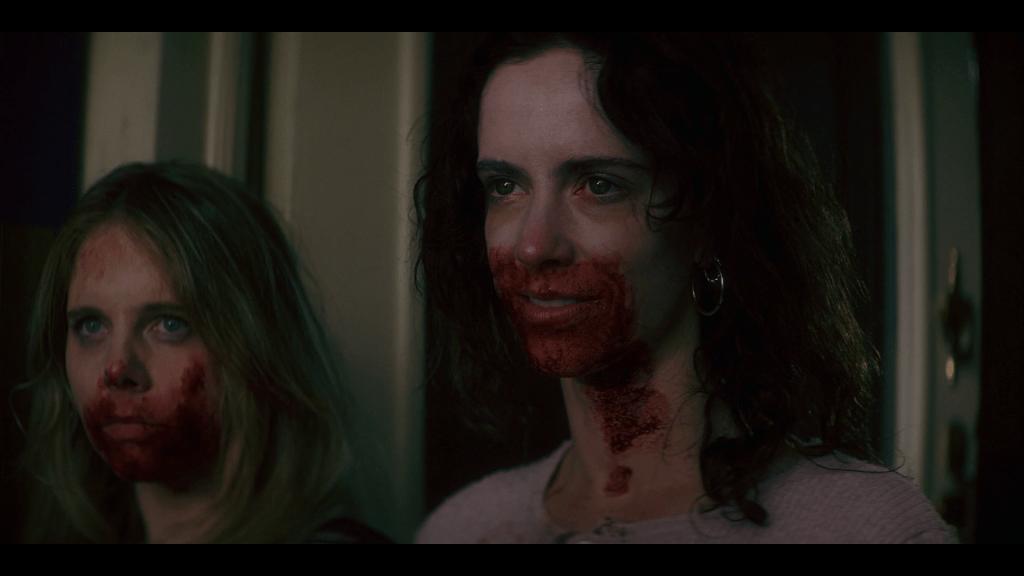
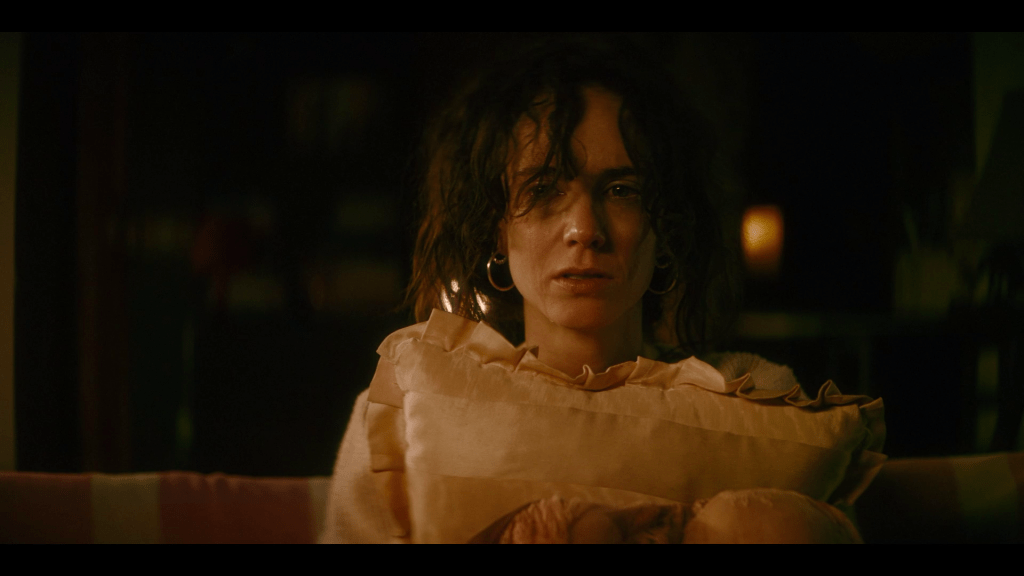
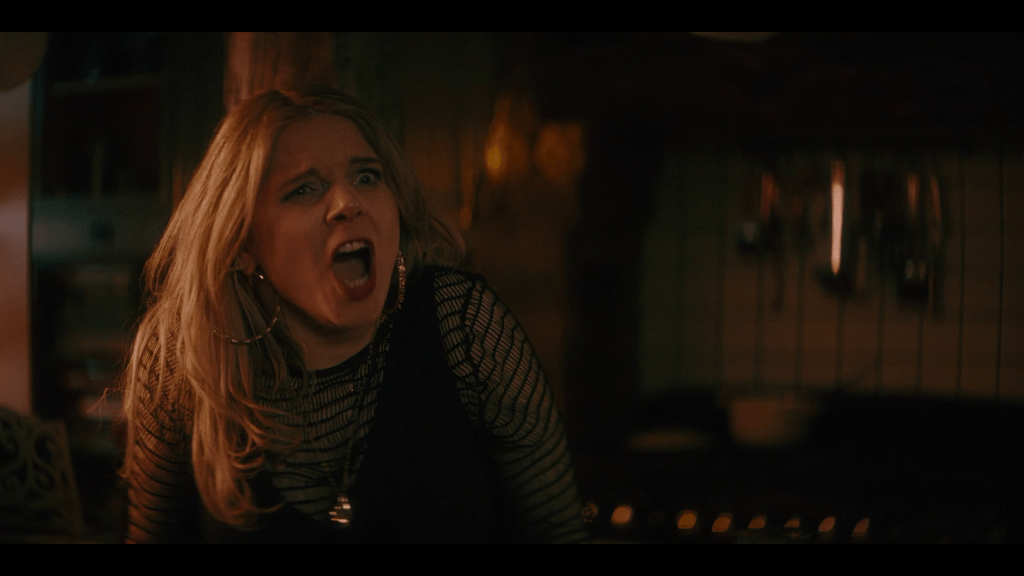
Thanks for having me! Poly Baggage is about romantic heartbreak. The protagonist Poly is at the height of grief following a break up, so she decides to cut her heart out, to avoid the pain of this heartbreak and any subsequent ones. Poly’s best friend finds out what she’s done and tries everything in her power to reverse the process and put her heart back in. And that’s when things get gross. It quickly becomes a film about female friendship, or just friendship in general that happens to be between females.
You can certainly expect a lot of heart, figuratively and physically. I think that heartbreak feels kind of horrible, it’s a truly physical experience. Your heart doesn’t control your emotions directly, but you feel that pain, that hole in your chest: life would be easier if you could cut it out. Despite the darker stuff, it is not scary, there’s humour and gore, the real scary part is the intensity of the emotions, especially for the protagonist. Nothing about this film is subtle, it’s both a metaphor and a physical experience of loss and grief when it gets too much. But there is also a glimmer of hope in it, also represented by Poly’s best friend who comes to the rescue.
Where did the idea come from, and how did it develop?
It comes from a very personal and raw place. I went through a really formative relationship breakup, a relationship that really changed me, my nervous system, my whole idea of who I was. I felt like there was no point anymore, living a normal life again seemed impossible, while the rest of the world didn’t seem to care. Of course they wouldn’t care, as it’s a very intimate thing a singular person is going through, nobody else gives the gravity, but I felt the loneliness and isolation of it.
Same as for Poly, my best friend dropped everything to come around and rescue me, allowing me to feel myself again and see that things could get better.
How did the pitch and development process work?
I applied to the Short Circuit scheme, one of the numerous iterations happening in Scotland. I applied with a 500 words synopsis, breaking down the beginning, middle and end of the story. It was a challenge to condense everything in a short space while keeping it really simple and clear. After the submission, I got selected and the development process started. I started working on developing the script with guidance and steering from a mentor. I am used to writing longer form stuff, so going back to that shorter structure of a maximum of 13-14 pages (the short is 13 minutes long in total) was a challenge. Especially because I wanted to include humour, and the jokes are usually the first thing to go. However I was concerned that it would take away the balance of the overall tone of the short, making it either too serious, melancholic, or just boring without that added levity. My mentor was Alice Low (Timestalker, Prevenge) whose really specific quirky style of horror I very much enjoy. She punched the script up so much, and gave me so much confidence about being fearless: it doesn’t matter if your script makes sense or not, just do the bold thing, be honest with yourself and your audience about your intention and the spectators will resonate with it.
I’d say that supported schemes are really good for this: they’ll interrogate and dissect your idea, so by the end of the process, you come away with something that works and you can feel confident with. Now you just have to make the bloody thing.
On the practical part of Poly Baggage, what was the greatest challenge during its production?
Time and money: there’s never enough of either. On the financial side, I was lucky to be encouraged by the Short Circuit team, since my piece has both horror and comedic elements, neither of which funders are chomping at the bit to give money to. There’s always going to be risks involved with the uncertainty, and it can be hard to put your money where your mouth is and say “No, this is what we have, it’s going to be good.” They made sure to challenge my work and ensure that I was as ready as possible for that, which meant re-working the script over and over again. Before Poly Baggage was green lit, I spoke to Amy Manson (Misfits, Raw, Rebus) at the Scottish BAFTA ceremony. I told her how much I loved her work and she was really receptive. I think she’s just a big supporter of Scottish Talent in general, and she came on really early on the project as a collaborator. She went through multiple drafts of the script, we had several calls and managed to build a fruitful professional and personal relationship, and that helped setting the bar really high for the script, but also meant loads of work to ensure it was in the best place possible.
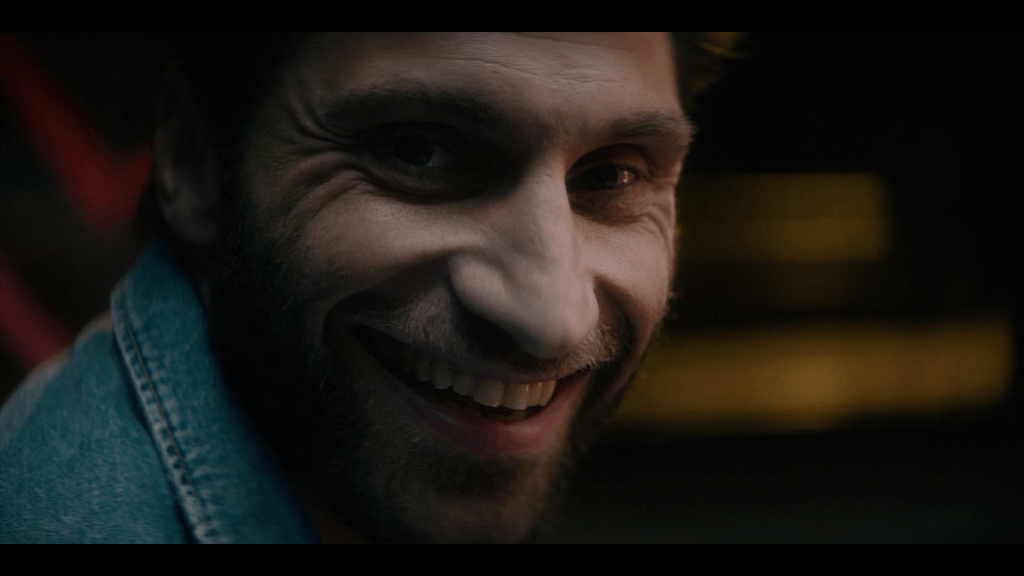
Another challenge was the special effects, which in our case were all practical. I am a big fan of practical effects as they stand the test of time (Jurassic Park still looks real) and makes the overall interaction and level of details far more realistic.
I was lucky to bring in Sean McDonald, with whom I have a solid and trustworthy relationship and who elevated the production value so much. He had so many shortcuts which allowed him to make really complicated stuff happen quickly.
The issue with practical effects is that they can be unreliable and might not work on the day that they should, or not in the way that you planned, and you don’t have the finances or time to rearrange additional tests and reshoot.
Is there anything you would have done differently in Poly Baggage or that you’re perhaps planning to explore more in another project?
I try to not pull that thread of what we could and couldn’t have done, since if you start with it you will pick the whole work apart, whereas I am really proud of the final result we achieved and that it works well even without those details. The movie didn’t rely on those details, they just made it more visceral. I have to remind myself the spectator might not even notice from their external point of view. I thought that the concept itself as a short movie since it has a beginning, middle and end, and I feel like it’s now done and I can move on from it. I am excluding that I’d pick up the general theme again, since I write a lot about heartbreak (I am a massive emo at heart) but not in this specific guise.
As a horror writer, where do you draw the line as to how far you are going to take a specific scene or theme?
I don’t personally draw any lines, although I am not a fan of gratuitous gore and violence. The feature film I am currently working on is the strictest horror I have ever written, but even the worst and most disturbing things there, I perceive them as horrifically sad. I recently watched a movie which I thought was done in exceptionally poor taste regarding this, and it made me feel very uncomfortable. But it’s done reasonably well, all of this is art to someone, I personally just trust my instinct or barriers based on the specific story I am working on. I don’t write from a place of spectacle of shock, I try to write from a place of truth. I find the world to be a truly scary place, and that’s why I think horror elements infiltrated my work. I consider myself a drama writer who dips into horror. I don’t set out to scare, but to connect and empathise with the darker sides.
What would you say is the biggest challenge for movie creatives based in Scotland at the moment?
The TV and cinema industry more in general is precarious, I think that one of the main challenges is that there’s never enough money. It can be hard to survive on your own money until you get a break, and then it can be months until you get another one again. There’s plenty of contests and schemes going on, but it’s a lot of graft to go through each of them, and often being selected just comes down to the luck of the draw. I believe that on the other hand it is freeing to understand that there are several other factors at play that are conducive to your specific body of work being selected, all you can do is show up, do the things that appeal to you and let it go. This comes also with a heavy mental challenge, of keeping doing it even without the prospect of success. It’s a double edged sword, where you have to love the craft enough to do it for free otherwise you’ll never get paid to do it. I work a hospitality job to support myself in between projects, as I need the income but also the flexibility to take time off when the call comes. I live in this sort of limbo trying to survive until the next break. On this specific topic I’d recommend the Just Get a Real Job podcast by script editor Jamie Mackinlay, which offers a great insight on the state of the industry right now.
What would you advise to someone looking to enter the film industry?
You need to have thick skin and not get discouraged. When I was at Uni, one of my lecturers kept repeating: “You know, you’re not all going to make it.” I actually found that really unhelpful, we wouldn’t be in this position if we didn’t already know it was unlikely for us to get the big break. I’d say you have to be really honest with yourself: can you take a lot of rejections? I am a determined little s**t, my confidence gets battered but I am good at picking myself back up and continuing. Apply to everything, every year, whether they say no 10, 15, or 20 times. I applied to Short Circuit several times before and was never shortlisted. There are numerous initiatives for this (along with Short Circuit, Open Call, Creative UK, Channel 4 Screenwriting just to mention a few) and I wouldn’t be here without them. Remember that even if people are saying no, it’s maybe a “not yet” or “not this time.” Even if you have to moonlight at another job to support yourself, change your mindset that you are a writer who needs to pick up the odd shift to support their career, even if that odd shift is a full time job.
What was your personal and formative experience as a writer and director? Do you think it’s fundamental to have a formal education when entering this industry?
I don’t think you strictly need it, however it was useful to me and certainly helped, so I believe there isn’t a unique answer to this as it really depends on the specific person and what their background is. The most important thing I got from my master’s degree was a grounding in the industry: I knew nothing about anything, and I got the opportunity to do internships. I was working full time, while studying for my master’s degree, and for every opportunity I would take a holiday from the day job. I started volunteering to put the chairs out at an animation festival, which led to me being asked to come back and work at the festival the following year, then I was asked to be on a panel at that festival, and eventually I met an animation company who gave me the chance to join the writer’s room. All this came from volunteering through the university, which opened up my eyes to opportunities I maybe wouldn’t have got otherwise. Having that practical experience also allowed me to in turn get more working and development opportunities for other internships, and so on. I personally can’t untie myself from formal education but I still don’t think it’s mandatory to go through that. I have colleagues who don’t have any formal education and are doing great in the industry. For example, James Price (Concrete and Flowers, Boys Night) he’s an avid cinephile, with his own knowledge and unique taste and is able to write gorgeous stuff. Nobody sat him down and explained to him what a 3 act structure was, he learned it himself and did the work. My advice would probably be to go study something else that you’re really interested in and keep filmmaking as a hobby (unless you’re looking for a specifically technical role) so you can bring additional knowledge of history, English, and politics to the table. I’d also say that you’ll never learn scriptwriting better than by reading screenplays. My job for 5 years was to read screenplays, at least 10 scripts a week, and read them with an active mind. What worked? What didn’t? What is my taste and why didn’t I like that specific one? One of my mentors told me that the only currency you have in this industry is your opinion and your perspective, so spend it well.
What would you say are the biggest rewards of this type of career?
Definitely not the money or the stability, it’s a labour of love and a complete privilege to be able to do that. You’ll meet so many people you’ll click with, and you’ll build an amazing professional and personal network. If you’re making something personal, which most of us are, when you get feedback about that, you feel less alone, you feel seen. I love that also connecting with other people through my work can create ripple effects by connecting with the viewers.
What are your main creative inspirations?
I am an emo at heart, a product of the melancholic emo-goth culture from the 90s and early 2000s. But I am also into silliness, Disney and Pixar movies were a big part of my childhood. I have to this day a soft spot for animation, the way it’s used to frame and freeze the characters’ actions to convey certain emotions, and I love how it cuts into the core of big emotional ideas in simple ways both adults and children can enjoy on different levels. To me Tim Burton really nailed that combination of goth and silliness I enjoy. I’d say he’s one of my biggest influences and I can identify a kinship in tone in my work. Other movies that really inspired me are Death Becomes Her, Constantine and Dogma. Especially for the last two, I like how they take massive philosophical concepts and ground them in the real world.
What are your projects for the future?
The feature horror film I am writing is currently in the development stage, and the most serious one I’ve ever written: it’s a period piece set in Scottish mining in the 1950s, there are elements of drama but also a monster. It’s quite violent and has disturbing elements, for this one I find myself thinking where the line we spoke about is, and I have not found it yet.
Check out Poly Baggage IMDb page for the release date!
Discover more from Decadent Serpent
Subscribe to get the latest posts sent to your email.
