

Author: Gavin Duffy graduated from Strathclyde University with an MSc in Historical Studies and has had a general thirst for knowledge from a very young age. His main passion turned towards history which led him to his degree and also his work in museums such as the David Livingstone Birthplace. He has a wide range of interests both academic and non-academic and has a strong belief in exploring the fullness of life and the world.
On the 2nd of August 1943, a revolt broke out amongst the prisoners of the Treblinka death camp. The Treblinka uprising would become one of the key pieces of active Jewish resistance to the Holocaust and connect itself to both the wider Jewish and Polish legacies of resistance to Nazi Germany.
Treblinka was a complex of two camps in the Mazovia province of Poland which also contains the capital Warsaw. The two camps were a work camp and an extermination camp respectively, the latter being one of the deadliest extermination camps built by the SS, with some estimates of 900,000 Jews being taken to the extermination camp and less than 100 surviving. All of these survivors were escapees of the rebellion, who managed to flee the camp into relative safety.
Jews, and a smaller number of Romani Gypsies, were usually murdered on arrival at the second camp with a select few being given the role of the Sonderkommando. The Sonderkommando were the logistical corps of the gas chambers. They were mostly Jewish prisoners, who were deemed to be strong enough and were selected to handle the operation of the genocide. This included herding prisoners into the chambers, removing dead bodies after they had been gassed, removing gold teeth with pliers and then incinerating corpses, all at the threat of execution by the SS or Trawniki.
The psychological torture of this role was twofold: prisoners were forced to partake in horrific crimes against humanity which often drove them to madness. Stories of Sonderkommando finding relatives or friends amongst the heaps of mangled bodies that met them were not uncommon. Prisoners were always in a precarious position, as the SS didn’t like the Sonderkommando working for too long and would often execute them arbitrarily to stop them from being able to spread information to the labour camp. The psychological weight of knowing that they could be murdered at any moment also lay on the prisoners’ minds.
Despite the immense physical and mental strain these men were put through, these Sonderkommando units in Treblinka would come to organise themselves into a force that would attempt an uprising against their Nazi slave drivers and attempt to escape in desperation.
The Rebellion
Fearing that they would be killed and the camp dismantled based on lesser numbers of prisoners being brought into Treblinka and news of German losses on the Eastern Front, the Jewish prisoners of both the ‘lower’ labour camp and the ‘upper’ extermination camp began to organise themselves into the Organising Committee, the secret group that would arrange and carry out rebellion.
The lower camp group found it easier to escape the watchful eye of the guards and also acquire weapons and organise a conspiracy in the first place. Several plans were formed by prisoners, including those who functioned as kapos in the first camp, but these early plans would hit one logistical obstacle or another. The upper camp found it harder to organise but had a greater urgency to do it. The Sonderkommando were certain that their days were numbered and that their deaths were imminent. They used the leverage of a threat of independent rebellion to get the lower camp to decide on a plan and stick to it, ending the squabbles and debates over plans within the conspirators of the lower camp.

The 2nd of August was thus decided upon as the date for the beginning of the uprising. The plan was to be kept of the utmost secrecy, and everyone was to be well-drilled to keep it secret. A normal day’s work would commence on the 2nd of August until the signals of two gunshots from the lower camp were given. Individuals were given certain tasks such as stealing guns and killing or distracting the guards and others were given the task of destroying the gas chambers. According to the testimony of one survivor Hershl Sperling, the date was picked as the guards would go to bathe in a lake and guns had been stolen and divided amongst the prisoners the night before.
The plans took a turn though. The SS had found prisoners with gold, extracted from the teeth of victims of the gas chambers and used to potentially bribe guards. When the SS started to take the prisoners away, the decision was taken to begin the fight at that moment. A grenade was used to kill the Nazi commander and men revealed their arms and fought against the Nazi and Ukrainian guards. This intense gunfire was not beneficial for the insurgents. The boys who had raided the ammunition room had only managed to steal a few guns and little ammunition so when the SS and Trawniki recovered from the initial surprise of the battle they were quick to gain the upper hand.
The gunbattle gave the prisoners’ side the advantage of chaos. Prisoners who were not involved in the conspiracy panicked and generally made their way towards the fences of the camp. They managed to destroy the camp fence with tools which gave the prisoners a window to escape into the forest given that the guards were distracted by the firefight that they were engaged in by the Organising Committee.
The signal was also given for the men in the extermination camp to likewise take action. They were initially dismayed by the outbreak of the gunfire, which they did not expect to take place for a while yet before it did, but they also sprang into action and managed to quickly overcome the initial SS and Trawniki guards. This gave them enough time to set fire to the gas chambers and other buildings and cut holes in the fences which as in the lower camp. Many of these prisoners managed to escape into some nearby fields and woods but not without being pursued by the guards from the camp, who managed to kill some of the escapees.
The Prisoners are Hunted
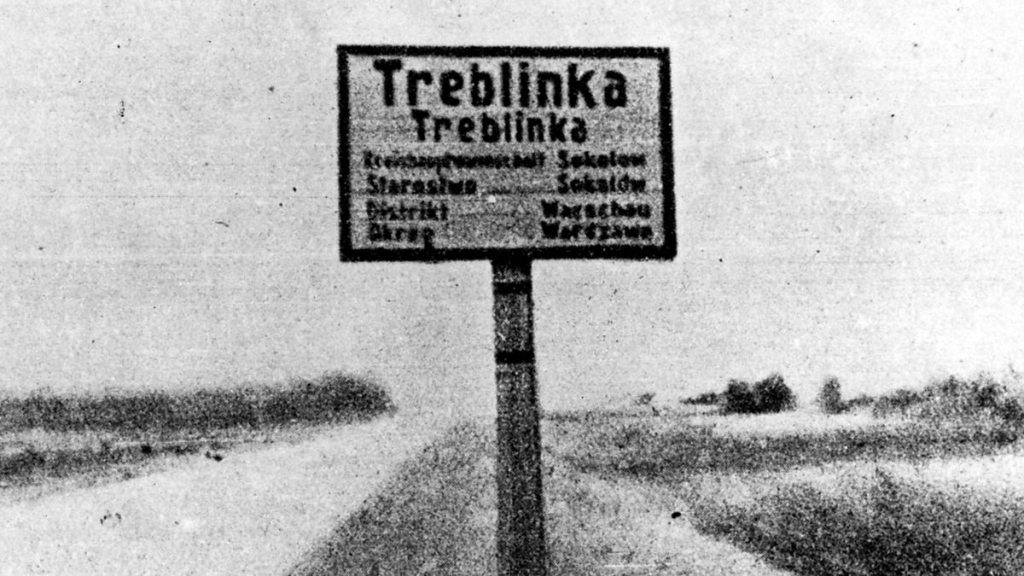
After their escape, the next stage for the escaped prisoners was to escape to safety. The guards were in pursuit of escapees which meant that they were still in mortal danger. Chil Rajchman’s memoir The Last Jew of Treblinka notes a Czech Jewish man who was hiding in the bushes with him while being hunted in the woods who slit his own wrists as he culminated to the stress of being hunted down by the guards. This death by suicide would also be the death of Alfred Galewski, one of the leaders of the conspiracy. In fact, none of the members of the Organising Committee survived, with all survivors being prisoners who made for the fences when they heard the gunfire.
The survivors realised that they could not survive and remain undetected in a large horde so naturally split up into smaller groups. Some found some safety in nearby villages. This was dangerous as the SS were searching through these villages and whether through fear of punishment for harbouring Jews or their own antisemitism, some Polish villagers may have worked against the prisoners.
The testimony of one survivor Hershl Sperling shows that some villagers were helpful, noting one woman who gave them food but not shelter likely to avoid detection. Sperling managed to escape on a train bound for Warsaw.
Most of the escapees were eventually rounded up and killed by the SS within a few days. Around 70 or so managed to escape the area and managed to live until the end of the war. The legacy of these survivors had a larger impact and helped to preserve the memory of the Treblinka camp in the face of its obfuscating destruction by the Nazis.
Legacy
The legacy of the survivors varied, both in the immediate aftermath and after the war. Some had managed to settle into hiding until the threat of the Third Reich stopped looming over their head. One account of a survivor named Samuel Rajzman involved him being sheltered in a farmhouse until the war’s end.
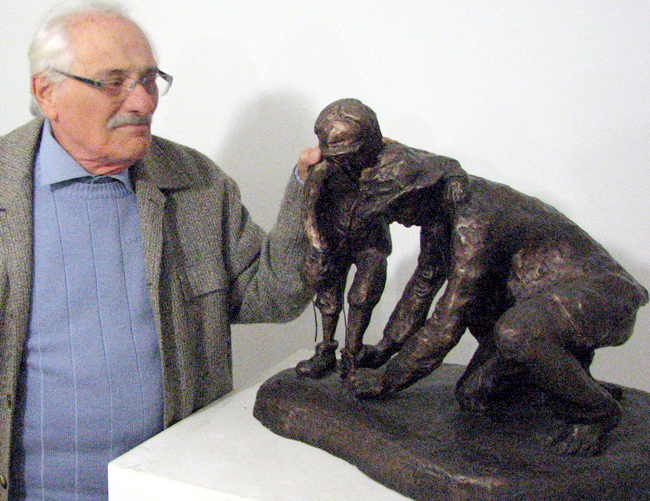
The other side of the coin were those who continued to take an active involvement in the resistance against the Nazis. The Polish underground resistance took the news of the rebellion very well, exaggerating the number of escaped prisoners and taking it as a victory that they sorely needed. One of the most notable survivors, Samuel Willenberg, joined the resistance, supplying arms to left-wing factions of the Polish resistance movement and eventually playing a part in the Warsaw Uprising. This made him a very notable figure in post-war Poland, as well as in Israel where the moved to, and he became a potent symbol of both Polish and Jewish resistance to Nazism. Willenberg also expressed his experiences artistically by making sculptures that reflected his time in Treblinka as a more avant-garde version of the Auschwitz Sonderkommando painter David Olere.
The Treblinka revolt ultimately serves as a reminder that Jews did not always passively accept their attempted annihilation with a resigned and defeated apathy as is sometimes portrayed in popular imagination. Instead, a living active resistance was to be found in spite of the crushing force of the Third Reich that stood against them. Ultimately this resistance won out and the horrors of the Third Reich succumbed to the Allied effort, and the men and women who had survived the horrors of Treblinka, Sobibor, Mauthausen, Auschwitz and others, provided a living testimony of the potential horrors of humanity and the hope that persisted against them.
Bibliography
Bomba, A.L. (n.d.). My Escape from Treblinka. [online] Available at: https://www.czestochowajews.org/wp-content/uploads/Czestochowa-1958-Book-Treblinka-pp-57-59.pdf.
Chil Rajchman (2021). The Last Jew of Treblinka. Simon and Schuster.
Gibbs, C. (2021). Against that Darkness: Perseverance, Resistance, and Revolt at Treblinka. [online] Available at: https://asset.library.wisc.edu/1711.dl/OJYCCUUOBCREW8I/R/file-832c6.pdf.
Holocaustresearchproject.org. (2025). Hershl Sperling testimony on the Treblinka Death Camp- http://www.HolocaustResearchProject.org. [online] Available at: http://www.holocaustresearchproject.org/survivor/sperling.html [Accessed 22 Jan. 2025].
Maher, T.V. (2010). Threat, Resistance, and Collective Action: The Cases of Sobibór, Treblinka, and Auschwitz. American Sociological Review, [online] 75(2), pp.252–272. doi:https://doi.org/10.2307/27801524.
Discover more from Decadent Serpent
Subscribe to get the latest posts sent to your email.
