

Author: Tyler Hummel. Tyler is a Wisconsin-based freelance critic and journalist, a member of the Music City Film Critics Association, a regular film and literature contributor at Geeks Under Grace, and was the 2021 College Fix Fellow at Main Street Nashville.
As I sat in my college classroom overlooking Daley Plaza in downtown Chicago, I had little thought about the film my humanities professor was about to inflict on me.
He had a habit of being puckishly clever and unconventional in his opinions, eager to ask penetrating questions to his students while still respecting them. So when it came to the cliche task of teaching a group of film students about Joseph Campbell’s Hero With A Thousand Faces—which half the screenwriting students would immediately misinterpret—he had to pick a film that would meaningfully challenge us for class discussion, rather than give us a cozy afternoon to watch Star Wars or Lord Of The Rings.
And in this context, the first infamous opening minutes of David Lynch’s Blue Velvet washed over the eyes of the students of Tribeca Flashpoint College. Admittedly, it was a tough watch, but not as tough as the other films my professors had inflicted upon my virgin eyes—Ingmar Bergman’s Persona, Fritz Lang’s M, The Passion Of Joan Of Arc, etc.

Blue Velvet is a film of luscious and brutal imagery, usually intermixed for maximum effect and with the subtlety of a hammer. An idyllic American suburb is disrupted by a man having a heart attack. The green grass covers a world of insects predating upon each other. A human ear is discovered in a vacant lot. Its title references a song sung beautifully by a lounge singer who returns home each night to be brutally sexually assaulted by a psychotic gangster who walks around snorting an oxygen machine (to which my professor made the obvious Darth Vader comparison).
I’ve never forgotten how he laid out the film as an unconventional Campbellian hero journey, as it gave this strange alluring film a grounding I wouldn’t have expected. The film’s symbolism isn’t hard to interpret upon reflection, as Lynch was clearly speaking to sadness and pain underlying the ideal of the American Dream in the late 20th century. As novelist David Foster Wallace once put it, the film offered a glimpse into the vibes of Reaganism, reaching deep into the underbelly beneath America’s suburban self-image to show that the vibe at the time was very much deteriorating.
But that journey was rooted in disappointment and revelation; of a young college student returning home to his hometown, being guided by an unconventional wise sage, and slowly encountering the underbelly of society. He’s allured into a sexual relationship with the femme fatale, finds himself receiving bizarre affection from the man instigating the situation, and comes out the other side of these events wiser and sadder for his trouble.
The image of suburbia remains intact, but he has stared into the abyss, survived, and has to live with the knowledge of it. There is nothing triumphalistic about this knowledge, just the reality of having plumbed the depths of humanity’s darkness despite the beauty around him. This set Lynch’s voice apart from his contemporaries Coppola and Scorsese, who were less reticent in their criticism of American society. Apocalypse Now cannot be described as alluring or melancholy because it isn’t rooted in a tragic sense that knowledge of that sort doesn’t make you better, nor does it embrace Wolf of Wall Street’s cynicism at a society that endorses unrestrained capitalism and praises frauds as heroes.
David Lynch was a terminally unreadable individual by nature. He was perpetually locked into a public persona that was effectively indistinguishable from the surrealist films he made. He owned his predilection of “saving” Woody Woodpecker dolls or requested Spielberg to pay him in Cheetos for his cameo in The Fabelmans because of their “incredible flavor”. As journalist Walter Kirn puts it,
“I couldn’t get a grip on him at all because there was nothing to grip. I’m not saying he was shallow, more that he was truly elusive, meaning the ‘self’ that was in there, supposedly, was simply that of an artist in his off hours.”
Despite frequent requests by the public for a means to explain his films, he perpetually declined to relent the secrets of his heart. At best, he would feed into the public’s image that his “Lynchian” style was just an affectation and that his films didn’t mean anything, but any serious delve into his work made it obvious that he was a deeply transcendental thinker mining the subconscious of the world.
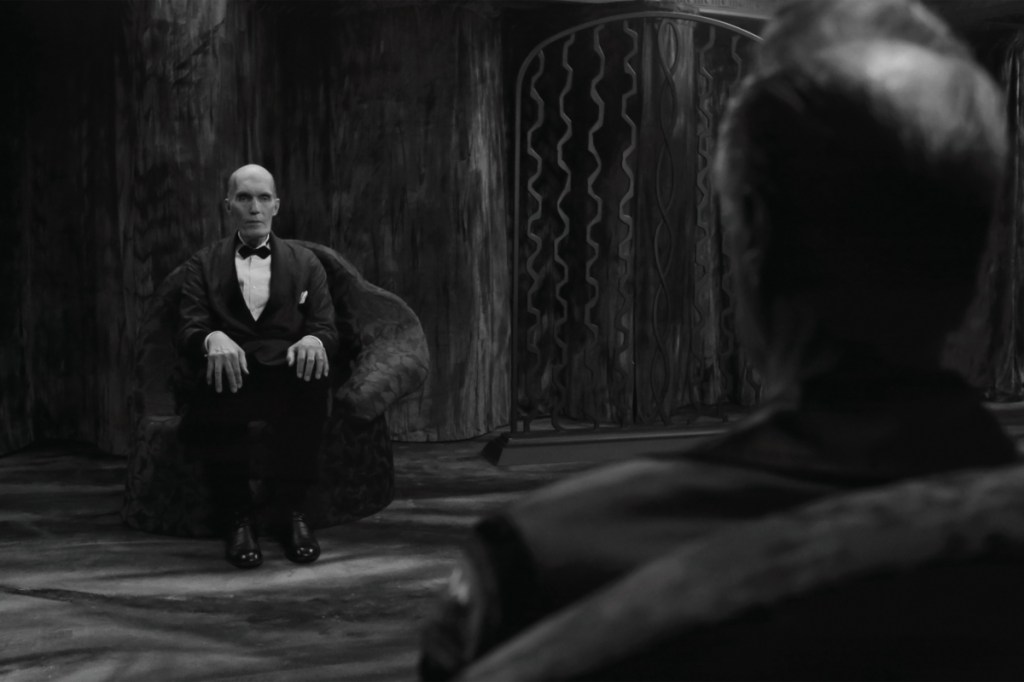
As he’s made clear, explaining his art would merely “limit it,” and wants his viewers to “think on their own” and grapple with his work unfettered. Thankfully, his 10 films and 3 seasons of television off many opportunities.
From the horrific anxieties of Eraserhead, to the dreamlike disdain for Hollywood in Mulholland Drive and Inland Empire, to the simple dignity of the common man he found in The Straight Story, Lynch’s unique perspective—his love for Americana, his sadness for human nature, and his bravery to challenge his audience—was spoken through one of the clearest eyes for cinematic language of any contemporary filmmaker.
It is a shame that his rumored final Netflix miniseries never saw the light of day, being cut short by lung disease and COVID delays.

His passing on January 15 at the age of 78 marks an incredible loss in the history of cinema; both as an auteur in his own right and as an inspiring human being. He was remarkable not merely because he was a free thinker—that rarest of things in modern life—but a successful one. His films were popular and recognizable. Twin Peaks was one of the most successful television shows of all time, with its 2017 resurgence marking one of the greatest moments in contemporary television. He was a successful populist surrealist and a voice that will never be replicated.
But more importantly, his passing has shown the best part of him. With his colleagues and friends writing beautiful (and occasionally surreal) obituaries for him, the world has been brought together for a brief moment in mourning for a filmmaker whose works were incredibly divisive and challenging in his lifetime. However, his death showed him to be a man of compassion and love. Through his passion for meditation, his cranky defiance of anti-smoking advocates, and his willingness to say controversial things (going so far as to obliquely praise President Trump on one occasion), he showed himself to be the rare sort of person that nobody has a bad thing to say about.
Lynch was never as elusive as he was perceived. But like a dream, he was never meant to entirely be understood. As he once wrote, “There is goodness in blue skies and flowers, but another force—a wild pain and decay—also accompanies everything.” Although as he later wrote, “I am searching for a good pair of pants. I never found a pair of pants that I just love … I’m working on it, believe me.”
Discover more from Decadent Serpent
Subscribe to get the latest posts sent to your email.
