
Author: Sarah Stook. Sarah is a writer for Elections Daily, The Mallard and other publications. She enjoys history, reading and fashion.
Throughout the centuries, we have seen numerous monarchs. From William the Conqueror to our incumbent Charles III, each has played a huge role in shaping our nation. Their burial places, as well as those of their consorts, span not only England but France, and other locations. Some are simple, and some are ornate. These are the resting places of these men and women, showing the beauty of how they are remembered in different ways. There is also the beauty in how many are laid to rest closely with their spouses, showing the number of monarchs who experienced love.
William I & Matilda of Flanders – Abbey of Saint-Étienne, Caen, France
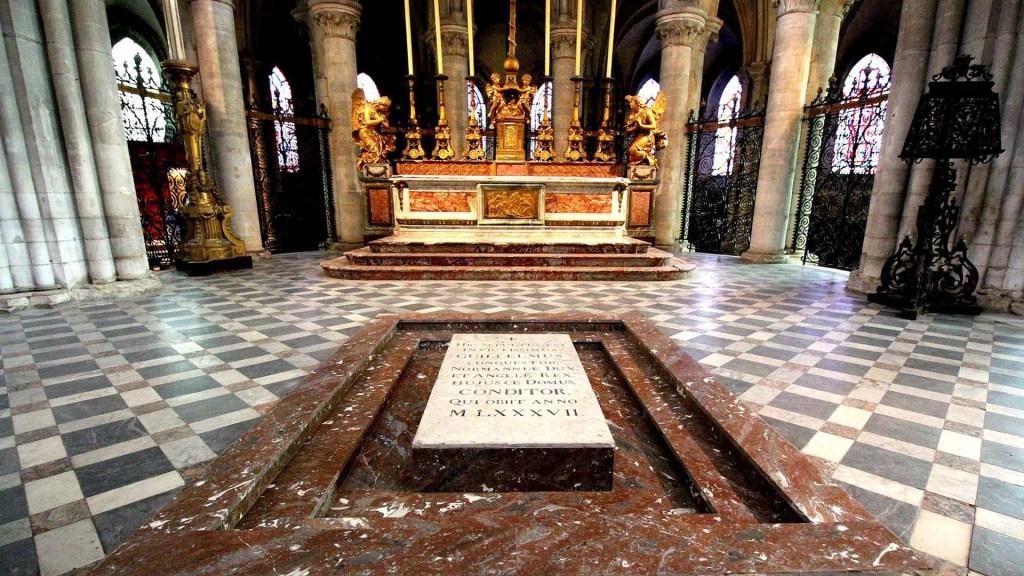
William I (or the Conqueror) died in 1087. The Abbey of Saint-Étienne was founded as penance for his marriage to Matilda of Flanders and it was where she was buried upon her death in 1083. After several disturbances that left only one of William’s bones behind, a Latin-inscribed ledger stone remains.
William II- Winchester Cathedral, Winchester
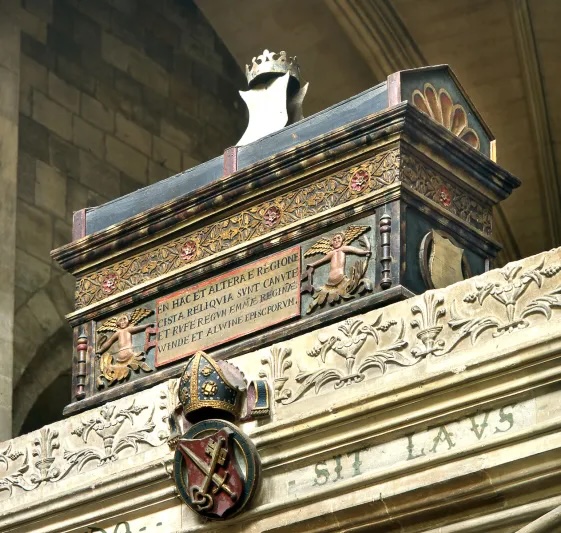
William II (or William Rufus) died in 1100. He was buried at Winchester Cathedral, but a tower collapse in 1107 was blamed on him, as he was considered a wicked and sinful man. His remains, placed in mortuary chests, were tossed around by a Parliamentary raid during the English Civil War. They were put back, but no one is entirely sure of the order.
Henry I- Reading Abbey Ruins, Reading
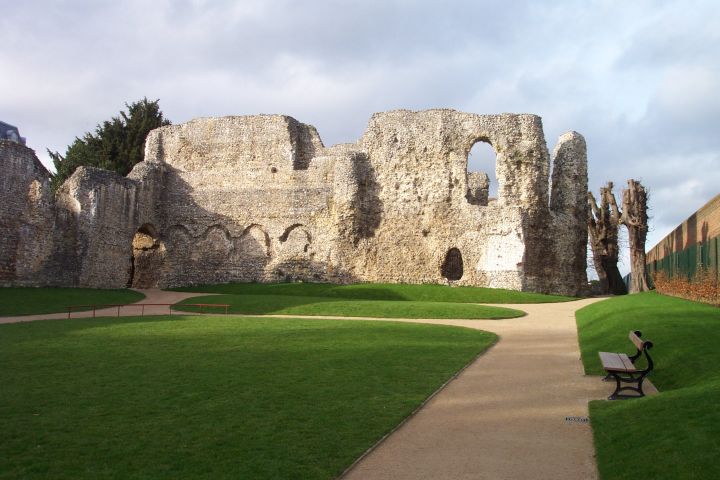
Henry I died in 1135. He was buried close to the high altar at Reading Abbey. Unfortunately, Reading Abbey was decommissioned and ruined during the Dissolution of the Monasteries. Historians, led by Philippa Langley who helped discover Richard III’s remains, are searching for the body. Some believe he’s buried underneath a local nursery. A plaque marks the rough area of Henry’s burial.
Matilda (disputed monarch)- Bec Abbey, Normandy, France (until 1846), Rouen Cathedral, Normandy, France (from 1846)
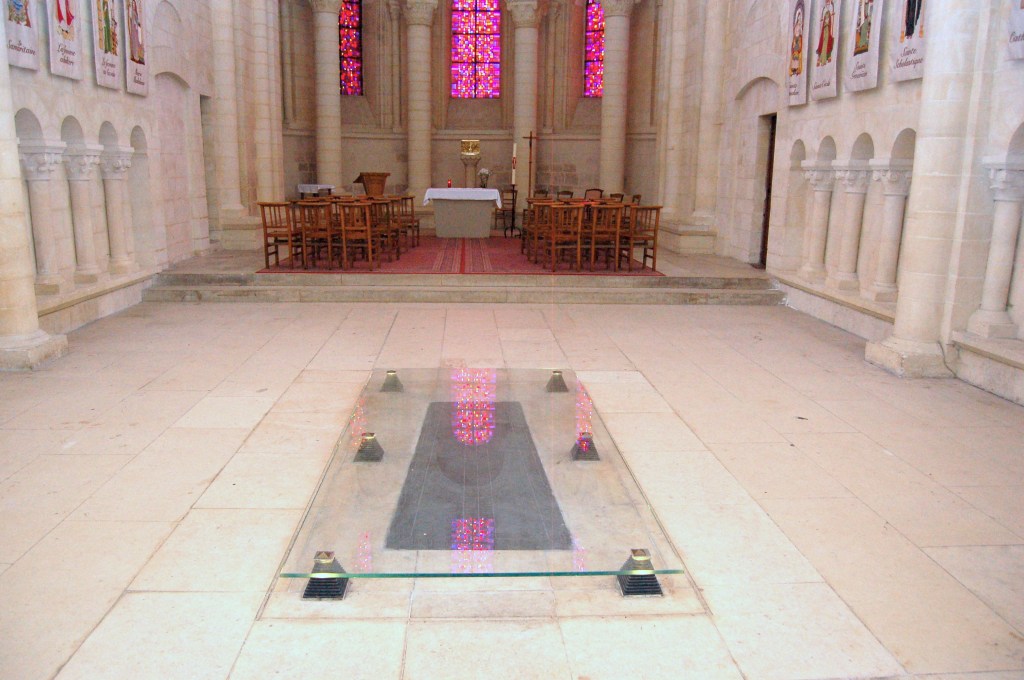
Matilda, the disputed Queen of England, died in 1167, after unofficially ceding the throne in 1148. She was initially buried at the high altar at Bec Abbey in France. Unfortunately, Matilda’s afterlife was as unpredictable and violent as her life. An attack during the 100 Years’ War saw her bones disappear. They were rediscovered in the 17th century, but the remains were lost again during the Napoleonic Wars. Finally, Matilda’s bones were re-identified in 1846 and placed in Rouen Cathedral, where they have remained since.
Stephen & Matilda of Boulogne – Faversham Abbey, Kent

Stephen died in 1154, a year after he officially named Matilda’s son Henry as his heir. He was buried at Faversham Abbey, which he had co-founded with his beloved wife Matilda, with whom he was buried. As the Abbey was destroyed in the Dissolution of the Monasteries, their bones were lost until they were rediscovered in 1964. A small brass plaque marks his burial.
Henry II & Eleanor of Aquitaine – Fontevraud Abbey, Maine-et- Loire, France
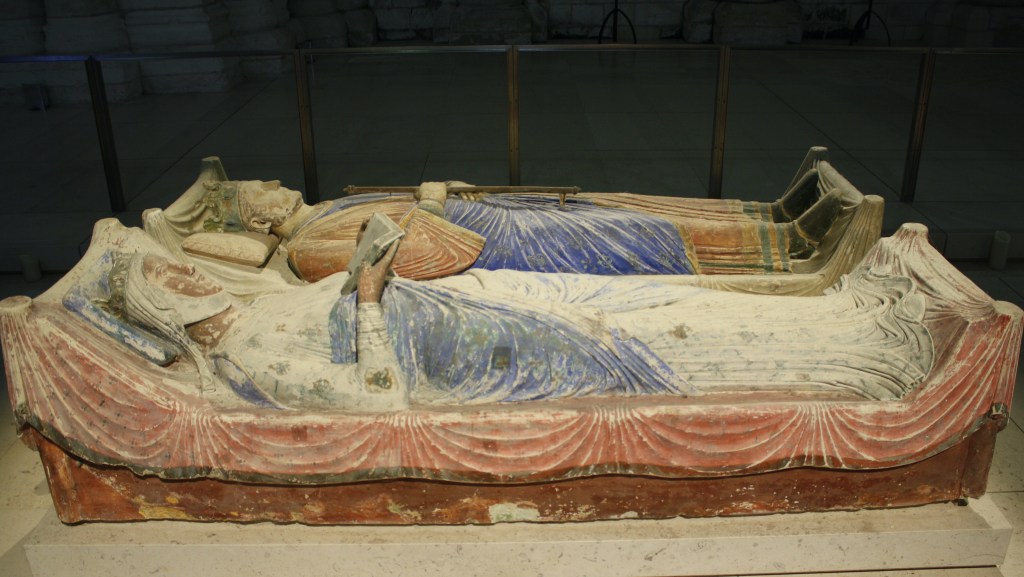
Henry II died in 1189. He was buried at Fontevraud Abbey in France due to its location being near where he died. The sarcophagus and effigy of Henry are beautiful and intricate and could be used to give us a clue as to what he actually looked like. The one of his wife Eleanor is also present, as is the one of his son Richard. Whilst the French Revolution saw the Abbey stripped down and turned into a notorious prison, the tombs were restored and are a popular destination for tourists.
Henry the Young King- Rouen Cathedral, Normandy, France
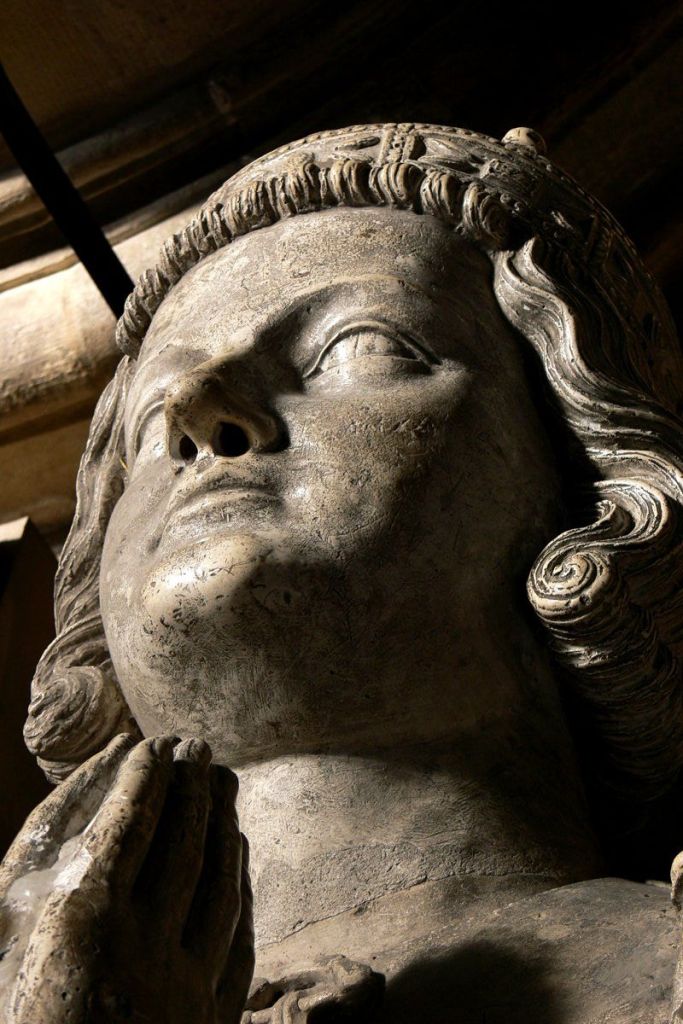
Henry the Young King, crowned by his father but without power, died in 1183. His remains are across from his younger brother Richard’s heart, and the sarcophagus is nicely carved and with an inscription in Latin.
Richard I- Fontevraud Abbey, Maine-et-Loire, France
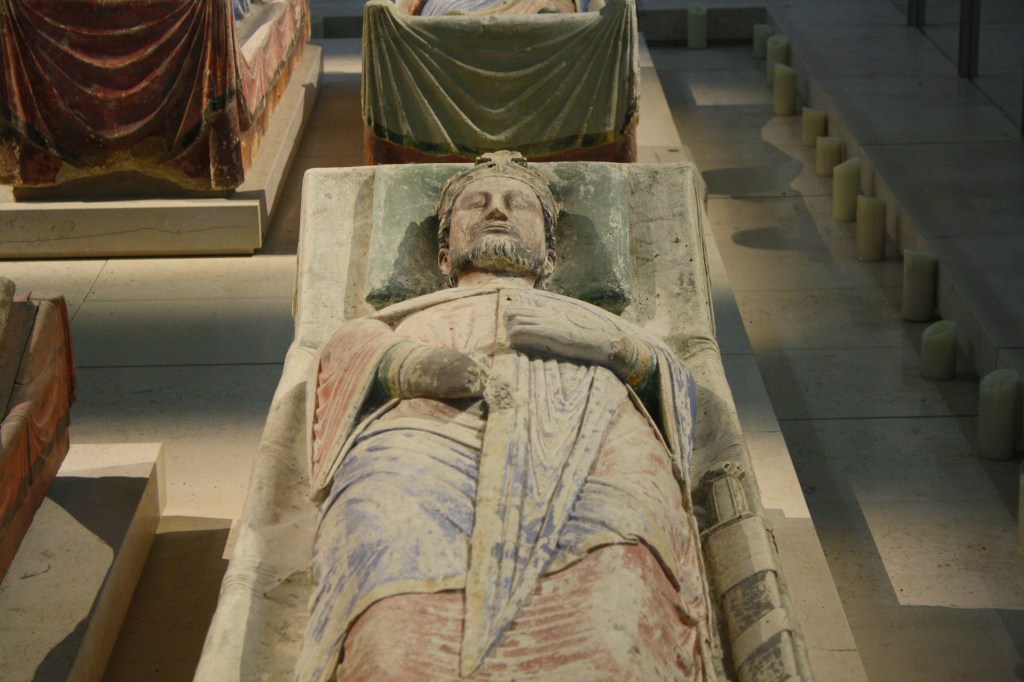
Richard I (or the Lionheart) died in 1199, having barely spent any of his life in England. He was buried with his parents at Fontevraud Abbey. See above for details. His heart was buried at Rouen Cathedral.
John (Worcester Cathedral, Worcestershire)
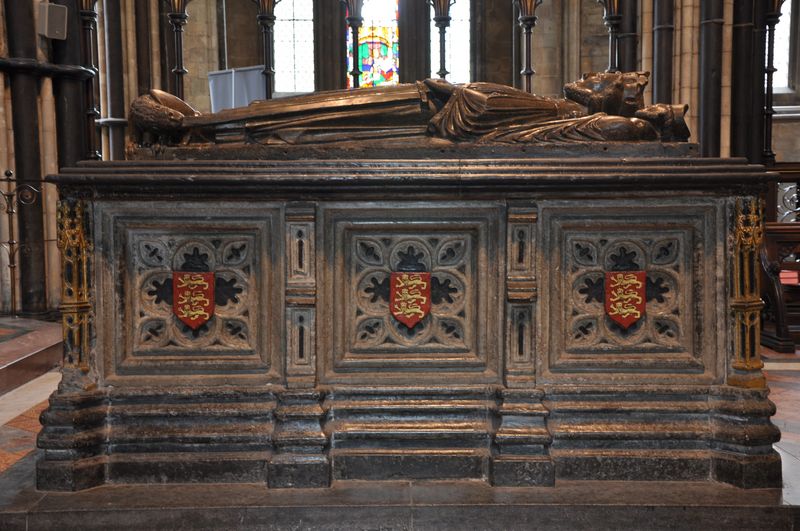
John died in 1216. He is buried at Worcester Cathedral in a tomb not quite as intricate as that of his family, with no words either.
Henry III- Westminster Abbey, London
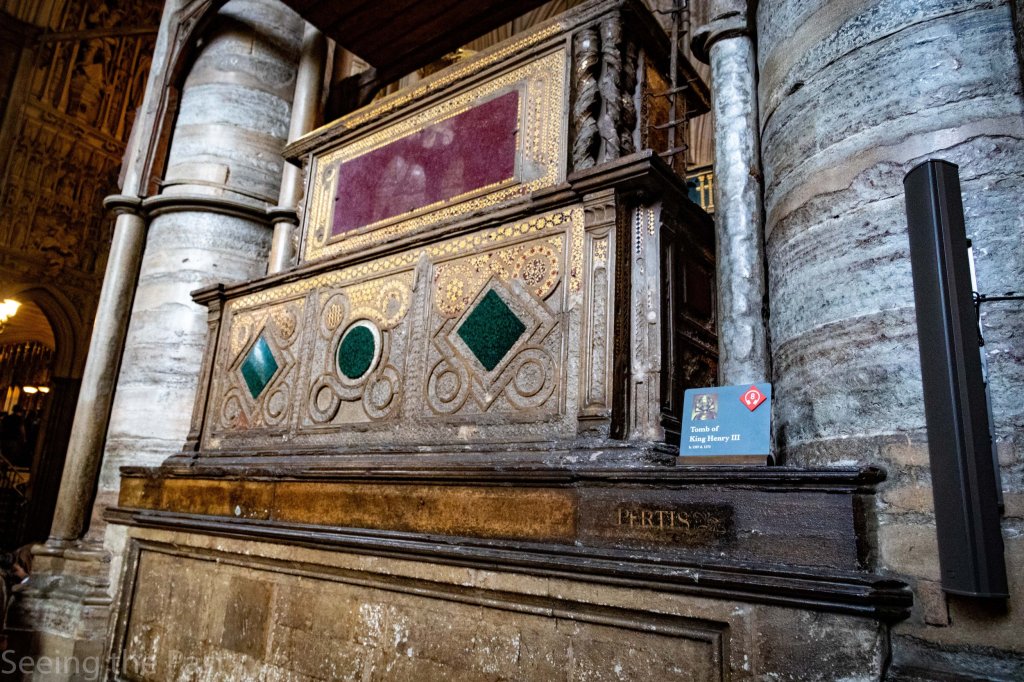
Henry III died in 1272. His tomb in Westminster Abbey sits high atop a raised platform and is made of brass. His wife Eleanor of Provence was buried at Amesbury Priory, Wiltshire but the Dissolution of the Monasteries means that we don’t know exactly where.
Edward I & Eleanor of Castile – Westminster Abbey, London
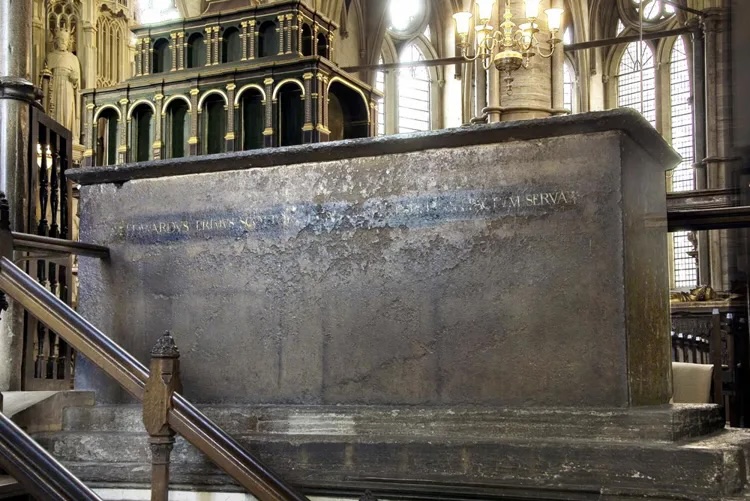
Edward I died in 1307. He is buried at Westminster Abbey in a very plain, simple coffin with a Latin inscription that one can just about make out today.
Edward II- Gloucester Cathedral, Gloucestershire
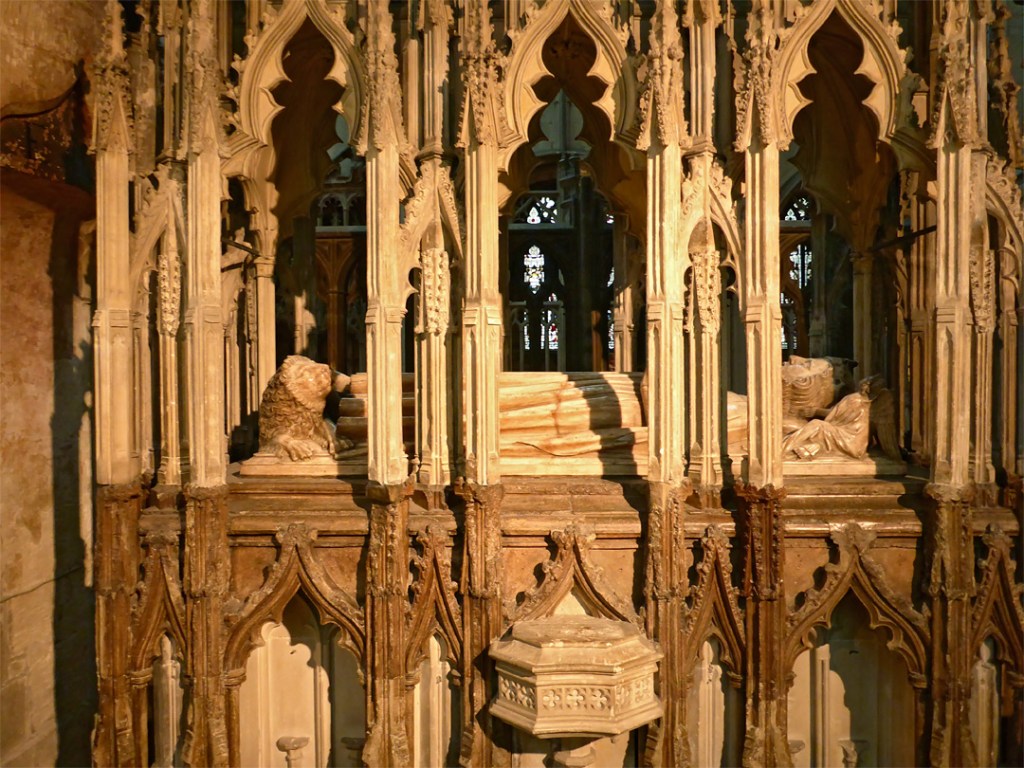
Edward II died in 1327. He is buried in Gloucester Cathedral. His tomb lays upon a high altar and is particularly nice, with his effigy made of marble and protected by an intricate wooden display. His heart was buried with his wife Isabella (Isabella of France- Christ Church Greyfriars, Newgate, London) upon her 1358 death- ironic considering she overthrew him in a coup.
Edward III & Philippa of Hainault- Westminster Abbey, London
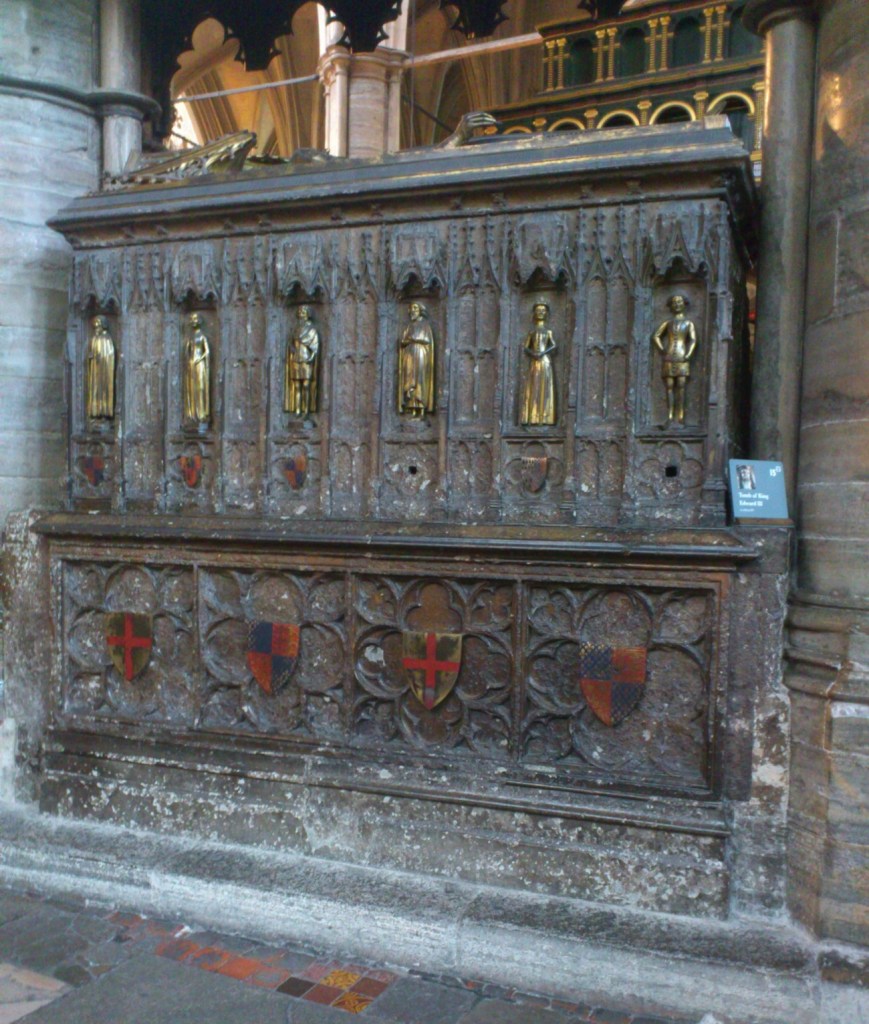
Edward III died in 1377. He is buried at Westminster Abbey. His tomb is marble and his effigy bronze. Much of his original tomb is gone or lost, including the pillow under his head, statuettes of six of his children and angels. His tomb sits under a wooden tester which is both intricate and elaborate. He is buried right next to his beloved wife Philippa.
Richard II & Anne of Bohemia – Dominican Friary, Kings Langley, Hertfordshire (until 1413), Westminster Abbey, London (from 1413)

Richard II died in 1400. He was initially buried at a Dominican Friary in Hertfordshire, but Henry V decided to give him a better, elaborate resting place. Richard was laid to rest in Westminster Abbey in a double tomb with his beloved first wife Anne, as he had initially planned. It is an intricate bronze effigy carved with several symbols and a separate Latin inscription for both of them. They were initially shown holding hands, though this has broken off over the years. An oak tester sits above them. The cushions they laid on were gone, and Queen Victoria ordered new ones as she had for Edward III.
Henry VI & Joan of Navarre- Canterbury Cathedral, Kent
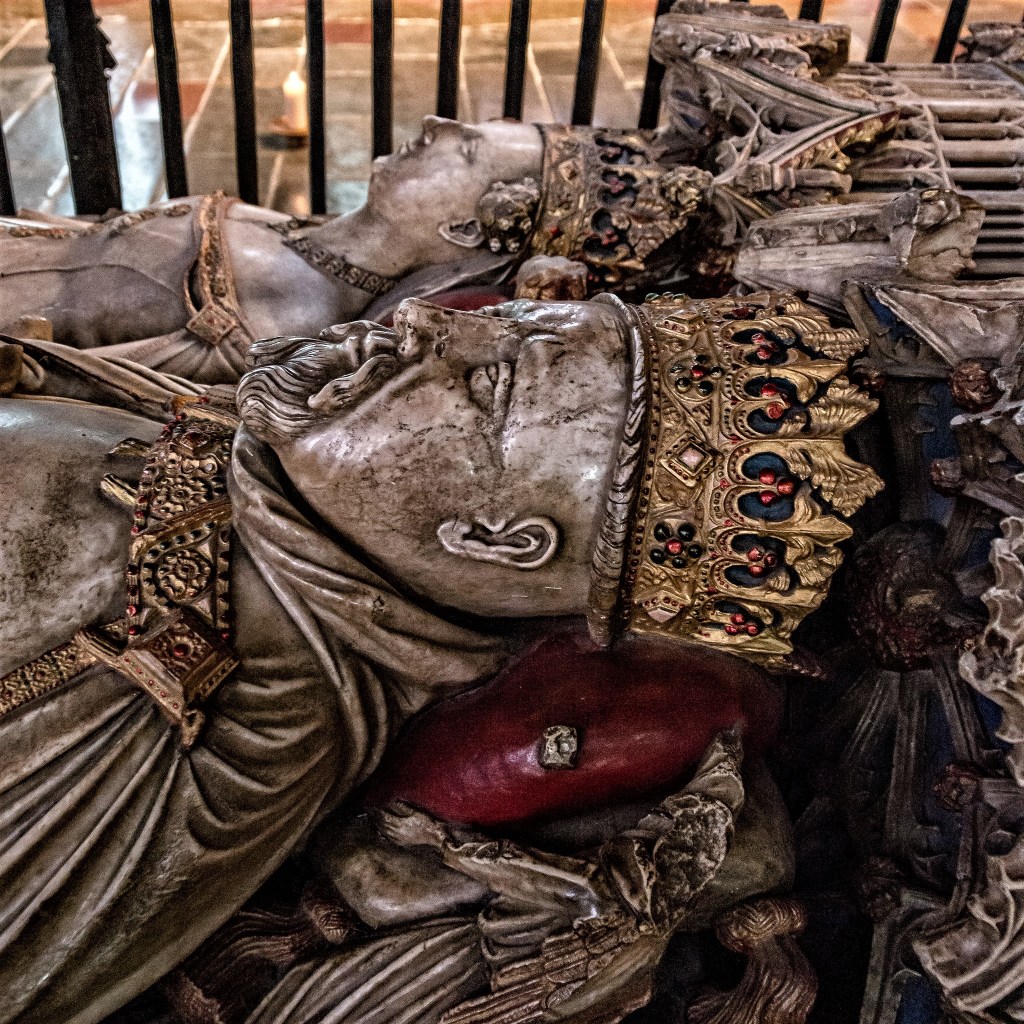
Henry VI died in 1413. He is buried in Canterbury Cathedral, as he was at pains to draw a connection to St. Thomas Becket. Following the death of his widow Joan of Navarre, an elaborate alabaster tomb was created of the two of them together. It is believed to be an accurate likeness. When Henry’s tomb was opened in 1832, the remains were very well-preserved, showing his ginger beard. Interestingly, he chose to be buried with Joan, and not his first wife Mary, who bore all his children but died before his ascension.
Henry V & Catherine of Valois- Westminster Abbey, London
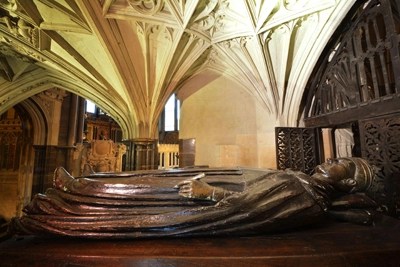
Henry V died in 1422. He was buried in Westminster Abbey in a silver tomb with an effigy and Latin inscription. Many of the adornments have been lost or stolen, leaving a rather more plain resting place. Despite his widow Catherine later remarrying for longer and having more children, she was buried with Henry.
Henry VI- Chertsey Abbey, Surrey (until 1484), St. George’s Chapel, Windsor Castle, Berkshire (from 1484)
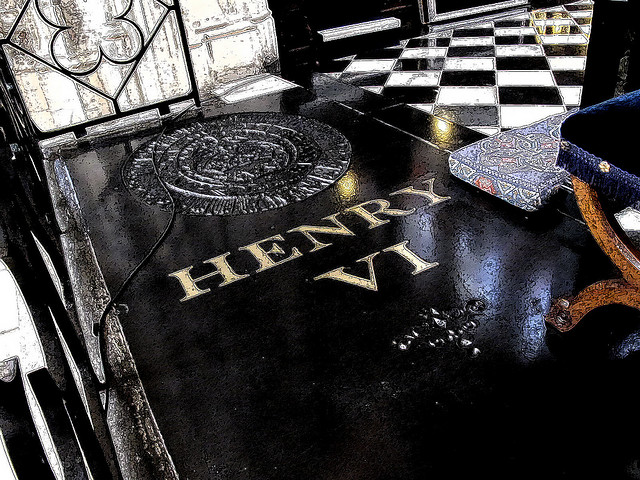
Henry VI died in 1471. He was initially buried in Surrey, but rival Richard III had him reinterred in Windsor Castle. A simple black floor tile indicates his burial with a cross and a large emblem at the top. Margaret of Anjou was buried at Angers Cathedral, Maine-et-Loire, France.
Edward IV & Elizabeth Woodville- St. George’s Chapel, Windsor, Berkshire
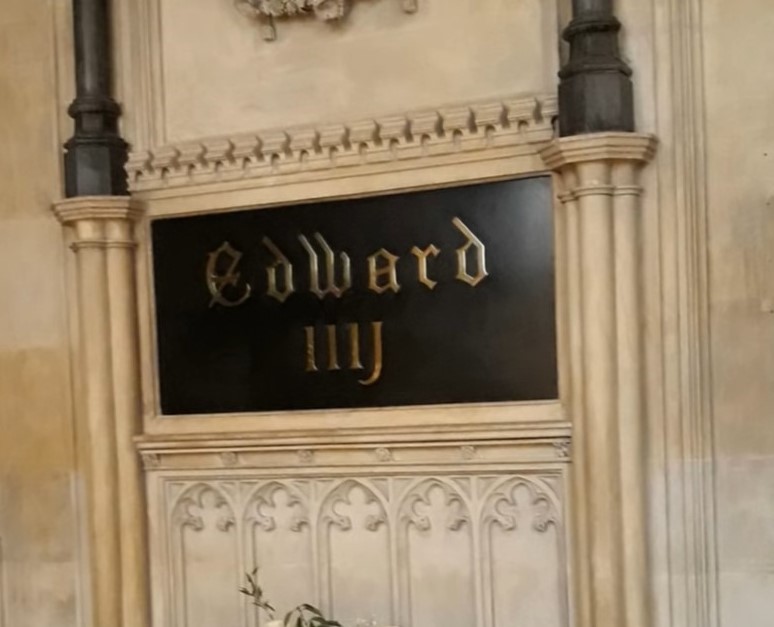
Edward IV died in 1483 and is buried at St. George’s Chapel, Windsor Castle. A black floor tile indicates his burial and that of his Queen, though his tomb is underneath some elaborate gates.
Edward V- Unknown
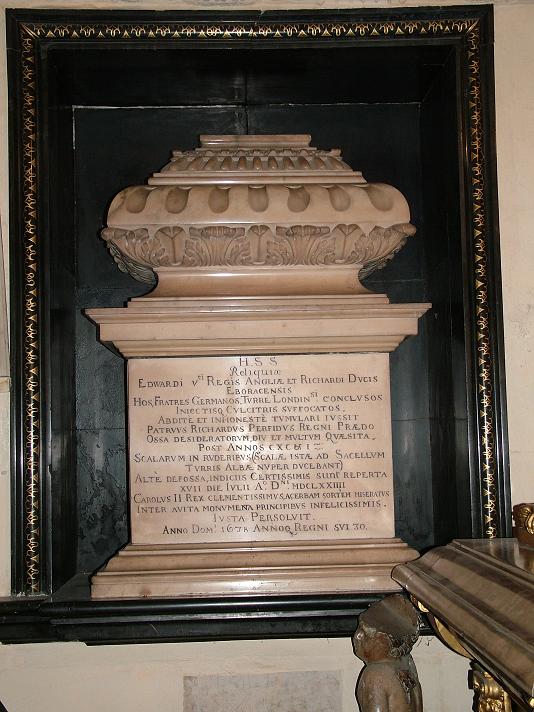
Edward V is believed to have died around 1483. He and his younger brother Richard are collectively known as ‘The Princes in the Tower.’ Their disappearance and subsequent likely death have been the object of fascination for centuries. Some believe that they escaped and that a man named Perkin Warbeck was actually him. Most historians nevertheless believe they died in the tower, at the direction or even hands of Richard III. The skeletons of two children were found some years ago. Whilst Elizabeth II refused to have them tested, Charles III is said to be more willing to do some. Time will tell if they will follow the route of Richard III.
Richard III- Greyfriars Church, Leicester (until 2015), Leicester Cathedral, Leicestershire (from 2015)
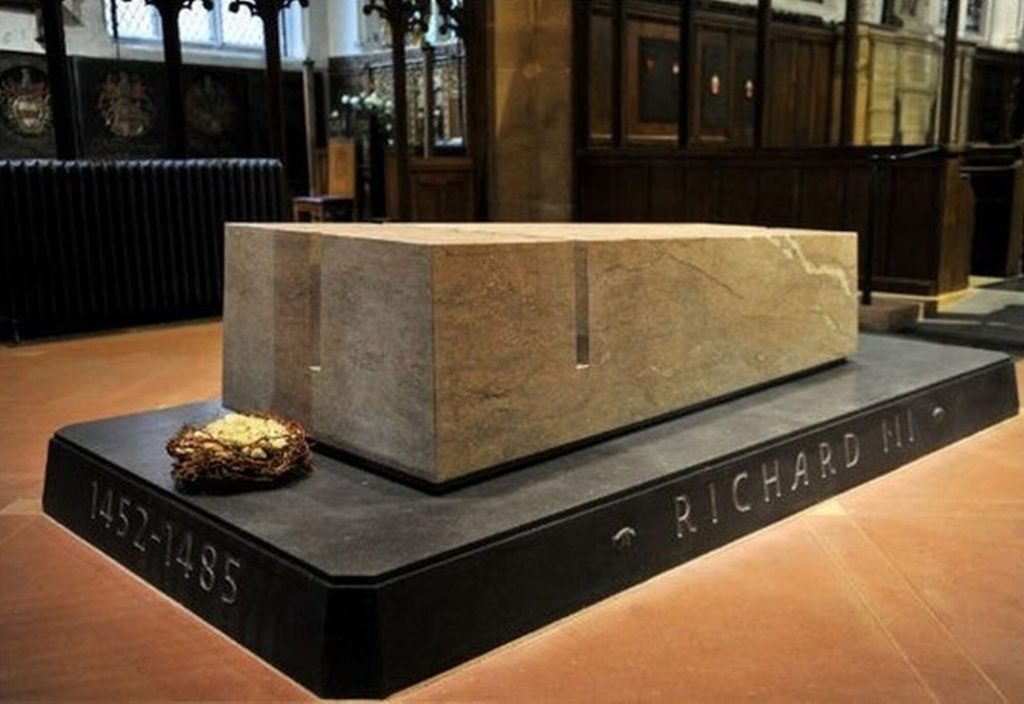
Richard III died in 1485. He was initially hurriedly buried in Greyfriars Church but the location was lost. For centuries, many wondered what had happened to the maligned monarch. Through the work of an interest group, Richard’s remains were found. After DNA analysis confirmed that it was him, plans were drawn up for his burial. Because of the Church of England and British law, he had to be buried in the nearest consecrated ground. Richard is buried in a stone tomb atop a black plinth and Latin inscription. Anne Neville was buried in Westminster Abbey, London.
Henry VII & Elizabeth of York- Westminster Abbey, London
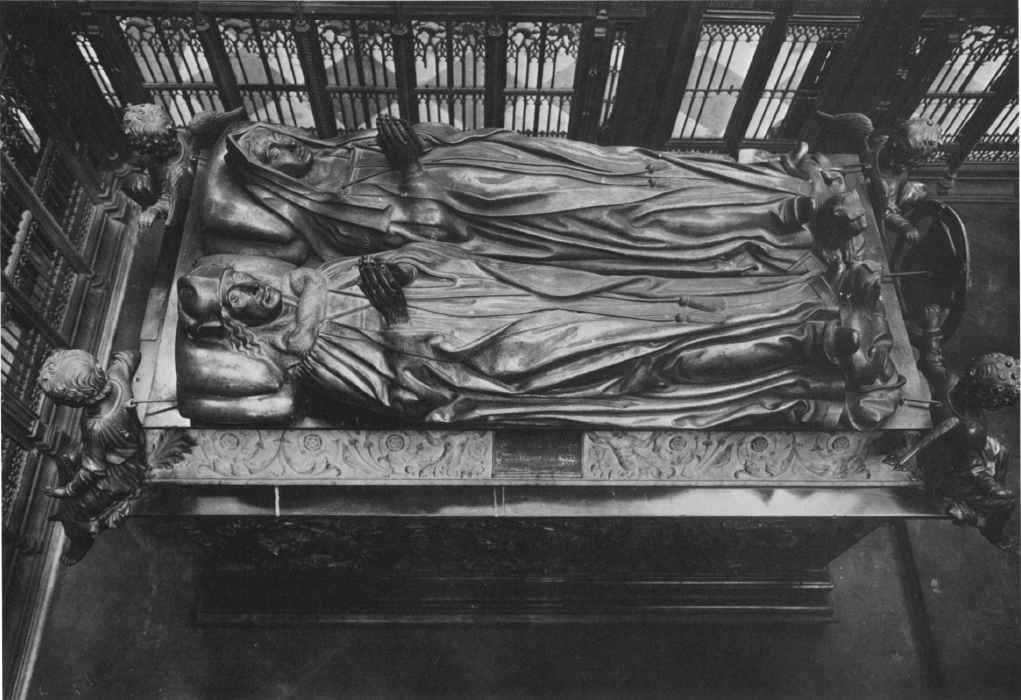
Henry VII died in 1509. He was buried at Westminster Abbey in a grand chapel he’d commissioned just before his wife’s death. Henry and his beloved wife Elizabeth share an above-ground vault tomb of marble and bronze. The tomb shows effigies of them and has Latin inscriptions for both. Despite much of it having disappeared over the years, the tomb remains extremely grand. Many other famous royals are buried in the same chapel.
Henry VIII- St. George’s Chapel, Windsor Castle, London
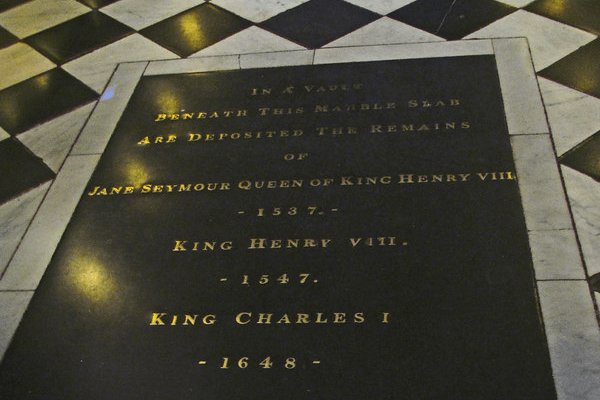
Henry VIII died in 1547. He is buried at St. George’s Chapel in Windsor Castle along with his favourite wife Jane Seymour, the woman who gave birth to his precious son and died before really angering him. His burial place is surprisingly only marked by a simple black tile, along with his date of death. Jane Seymour is written above him, and Charles I was buried there in 1648. Both his executed wives are buried in the former burial ground of the Tower of London.
The wives are buried as follows:
- Catherine of Aragon- Peterborough Cathedral, Cambridgeshire
- Anne Boleyn- Church of St. Peter ad Vincula, London
- Jane Seymour- St. George’s Chapel, Windsor Castle, London
- Anne of Cleves- Westminster Abbey, London
- Catherine Howard- Church of St. Peter ad Vincula, London
- Catherine Parr- Sudeley Castle, Gloucestershire
More beautiful graves to come in the next instalment.
Discover more from Decadent Serpent
Subscribe to get the latest posts sent to your email.


