
Author: Nathan CJ Hood is a YouTuber and a graduate of the University of Edinburgh with a PhD in the History of Christianity. He is interested in mythology, fantasy and history, taking a special interest in the works of JRR Tolkien. He is also the founder of Excalibur Tours, which offers guided walks of Arthur’s Seat in Edinburgh focused on its Celtic and supernatural history. You can follow him on Twitter here, and his YouTube channel here.
The Walking Dead TV series has finally come to an end.[1] For eleven years the post-apocalyptic show has graced our screens. In that time, it has gained a major following. The fifth season premiere was watched by 17.3 million people. Spin-off shows have been spawned, while there are new projects in the pipeline. Though fans have criticised the writing of recent seasons, with a decline in viewership reinforcing this message, the show initially appealed and retains a sizeable audience. The concepts explored in The Walking Dead seem to resonate with modern Western viewership.
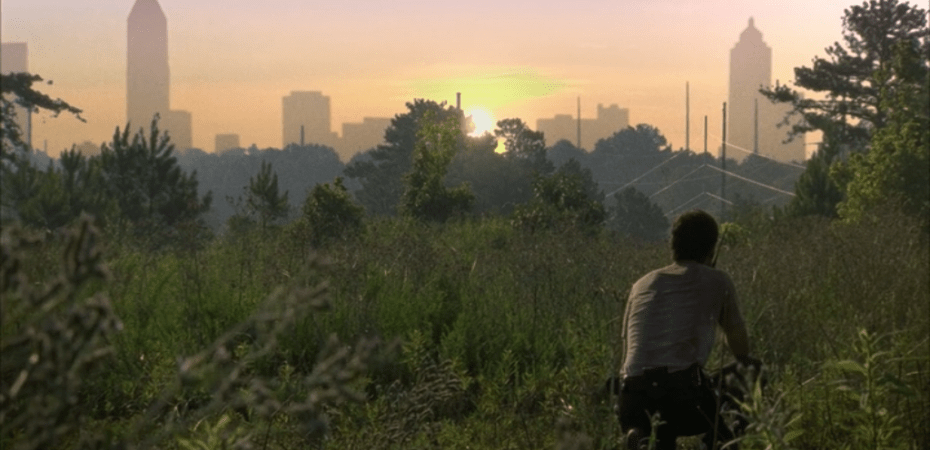
In its earliest seasons, the story focussed on Rick Grimes. He wakes up from a coma to find himself in an abandoned hospital. He discovers that while he was comatose the world was ravaged by a virus which brings the dead back as zombies. Reunited with his family and friends, he must attempt to survive in this new reality. They need to evade the danger of the undead. But other people are the greater threat. Once ordinary men and women are transformed into cold-blooded killers. The fight for survival drives Rick and his crew into mortal conflict with others for the increasingly limited commodities of food, weapons, and shelter. Zombies and human competitors kill many of Rick’s companions. They destroy what he builds time and again.
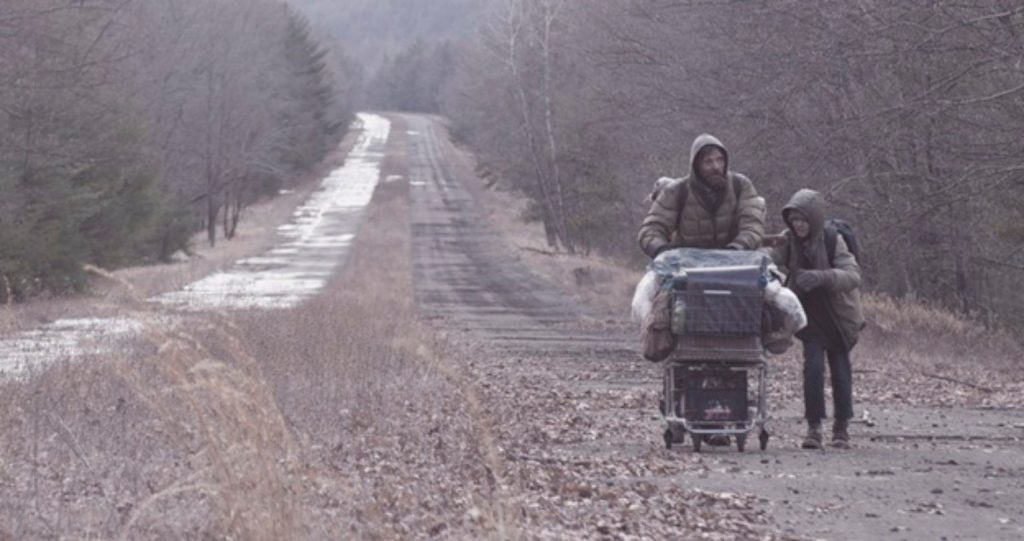
However, the world of The Walking Dead is not one of despair. This is clearly seen when the series is compared to the 2009 film The Road. An adaptation of Cormac McCarthy’s novel of the same name, the film stars Viggo Mortensen as a father who must lead his young son through a post-apocalyptic wilderness. After an unspecified catastrophe, all vegetation and animal life has been wiped out. Only humans survive. In this bleak world, many are driven to cannibalism. The protagonists repeatedly encounter the horror of this new situation. They discover a basement that contains prisoners being stored as food. Later, the man and boy witness a mother, and her child hacked down by a gang of hunters. The father promises his son that they will find help at the coast, but when they arrive there is nothing there. Increasingly desperate, the man is mortally wounded as he hunts for food. He dies on a beach. His son is approached by a family who have been tracking the man and boy. They claim that they are worried about the boy and that they do not eat people. Reassured, the boy goes with them. The audience is left wondering as to his fate.
The Walking Dead strikes a more optimistic tone. This may be surprising given that in the story civil society has collapsed and many people have succumbed to the undead. But Rick and his group have hope. When given the chance, they refuse to give up and die. Instead, they embark on a quest to build a home for themselves. They find a place that they can make safe and set up camp. Together, they begin to repair the defences. In time, members of the community take on specific functions. Some develop primitive forms of agriculture. Others provide medical aid. Rick leads those who go scavenging for resources. The group retains something like normality, even if it takes an extraordinary amount of hard work. Despite their efforts, at some point, their new home will be destroyed. This will either be by the zombies or by a rival faction. The group scatters and all seems lost. Nonetheless, Rick and those he leads find a way to start building once more. They have a will to survive. Their love for one another drives them on. And, as Giant Gio has pointed out, their liberal values and multicultural coalition enables them to conquer their fascistic foes.[2]
The positive vision that permeates the narrative of The Walking Dead draws upon the Frontier Myth. Up until the twentieth century, American history was dominated by a migration Westward. Individuals, families, and communities left the Old World to begin a new life in North America. For the original Puritan settlers, this unexplored land provided the opportunity to establish a godly society. In time, groups began to set out westward. They entered unknown lands. These new spaces were filled with opportunity. They offered seemingly limitless wealth and riches. They provided pioneers with their own land to cultivate. In a place with no governmental control and societal expectations, innovation and creativity could thrive. The mysterious beyond invited all who could master it to take their slice of the pie.
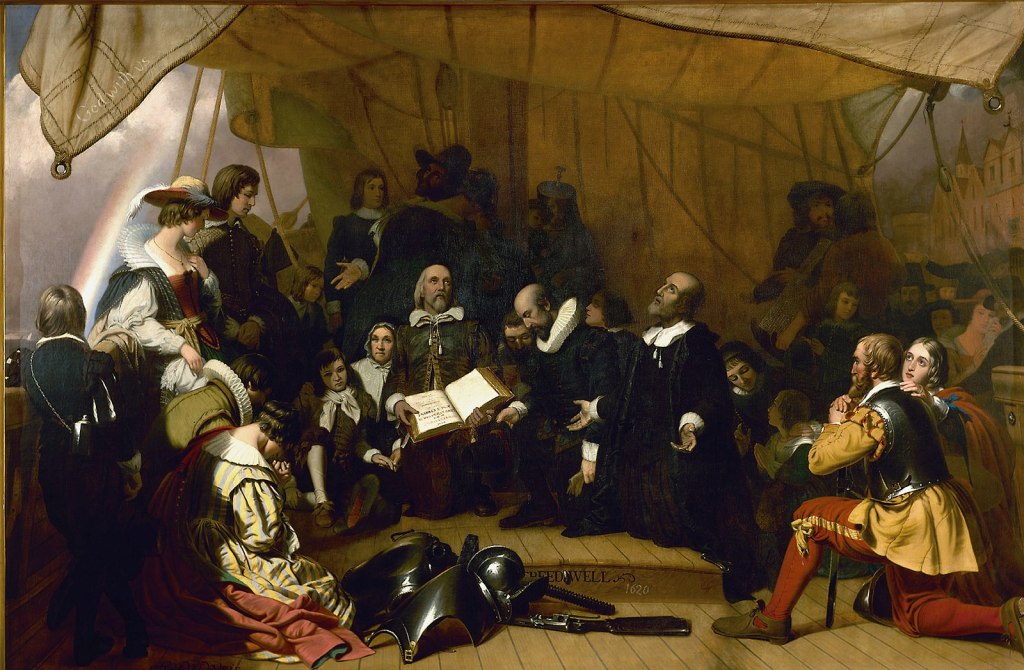
But these unchartered spaces were also dangerous. Disease and famine were a constant threat. Native American tribes resisted the expansion of the settlers. The natural environment could be a hostile place. The pioneers were portrayed as conquerors of a barbaric world. They believed that they were civilising savage nature. Control was established by heroic individuals who aided their people by taming a wild land. This included spreading Western culture to and subjugating indigenous peoples. In doing so, the American hero fulfils his obligations to the community by defeating the ‘monsters’ and by providing them with a new home.[3]
The Frontier Myth channels the desire for discovery. This is what Oswald Spengler called the ‘Faustian Spirit’.[4] He argued that this sentiment lay at the heart of Western culture from the Renaissance onwards. For Spengler, a Faustian man is moved to action by his own will. Whereas Hercules was driven to complete his twelve labours by the commands of King Eurystheus, Captain Kirk is under no compulsion to explore the galaxies. He does so because he loves the thrill of adventure, the exploration of the unknown, and the conquest of that which threatens humanity. These desires are a manifestation of a yearning for the infinite which is expressed through the extension of space. Architecturally, this impulse takes the form of soaring Gothic cathedrals which reach for the heavens above. It also manifests in the desire to go where no man has gone before. The Faustian seeks to explore the wilderness beyond civilisation. He also attempts to master them. In the Frontier Myth, the hero’s will is established in the world by his exertion of control over the untamed places. By shaping the environment according to his desires, Faustian man institutes a new order which harnesses the power of nature.
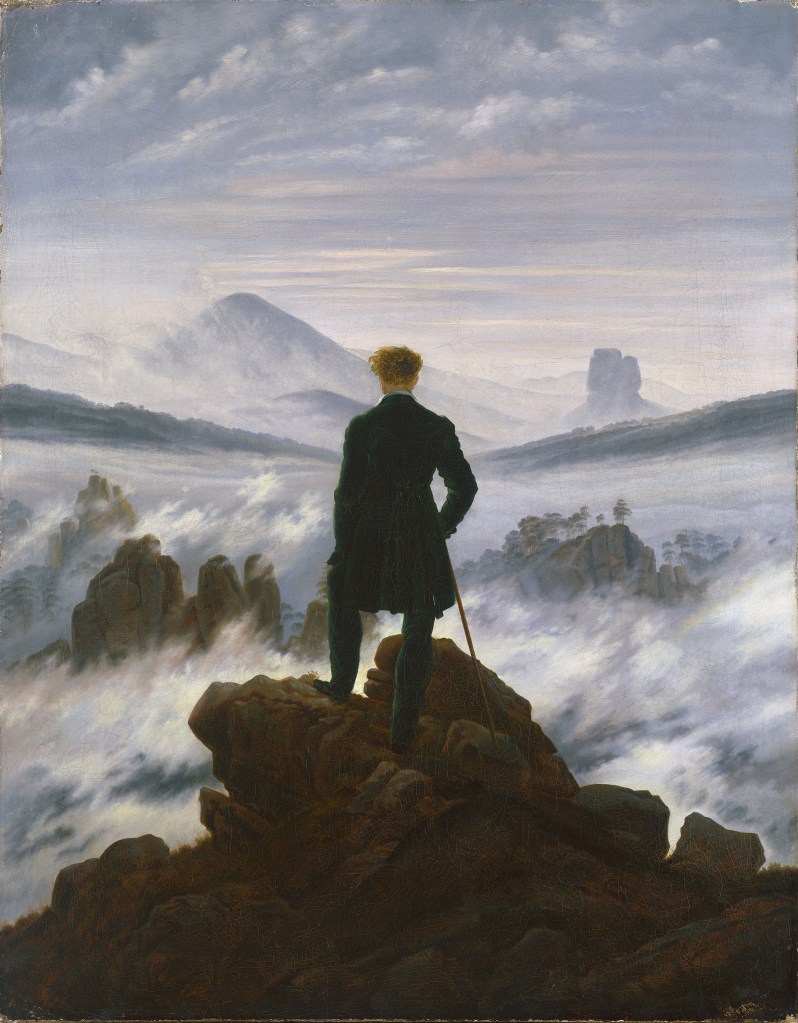
Modern Western societies leave few spaces within which the hero of the Frontier Myth can emerge. Most of us are not in a struggle for survival. Our basic needs are provided for (in theory) by the paternalistic technocratic system. The bureaucrats working for the state, multinational corporations, and NGOs operate in concert to administer that which is needed to sustain a relatively comfortable standard of living. The individual makes their way in a world that has already been tamed. They fit into a set of roles that contribute to the maintenance of the social order. Innovation and creativity are channelled into pre-existing spheres of activity. Nature has been conquered and few places, within the West, are truly unknown. Even if a person finds a remote land, they need the government’s permission to go off-grid. Even they will still have to pay their taxes. In other words, there is nowhere to go that is not within the reach of civilisation.
These arrangements limit the avenues for exploration and conquest. Hiking and mountain climbing are hobbies which provide the opportunity to encounter that which is remote, though danger is only faced in the harshest of places. Military service for America or Britain may offer the chance to ‘civilise’ the ‘barbaric’ places of the world. Neo-Con wars in Iraq and Afghanistan enabled young men and women to participate in a Faustian project to impose liberal values in the wild regions of the Middle East. Finally, an intrepid individual may seek to travel and/or move to a place outside of the great social systems. There are places in Africa, Asia, and South America that are beyond the tendrils of the technocratic regime. But these places, because they lie outside of ‘civilisation’, are dangerous for Western people.[5]
Post-apocalyptic fiction enables audiences to experience the Frontier Myth in a modern setting. With the disappearance of the state, the economy, and civic institutions, the system that supplies our needs vanishes. Civilisation is gone. Survivors must fend for themselves in a hostile world. A hero, such as Rick Grimes, must overcome the wilds and build a home for his community. He does this by mastering his environment. He establishes a settlement within which he can grow crops. He maintains the safety of his people by erecting walls to keep out the savage Zombies. He defeats the barbaric enemies that threaten his community’s livelihood. In sum, Rick Grimes establishes a space within the unknown and monstrous wilderness which is safe and secure for his family and friends. He civilises a corner of the world. His character allows us to vicariously exercise the Faustian spirit which lives suppressed within the Western soul. Through him, we can imagine what it would be like to become a hero of the Frontier.
The TV show offers a vision of a pioneer and patriarch who steers his people through the horrors of post-civilisation. Grimes’s character may be particularly appealing to white men who feel disempowered by the managerial political and economic system, and the intelligentsia’s deconstruction of white masculinity. Notably, later seasons feature a more diverse set of characters whose teamwork enables them to overturn unjust social structures within the spaces of civilisation. This is especially the case in the final set of episodes.[6] However, The Walking Dead also resonates with audiences because it shows a way of life that paradoxically seems safer than that which is experienced in modern Western societies. This becomes evident when we place the TV show in conversation with open-world video games.
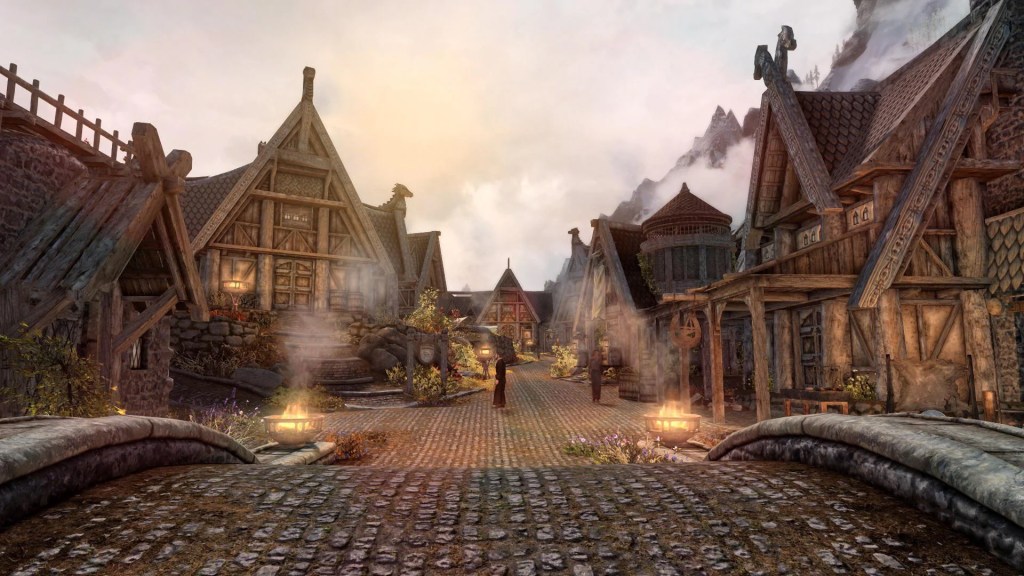
In many games, players control a character who can roam freely within a virtual world or ‘sandbox’. This provides an unknown landscape that offers the player a seemingly infinite set of possibilities. As they explore, players begin to learn the geography of the game-world. They also meet a range of enemies who they must defeat. Such landscapes are a hostile sea of threatening beings who must be mastered for the player’s safety. For example, in Skyrim, the roads are patrolled by packs of wolves. Dragons may appear and attack the player. Trolls make their homes in the high mountain passes, while the undead lurk in the dark recesses. While the player may find several allies in the wilderness of Skyrim, in the video games Dark Souls and Elden Ring most of the world is populated by enemies. Progress can only be made by killing your way through mysterious realms.
Punctuating these landscapes of danger are places of respite. The player can go to these spaces and find sanctuary. This allows them to heal up, buy resources, and rest from their struggles. Importantly, these hubs are never seriously threatened. Though enemies may infrequently appear within their confines, they are unable to seriously harm the sanctuary of civilisation. In Skyrim, the towns and cities provide relief from the unforgiving world. Bonfires and sites of grace are a welcome sight for any Dark Souls or Elden Ring player, while the Firelink Shrine feels impervious to the dark forces outside. The same geography can be found in Anglo-Saxon and Medieval literature.[7] The great halls and castles are places of feasting, gold-giving, and shelter. They are outposts of light surrounded by a dark world. The woods are filled with fairies who ensnare their victims with magic. Man-eating giants live in the mountains. Serpents and dragons swim the waters of the seas.
The game that most closely parallels this dynamic as it takes shape in The Walking Dead is Minecraft. In this game, there are no pre-established places of safety. The player must use their wits and the resources in their environment to build a home. It must be such that it can withstand the zombies that roam in the night. But once instituted, this space provides a refuge from which the player can head out on expeditions to chart and civilise an unknown landscape. Put another way, the game encourages a player to create a sharp division between the space of safety and the arena of danger. Without a home base, it is almost impossible to develop the tools that are required to conquer the more hostile regions, such as the Nether. Nevertheless, whereas the hubs in Skyrim face little threat from the outside world or from player actions, the Minecraft home is under constant threat. There is always the possibility that a zombie may gain access through poor building design. Alternatively, complacency may provide an opportunity for the undead to infiltrate the home. This is also true of the homes built by Rick Grimes. In this respect, The Walking Dead and Minecraft exemplify the Anglo-Saxon conviction that evil forces will, sooner or later, invade the sanctuary.[8] For example, in the Old English epic Beowulf, the great hall of Heorot is defiled by the nightly attacks of the monster Grendel. Though the poem’s titular hero manages to slay the fiend, the giant’s intrusion of the place of safety presages the later death of Beowulf in combat with a dragon.
Though disaster is always around the corner, the characters in The Walking Dead create safe places within a wild and dangerous world. They manage to build a boundary between civilisation and savagery. While they face a much harsher land beyond their settlement, they can expect greater security within their walls than most people in the modern West. America and Britain have become what Samuel Francis called ‘Anarcho-tyrannies’.[9] There is both anarchy and tyranny within these countries. The regime enforces increasingly oppressive measures upon the law-abiding populace. They use regulation, the threat of economic and social marginalisation, and intervention in the private spheres of people’s lives to police the ordinary citizen. Simultaneously, the governing authorities permit (and sometimes promote) serious crimes. They leave violent thugs unpunished while bankers who crash the economy walk away with millions. Additionally, it seems that the institutions enforce the law in accordance with their political agendas. Observers have noted variations in law enforcement responses to different public demonstrations.
The current political system has allowed the proliferation of barbaric elements within the walls of civilisation. But unlike the hero of the Frontier, the modern Western individual can do little about it. The regime promises to keep its citizens safe. But it is increasingly difficult to get help when it is needed. On a mundane level, organisations use automated responses and a multiplicity of options to make it increasingly difficult for people to contact those who could address their problems. This situation makes a person feel helpless as they have little way of guaranteeing their safety.
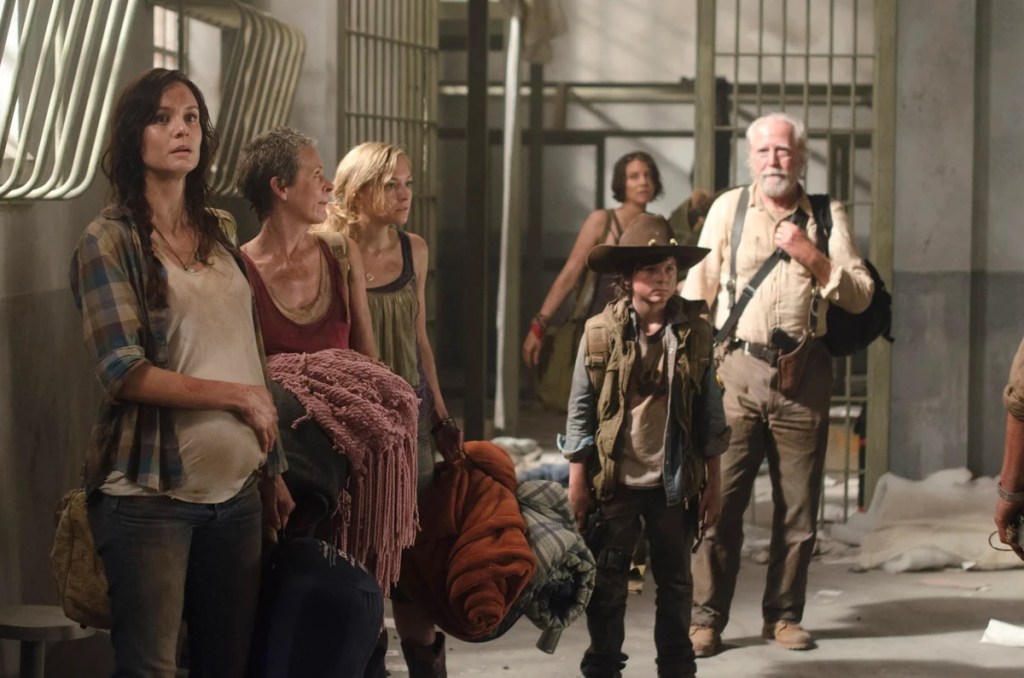
By contrast, Rick’s group illustrates what it would be like to live in a place of security. The community struggle against the savage to establish a place within which they are safe. They do what it takes to keep the zombies and gangs out of their home. Their efforts set a clear divide between themselves and the dangerous outside. This barrier is often marked by a wall. Inside the compound, the people conduct their lives in relative safety. When threats break into the sanctuary, the group works together to expel them. Furthermore, each member of the community knows that if they are in danger then Rick will do his best to save them. Although he might fail, they have the assurance that those who govern them will try to protect them. Even the antagonist Negan offers safety for his subjects. Many survivors choose to work as slaves for him because he and his goons provide defence from the hostile world. Negan also has the personal authority to protect his workers from the darker tendencies of his thugs. As conflict breaks out between the labourers and soldiers, one woman cries out on his return, “Thank you Negan. Thank God for you!”[10] The Frontier heroes of The Walking Dead civilise spaces and protect those who live within their borders. The TV show depicts a social life that contrasts with the leadership of modern Western nations which simultaneously abandons its citizens to chaotic elements while persecuting those who seek to defend themselves.
The Frontier Myth elevates the hero who defends his community. It also champions individualism. Frederick Turner argued that the American pioneers headed into the west in search of land.[11] As the unknown plains seemingly offered a limitless supply of resources, settlers believed that each man could carve out his own piece of America without harming the prospects of his fellow explorers. In turn, they thought that a man’s fortunes were determined by his ability to harness nature towards his own ends. This idea fostered a mentality of innovation as men sought to maximise their returns from the resources they owned. It also cultivated a free market within which individuals competed with one another to grow their fortunes. Put another way, each Frontier hero was able to build his own sphere of influence because he could take possession of free land. Rupert August has described how other civilisations, such as the Roman and British Empires, also provided young men with the opportunities to create their own domains of power by sending them abroad to establish colonies.[12] However, whereas the kingdom-building of young men reinforced the national interests of these regimes, the American pioneers sought to create realms for their own benefit.
Turner goes on to argue that the individualism of the Frontier heroes was the foundation of American democracy. The settlers were suspicious of government interference. They were also hostile towards the ‘money power’, the banks and capitalists of the East Coast. They believed that both factions would curb the freedom of the pioneer to take their share of the land’s inexhaustible resources. As each man could profit from the abundance provided by the American continent, it was imperative that they protected themselves from those who would prevent them from making the most of the land. As such, there was a deep conviction that each pioneer should have a say in the government. The democratic process was there to protect the interests of the free individual in their pursuit of the American Dream. Democracy functioned, then, as a restraint on those forces which threatened the kingdoms built by the Frontier heroes. At root, it was meant to enable the pioneers to defend their ownership and utilisation of land.[13] It thereby allowed for a society of “circulating atoms, each seeking his own place and finding play for its own powers and for its own original initiative.”[14]
Turner argues that increases in population and the discovery that America’s abundance was finite killed the individualism at the heart of American democracy. The frontier was dead. In its place was a conviction, held by the descendants of the pioneers, that the government was a means by which society could be organised more efficiently. This restructuring of society was a necessity because it was no longer thought that each person could make their fortune from their land as there was not enough territory to go around. As such, the power of the bureaucratic state grew exponentially. It expanded its ownership of the land. It also began to distribute the limited resources according to the needs of the citizenry.[15] Its presence has grown so much that almost everyone in the West is dependent upon the system in some way. In other words, there is nothing which is independent of the power of the managerial class. Moreover, elite theorists like Francis have observed that in mass democracies those who control public opinion, such as the media, direct public policy.[16] Curtis Yarvin has also noted that the two dominant political parties in a democratic system, the inner and the outer parties, are aspects of the one regime that work for the same end goals, albeit in different ways.[17] Thus, the current political order does not protect the liberties of the individual. Instead, it increasingly controls the beliefs and actions of the populace.
Again, The Walking Dead presents audiences with a social order that contrasts with modern Western politics. Rick’s group go through a repeated narrative arc. They establish a home and then come into conflict with a rival faction. This cycle reaches a climax when they interact with the ‘Saviors’. Led by Negan, this gang attempts to subjugate all rival groups by force. They enslave other communities and compel them to find resources for their masters. By contrast, Rick attempts to build a network of cooperating communities. Each group is self-determined. They are free to conduct their affairs as they please. Many choose to work together for mutual benefit. Moreover, no one is required to join Rick’s group. They are free to stay or leave. All are welcome providing they contribute to the survival of the home. Rick’s emphasis on liberty corresponds with his individualist beliefs. He assumes that those who inhabit a place have a right to do with it as they please. This conviction stems from the recognition that the post-apocalypse is abundant with free land. Each person can establish their own home and do with it as they desire. Put another way, it is possible to leave a group and build one’s own domain in the zombie apocalypse. Viewers may find these aspects of the story appealing because they aspire to self-determination and find it lacking in modern democratic life. Many players may also find Skyrim and Minecraft exhilarating because, in these open-world games, they can experience a kind of freedom unimaginable in the current social order.
However, the TV show’s integration of the Frontier Myth into the post-apocalyptic genre creates a contradiction within the fictional world. The pioneer ideal of democratic individualism rested upon the assumption that all people could take a share of America’s wealth. This view made sense given that the mysterious unknown was viewed as a land of infinite abundance. But the world of The Walking Dead is not one of limitless resources. The societal collapse has meant that food and energy are scarce. Very few people have the skills to harness the potential of the environment. This means that most communities scavenge for supplies. As a result, there is fierce competition over valuable items within the world. Such a setting is not conducive to societies founded upon respecting the property rights of everyone. For that reason, it would also not be favourable towards the creation of the multicultural neoliberal communities seen in later seasons.
Instead, the post-apocalypse would mirror the rise of Anglo-Saxon kings at the end of the 6th century. The early settlers established small communities in an abundant land, much like the American pioneers. In the middle of the 500s things took a turn. Famine and bubonic plague ravaged Europe. It is reasonable to infer that Anglo-Saxons in the East of Britain, who had trade links with the continent, were also affected by these catastrophes. It is probable that groups began raiding one another due to food shortages. A new elite class of strong men arose in this period. They promised protection and sustenance in exchange for loyalty and obedience. These individuals became the progenitors of the Anglo-Saxon royal dynasties who warred over Britain in the 7th century.[18] Scarcity in Saxon England led to the emergence of kings. So it would also be in the world of The Walking Dead. As Giant Gio has pointed out, the zombie apocalypse requires strong leaders, such as Negan.[19] They become warlords. These new kings would, through violence, secure for themselves and their followers those few resources that remain in the world. The strong man would arise and establish a home, but to do so he must fight with other domains. The Frontier optimism of the show is unwarranted given the conditions of the fictional universe necessitate competition, rather than democratic cooperation, between settler communities.
The Walking Dead resonates with audiences because it lets them experience vicariously the heroism of the Frontier Myth. Viewers encounter what it would be like to explore and conquer an unknown and hostile world. They get to see the Frontier hero create a safe place for his community. Their ideals of democratic self-determination find expression in the liberal social order created by Rick Grimes. In short, the TV show provides an escape from the bureaucratic, anarcho-tyrannical, and illiberal aspects of modern Western democracies. However, the series integrates contradictory elements to show that liberal values will always triumph over fascistic dictatorships. This can make the story feel, especially in later seasons, incongruent with its setting. Nonetheless, the popularity of The Walking Dead points to the fact that many people long for the heroism, security, and freedom of the Frontier.
Sources
[1] The TV show was an adaptation of a comic book series by Robert Kirkman, Tony Moore, and Charlie Adlard.
[2] GiantArt Productions, “The Walking Dead: Post-Apocalyptic Norwoodism”, Youtube, published 6th November 2022, https://www.youtube.com/watch?v=5DK6g7Bgoag.
[3] Brent Kice, “Expanding the Frontier Through War: Skyrim’s Ludic Contribution to the Frontier Myth” in Being Dragonborn: Critical Essays on The Elder Scrolls V: Skyrim, edited by Mike Piero and Marc A. Ouellette (North Carolina: McFarland & Company, 2021), 45-58: 45-49.
[4] Oswald Spengler, The Decline of the West, translated by Charles Francis Atkinson (New York: Alfred. A. Knopff, 1927), 302-320, 332-338.
[5] See “John Allen Chau: Who was US man killed in remote islands?”, BBC NEWS, published 21st November 2018, https://www.bbc.co.uk/news/world-us-canada-46293221; “Morocco hikers: Three get death penalty for Scandinavian tourist murders”, BBC NEWS, published 18th July 2019, https://www.bbc.co.uk/news/world-africa-49029505.
[6] GiantArt Productions, “The Walking Dead: Post-Apocalyptic Norwoodism”, Youtube, published 6th November 2022, https://www.youtube.com/watch?v=5DK6g7Bgoag; Laura Bogart, “The surprisingly fascinating politics of The Walking Dead: How a show about zombies speaks to our cultural moment”, The Week, published 20th October 2017, https://theweek.com/articles/720691/surprisingly-fascinating-politics-walking-dead.
[7] J.R.R. Tolkien, The Monsters & the Critics and Other Essays, edited by Christopher Tolkien (Great Britain: HarperCollinsPublishers, 1997), 18.
[8] Tolkien, Monsters & Critics, 21.
[9] Beau Albrecht, “Remembering Sam Francis: The Rising Tide of Anarcho-Tyranny”, Counter-Currents, published 28th April 2021, https://counter-currents.com/2021/04/rising-tide-of-anarcho-tyranny/.
[10] Series 8 episode 5.
[11] Frederick Jackson Turner, The Frontier in American History (New York, Henry Holt and Company), Chapter 11.
[12] Rupert August, “Questing for Imperium”, Praxarchy, published 17th March 2022, https://praxarchy.com/2022/03/17/questing-for-imperium/.
[13] Carl Schmitt argued that, prior to the industrial revolution, land appropriation was considered the precondition for all forms of distribution and production. It was, thus, the foundation of the economic and social order. These appropriations were either by the conquest of free land or of an inhabited land. Either way, those who hold the land have the authority and means to use and distribute it. He notes that this view was later challenged by Marxist philosophy. See Schmitt, The Nomos of the Earth, translated by G.L. Ulmen (USA: Telos Press Publishing, 2006), 327-331. I am grateful to Evelyn Grant for sharing an excerpt from this passage on Twitter.
[14] Turner, The Frontier, Ch.11.
[15] Turner, The Frontier, Ch.11. James Burnham has also discussed the transition from 19th century laissez-faire bourgeois capitalism, which promoted individualism, to the limitless state of the 20th century managerial society, which focusses upon the public good. See Neema Parvini, The Populist Delusion (Perth, Australia: Imperium Press, 2022), 97-102.
[16] Parvini, Populist Delusion, 112-113, 116-120.
[17] Mencius Moldbug, An Open Letter to Open-Minded Progressive (2008), Chapter 7, “The Ugly Truth about Government”, published at Unqualified Reservations, https://www.unqualified-reservations.org/2008/05/ol7-ugly-truth-about-government/.
[18] Marc Morris, The Anglo-Saxons: A History of the Beginnings of England (Great Britain: Penguin Books, 2021), 53-55.
[19] GiantArt Productions, “The Walking Dead: Post-Apocalyptic Norwoodism”, Youtube, published 6th November 2022, https://www.youtube.com/watch?v=5DK6g7Bgoag.
Discover more from Decadent Serpent
Subscribe to get the latest posts sent to your email.

