
Author: Blair Baleigh. Blair is an English and Film student. A fan of all things film with a particular interest in film noir and contemporary Hollywood cinema.
WARNING: This review contains minor spoilers.
I am Quite Entertained
Gladiator II is the legacy sequel to the Best Picture-winning Gladiator (2000), once again directed by Ridley Scott and follows Lucius Verus, played by Paul Mescal, as he is returned to Rome after his home of Numidia is conquered by General Marcus Acacius, played by Pedro Pascal, where he becomes a gladiator for Denzel Washington’s Macrinus. So, will Lucius have his revenge and restore the dream of Rome?
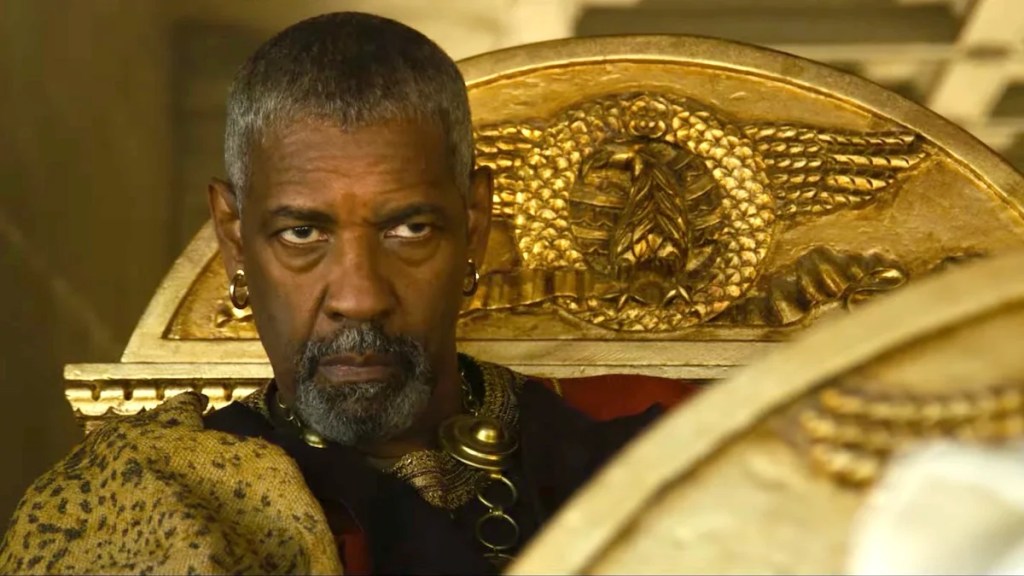
Paul Mescal’s performance is reasonable throughout the narrative, although he does sometimes appear to be a downgrade to Russel Crowe’s Maximus from the previous film. There are a few moments where he has a chance to shine and give a more subtle performance, which he does well alongside some more impassioned monologues that are believable as being able to get Roman gladiators and soldiers to rally behind him. Mescal is not only competent at delivering dramatic monologues but also skilfully handles the combat sequences with a posture and presence that allows him to command the scenes, which makes him even more believable as a gladiator leader. However, Mescal does not deliver the best performance of the film as that would go to Denzel Washington in a scene-stealing performance that I believe only the Shakespearean actor could deliver. Washington is flamboyant and subtly intimidating as his relaxed character and nonchalance make him quietly controlling, making his moments of aggression more impactful. The excellent costume design also lends itself to Macrinus’ character in a particularly meaningful way as the character is dressed in various lavish robes. Even in comparison to the other members of the aristocracy which shows this is what a former slave and gladiator thinks a free aristocrat would wear.
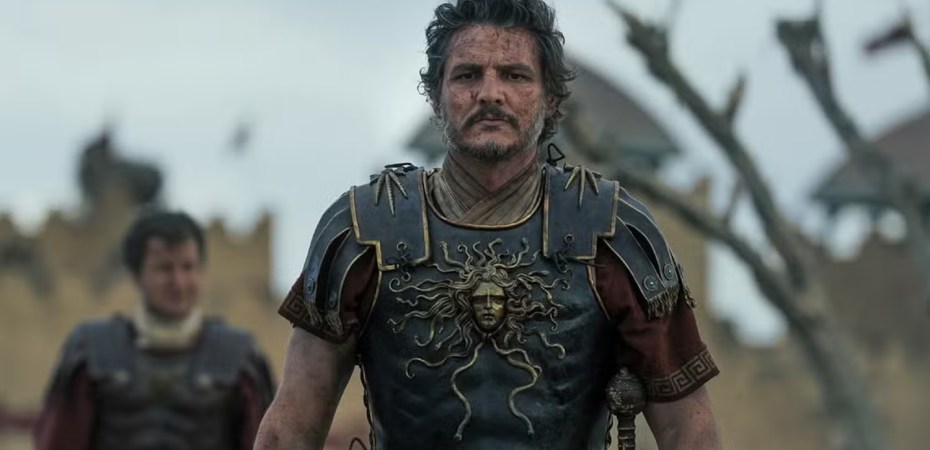
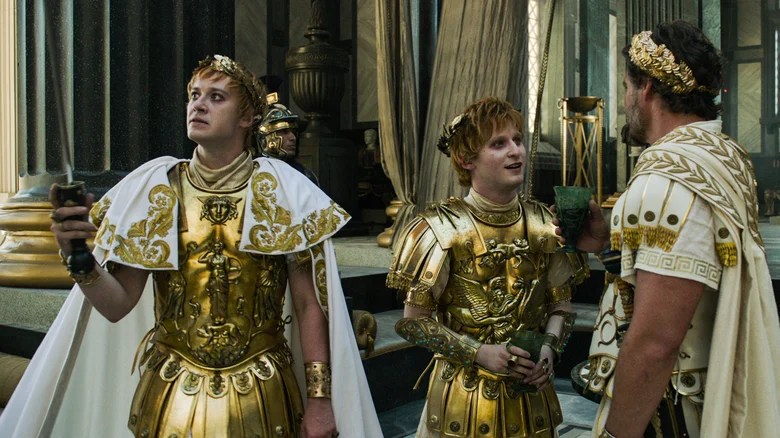
Pedro Pascal is also in the film but much more sparingly than advertised. However, he does deliver an understated performance that carries with it a certain dignity and collectedness that is needed from a skilled general; especially one who is burdened by the actions he carries out in the name of the Roman Empire and secretly wants the best for his people. On the other hand, some performances are not so subtle as the twin emperors Geta and Caracalla portrayed by Joseph Quinn and Fred Hechinger respectively, are much more boisterous and theatrical. Quinn’s performance walks the knife edge and manages to maintain a sense of the character’s arrogance and egocentricity and that his theatricality is a performance for his people in the Colosseum. The same cannot be said for Hechinger’s performance which at times becomes cartoonish especially as he attempts to portray the emperor’s unstableness due to his mental illness.
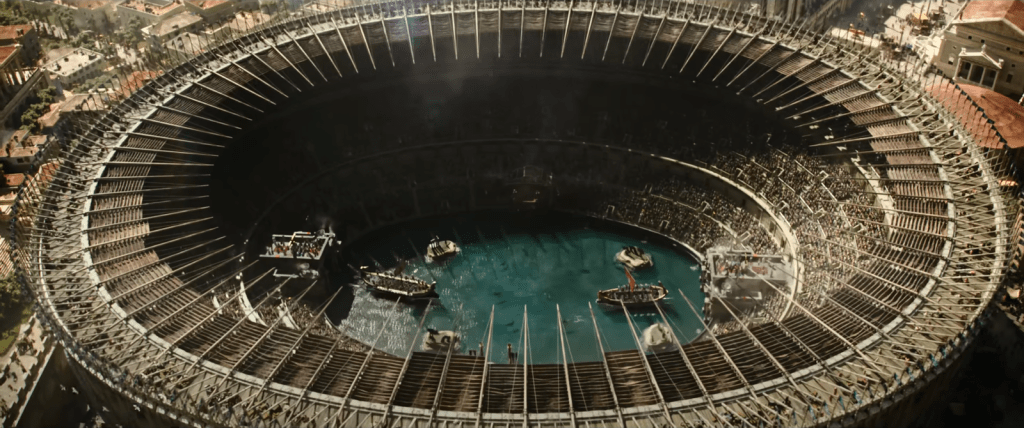
The film does deliver the action scenes expected from a big-screen blockbuster. For the most part, the combat scenes are well-realised during the sword-fighting and hand-to-hand combat scenes while there are a couple of moments where it does slip into generic fight choreography. These moments are fleeting, and a certain excitement that is present in the original film is recaptured. However, turning to a number of the bigger set pieces, some are a hit and miss as there are a couple of questionable uses of visual effects and a sense that the film felt obliged to top that last instalment. This leads to a particularly memorable scene where the gladiators fight a tribe of crazed monkeys that don’t look like any monkeys that I have seen or believe even exist. While the scene is fairly tense it feels less dangerous than the tiger fight scene from the first film which could be due to the uncanny nature of their design and use of visual effects. However, there are other large set-piece action scenes that are extremely well-realised and put together, particularly the rhino battle in the Colosseum.
As for the narrative, it does follow similar themes to the first film such as revenge and legacy but in contrast to the first film as shown above, when reviewing the performances, the film does not have a singular focus that anchors it as Crowe’s Maximus did. While Mescal’s Lucius is the protagonist, there are several storylines working in parallel that do eventually meet in the end. However, a few of the character motivations are tenuous, especially that of Pacal’s Acacius. The film does not give the character much motivation other than that he is tired of the way the emperors are ruling, but for the most part, ignores how this directly affects him. The same could be said for Lucilla played by Connie Nielsen who returns for the sequel. She also wants to liberate Rome and while she does have clearer motivations, her screen time is quite limited due to the number of characters and storylines. Despite this, the pieces somehow do fall into place and even with a runtime of 2 hours and 30 minutes the pace is brisk and the action, even when a little silly, is entertaining.
So, is Gladiator II worth seeing? The answer is, despite some criticisms, yes. This is because while it may not be as great as the first, Ridley Scott is back on form after the disappointment of Napoleon and delivers some great action spectacle and fight scenes worthy of the big screen alongside an impressive performance by Paul Mescal and a film stealing performance by Denzel Washington.
Discover more from Decadent Serpent
Subscribe to get the latest posts sent to your email.
