
Author: Gomery Kimber is the author of six novels, including the Big Shilling hitman trilogy, the Justin Martello adventures (‘A New Kind of Hero’), and the Wyvern series of historical novels (esotericism and espionage). In 2023, Gomery Kimber was chosen by best-selling author Mark Dawson as the winner of the SPF Foundation Thriller Award. Subscribe to his Substack and download his novella, ‘Vampire of Munich’, for free: Gomery’s Substack | Gomery Kimber | Substack
GOMERY KIMBER – INTRODUCTION
“Assassin of London is the second instalment of the Justin Martello adventures, London Lies Bleeding being the first. However, each Martello novel ‘stands alone,’ and, in fact, the events of Assassin precede those of London Lies Bleeding.
Justin Martello is a former MI6 operative and Special Boat Squadron officer, but that is where his resemblance to your ten-a-penny, interchangeable thriller protagonist ends. I aim to write page-turning entertainment, yes, but with serious intent.
If a novel is to hold my attention, then it has to have wide-angle vision. It shouldn’t merely reflect the everyday, but ‘liberate the human imagination’ and give the reader a glimpse of what human beings might become.
My literary exemplar, Colin Wilson, believed that the novelist’s task is a spiritual one: to free ourselves from the narrowness of everyday life, its close-upness. That’s just what I aim to achieve in my novels. Whether I manage to do this is up to the reader to decide.”
CHAPTER ONE – ASSASSIN OF LONDON
Captain Giles Seton-Glennie was killed on operations in Afghanistan two years after the murders of Sheikh Rashad al-Sinan and Bilal.
The circumstances of his death were both strange and horrible. Giles was captured by the Taliban while reconnoitring a village. Although dressed as a local, there was no way on earth he could have been mistaken for an Afghan. Pale-skinned and green-eyed, Giles could not have looked more Scottish if he’d tried. His subsequent beheading was recorded on video and broadcast to the world.
I’d like to say that Giles and I were close, but that would not be true. His parents, James and Theresa, took me into their home after I was orphaned, and Giles resented me. We were always at odds with each other. At bottom, it was a matter of temperament. Giles was a materialist, a literalist, at home in the world, while even as a youngster I was fascinated by the mystical, the spiritual, categories which Giles angrily dismissed as nonsense.
Still, I mourned him when he died a hero’s death, and Theresa grew to love me all the more, since her own son had been taken from her.
She is, by her own admission, a flinty Scottish dame, but hidden behind the stony exterior she presents to the world there is a sensitive and loving heart. And when Colonel Jamie Seton-Glennie was also killed, in a parachuting accident, Tessa concentrated all her resources on the one person left to her, making sure I took over the Seton-Glennie security corporation, and the running of Colonel Jamie’s TEMA Academy, headquartered in a disused church, St George’s, in Fulham, west London.
TEMA is the acronym for Traditional European Martial Arts, and the late Jamie Seton-Glennie was arguably the tradition’s greatest British exponent. He taught me how to fight, with the sword, with polearms, and most importantly with my spirit. We had a special bond where the esoteric was concerned, something which the materialist Giles both resented and despised.
It was Jamie Seton-Glennie who initiated the inner circle of the School of Arms, in cooperation with the bookseller and teacher, Caradoc Gwynion, also known as the Druid. The formidable Welshman was my mentor. I was in my mid-thirties, ambitious, self-confident, and with a yearning for that which is above.
For some weeks now, I’d been certain that the Druid was preparing to send me away. There comes a time when every pupil must strike out alone, whether he believes he is ready or not. Unlike some others, I had never become dependent on Mr G. This was partly deliberate and partly my nature. I prefer to keep people at a distance, even remarkable men like Caradoc Gwynion. The Druid found this commendable. He was forever reminding people not to believe, but to ascertain for themselves, and he could be brutal to those with starry eyes.
I had the idea that there would be a final revelation before we parted ways.
That Sunday evening in April, Mr G had arranged a programme of mixed martial arts bouts with the visiting members of an East London gym. My interest in MMA is limited. I boxed at school and learnt unarmed combat in the Army, but with little pleasure and without distinction. I prefer to go armed, either with a sword or a blade, and therefore see no need to lay hands on another man. If I have to defend myself, I will do so with a weapon, even if it’s only a coin cosh or a furled umbrella.
But that isn’t to say that unarmed combat has no place at the Academy. My general manager, former soldier Freddie Fellows, teaches Baritsu, Edward Barton-Wright’s amalgam of kick-boxing, jujitsu and cane fighting, made famous by Conan Doyle in the Sherlock Holmes stories.
And it was Freddie Fellows who we chose to fight Nizar Khawabi, the star of Tahir’s East End gym. But Freddie had been roundly beaten, and he, Mr G and I had retired to my office, for a post-mortem over cups of tea.
‘The trigger word,’ said Freddie Fellows, ‘it didn’t work.’
The Druid took a sip of tea before answering.
‘Those left hooks of his, to the liver? Hardly surprising now, Freddie.’
Freddie Fellows knew exactly what the Welshman was getting at, and so did I. A brutal liver shot can sap a man’s resolve, his legs stop working, his brain shuts down. But what Freddie claimed had happened in the ring with Khawabi was stranger still.
‘Counter,’ Freddie explained. ‘That’s my trigger word. But it was like he prevented me from hitting back.’
Caradoc Gwynion appeared in no way surprised.
‘Who is he really, Mr G, this Khawabi bloke?’ asked Fellows.
‘Drives an ambulance for the NHS, so they tell me.’
Fellows looked at the Druid keenly.
‘He’s more than that, and you know it. You saw him with his pals before the fight.’
‘Oh, he’s an impressive man, certainly.’
Nizar Khawabi was an impressive man. As he’d stood in the centre of the circle made by his comrades in the nave of the former church, there was a touch of magic about him that communicated itself to Freddie Fellows, and to me.
‘We’re well-matched,’ that’s what Freddie said before the bout. But he was wrong. Khawabi had out-classed him, and Freddie didn’t like it one bit. Realising that his emotions were getting the better of him, Freddie tried to push the annoyance aside and view the matter objectively.
‘Regal,’ he said. ‘That’s the word. There’s something regal about him. That’s why you invited him.’
But the old man did not answer. There was no need to. He finished his China tea and went and rinsed the mug at the sink in the corner of the office. Freddie Fellows shifted uncomfortably, and not just because of the pain under his ribs. He didn’t like being beaten, and being beaten by a Muslim, as far as Afghan veteran Fellows was concerned, well, that was even worse.
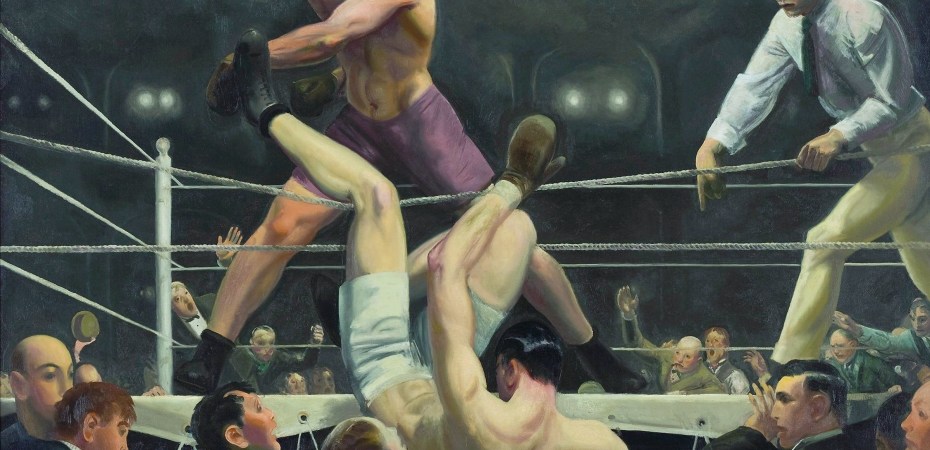
It was supposed to be a friendly, the penultimate fight of the evening. The four previous bouts had been good-natured enough – honours even, two wins each – but right from the bell Nizar Khawabi went at Fellows like he wanted to hurt him. As soon as the initial surprise wore off, it had made the Briton grimly determined. I went through in my mind what had happened next.
Khawabi almost broke Freddie’s nose in the first minute of the first round, butting him in the face with the top of his head. The referee, sprightly Mr Gwynion, immediately stepped in, and Khawabi raised his gloved hands in apology, the expression on his youthful, bearded face saying it was accidental. But Freddie hadn’t been so sure, and now neither was I.
Fellows gave him a couple of kicks in response that had the home supporters cheering, and he followed up with a straight right to the chin that stunned his opponent. Freddie was delighted, but immediately Khawabi countered, driving him back. It was remarkable. Almost any other amateur fighter would have been on the back foot after a blow like that. But not Khawabi. That was when Fellows knew he had a battle on his hands, and so did the crowd.
The former combat engineer withstood the onslaught until just before the bell when the Middle Easterner hammered him in the kidney. The Khawabi camp crowed. It was all Fellows could do not to show he was hurt, but everyone knew was. In the corner, the Druid fed Freddie water and words of encouragement.
‘Whatever you do, boy, don’t go down. Listen to me, Fred.’
‘I’m listening,’ gasped Freddie.
‘Listen, don’t lose your temper with him. Use your brains. He’s a grappler, you’re the better boxer.’
Some of Freddie’s friends were giving Khawabi the bird. Mr Gwynion went over and talked to him, reminding him it was supposed to be friendly. Freddie Fellows danced about with the pain. But as he liked to brag, he’d trained for pain, and reckoned he was its master.
Some of the chaps were calling out to him.
‘Sprawl and brawl, Freddie,’ came the advice. ‘Sprawl and brawl!’
It was good advice, even if I disliked the term. Yes, if Khawabi came in for the double leg takedown, Freddie ought to drop his hips and shoot his feet back, driving down the head and shoulders of his opponent before disengaging. That way Fellows could stay upright and be able to press the advantage with his fists.
The Druid had some advice for Freddie as well. When he returned to the corner, he put his mouth close to Freddie’s ear, and I heard him say, ‘Don’t let the side down, Fred.’
In response, Fellows danced around, punching his gloves together. ‘Wants a battle, does he?’
As soon as the bell sounded, the two fighters went for each other.
They traded blows, circling round, searching for advantage as they punched. Khawabi came in close with the left hook, searching for the liver, and Freddie Fellows let him punch, to show he could take the punishment, before defending with the low-guard right arm and driving him back.
Fellows was the better boxer, no doubt about that. That was why he ought to stay on his feet. In contrast, Nizar wanted to ground and pound. He was a grappler, trained in the brutal techniques, so Mr G had explained, of traditional Yorkshire wrestling. It was dictated by physique. Even though they were both light heavyweights, Freddie Fellows was tall and had the longer reach, whereas Nizar was short and squat, his centre of gravity much closer to the deck.
And suddenly he was quicker than Fellows, cleverer as well.
The liver shot driven home perfectly is a beautiful and terrible thing, and the Englishman had fallen for it like a fool. Nizar Khawabi let Fellows throw his right at him, and then he was inside, Freddie’s low guard too high, giving him all he had under his exposed ribs. To judge from the stunned reaction, it was as though Freddie’s liver had parted his lungs and collided with his heart.
That must have been when the trigger word sounded automatically in his head: ‘Counter!’
But Freddie didn’t counter. For some strange reason he couldn’t, and it wasn’t because his legs had gone or the tank was empty. I saw him retreat, confused and unable to punch. He hadn’t ignored his training, he’d wanted to counter, but something stopped him. And that something was Khawabi. It was the force of his will. In that moment I knew it. I even thought I could see it in his gleaming dark eyes. It was remarkable.
The only consolation for the home side was that Fellows didn’t go to ground.
Somehow, despite the weakness and pain, he managed to stay on his feet and fend off Khawabi’s attack. Somehow, he put distance between them, desperately parrying a flurry of kicks, but it only delayed the inevitable. At the death, Freddie was all but flailing, and when Nizar Khawabi swept his legs from under him, Fellows had nothing left. Down he went.
Khawabi had grounded his opponent. Now he proceeded to pound him. Fellows tried to defend, but he was being pounded, punched in the lower back over and over again, and then the referee, Mr Gwynion, was tearing Nizar away, and the spectators were roaring, both for and against.
The verdict: technical knock-out due to incapacitation.
‘Irish fellow,’ explained the Druid, ‘up in Yorkshire somewhere – Rotherham, Wakefield, I forget which. It was he who taught Khawabi. Yes, Mick Corcorren, that is his name. He started this gym, the Snake Pit it was called. Gives you some idea, doesn’t it? Catch-as-catch-can. The only rule was you don’t break bones.’
I resisted the temptation to comment on how lucky Freddie had been.
‘Yes, he owns a minicab firm now, over in Whitechapel, I think.’ Gwynion suddenly pointed, and I looked through the office window. ‘There he is. Come to see his boy.’
We all looked. Mick Corcorren was a tall, spare figure with the broken face of a bruiser. Even from a distance, he gave off an air of menace.
‘What has he got?’ asked Freddie, sniffling blood. ‘Nizar Khawabi, I mean. What has he got, Mr G, that I haven’t?’
But the Druid did not answer. He went closer to the office window instead, and looked across the nave to the fighting cage where the final bout of the evening was under way. Tahir, the owner of the visitors’ gym, was refereeing. Freddie looked to me for an answer.
‘Baraka, you mean?’ I said.
I had the idea that Freddie Fellows was experiencing a mixture of anger and envy. Freddie knew what baraka was. He knew what it was, and knew he didn’t have it. The Druid had it, and so perhaps did the man who had just beaten Fellows in the ring.
‘Baraka,’ I said, quietly. ‘An indwelling spiritual power inherent to holy men, and to charismatic leaders.’
We sat in silence for a time, listening to the sounds of the fight. The final matched pair were heavyweights, and to judge from the crowd’s muted reaction, taking things cautiously, as though neither man wanted to get hurt.
A short time later, I heard someone coming up the wooden steps to the office. It was Nizar Khawabi. Unsteadily, Freddie Fellows stood up, empty tea mug in one hand, an ice pack in the other. Caradoc Gwynion opened the half-glazed door. Khawabi thanked him.
‘And thank you,’ said Khawabi to Freddie Fellows.
For a moment, I wondered if Freddie was going to make a complaint about his opponent’s unsporting behaviour, but he did not, and nodded an acknowledgement instead.
I was examining Khawabi’s appearance as he stood politely on the threshold. What I saw displeased me. He’d put on an old tracksuit, and on his head he wore a cheap beanie hat. It was a prosaic combination that offended my sensibilities, dressed as I was in the black uniform of a fencing master. Khawabi looked entirely ordinary, an everyman, yet another interchangeable Londoner.
I wondered if I’d been deluding myself. Khawabi looked so benign, in fact, that I would not have been surprised if he’d apologised for the beating he’d given Freddie.
He said, tentatively, ‘We should have a rematch. At Tahir’s gym?’
‘A rematch?’ said Freddie. ‘You try and stop me.’
‘Perhaps you’d like to fight me, instead,’ I suggested, but Nizar did not respond.
I was about to repeat the challenge, and add ‘with swords,’ for Mr G had mentioned that Tahir and company trained with the shamsir and separ, when there came a victorious cry from the visitors.
It sounded like our boy, Danny, had been bested. Khawabi glanced round to see what had happened. The match was ended. The home side had lost, four-two. Momentarily, Khawabi looked pleased. Despite the beard, the face was boyish, blameless even. I was about to repeat what I’d said, but there was someone else loitering on the steps, and the moment passed.
‘Well, goodnight,’ Khawabi said to Freddie, before smiling briefly at Caradoc Gwynion.
He didn’t even glance my way. Off he went, back to his friends, some of whom were already preparing to leave. They received Khawabi with jubilation.
‘No chance of getting a cab tonight,’ said Mr G. ‘The car park is rammed. Anyway, here’s the doctor.’
It was the bodybuilder, Ajay. He came and stood in the doorway of the office, his lopsided head perched between bulging shoulders.
‘So, how you feeling, mate?’ he asked Freddie with unpleasant familiarity.
‘Never better.’
For a moment, Ajay grinned unreliably at me. He’d just returned from Turkey, where he’d had his perfectly healthy teeth veneered a cut-price white. The new teeth suited him. They looked unnatural, fake, just like he did.
‘So, you don’t want me to look you over?’ he asked Fellows.
‘Piss off, can’t you? Go back to Tahir’s, I’m all right.’
‘Banter,’ said Ajay, grinning indulgently. ‘Well, you know where to find me, the London Free. Till tomorrow, anyway, we’re closing shop. Thing with haematuria is, though, Frederick, you don’t always see the blood in your wee-wee.’
When none of us responded, Ajay waved a friendly hand, and left.
‘Little shit,’ pronounced Freddie Fellows, and looked at me. ‘I don’t know why you let him come here, I don’t.’
‘I’ve nothing to hide,’ I said.
‘That’s not the point, is it?’
‘Remember yourselves,’ said Caradoc Gwynion, speaking over Fellows, ‘always and everywhere. That is the beginning. Goodnight.’
And with that, he set off down the steps. But at the bottom, he paused and said:
‘Justin, take boyo to the hospital tomorrow. He’s off on his holidays, remember? You don’t want to get sick abroad, Fred. Goodnight, both.’
Dutifully, we both wished the old man goodnight.
‘You heard what he said, Freddie.’
‘All right, all right. But not the Free. That Ajay, he gives me the right hump.’
That night, I was the last to leave.
When everyone had gone, I went round making sure everything was in order. I loved the silence of the deserted former church, loved to be alone there. It gave me the opportunity to remember myself, and to think. I thought about Freddie Fellows and his ‘holiday.’ In fact, Freddie was off to Spain to work as a stuntman and fight co-ordinator on a Hollywood movie about the Crusades. Freddie’s partner, Nikki, would manage the Academy in his absence.
Freddie wasn’t the only one going away. My mentor, Mr G, I expected to leave as well. The Academy’s inner circle had already dispersed. Seb was in the Far East on diplomatic business, young George had been posted to Cyprus with his regiment, and Rob was down in Dorset, training Ukrainians in the use of tanks. Theresa had left too, forsaking Chelsea for the family pile near Elgin in the braw north-east of Scotland.
But I was not perturbed. I prefer my own company, even when danger is at hand.
A blare of rap music from the open windows of a passing sports car caused me to scowl. I’d been about to leave but decided I’d play some music instead – real music, not the commercialised crap pumped out from the capital city’s speeding muscle cars.
Aware of what I was doing, I climbed the stairs to the organ loft, and threw a leg over the wooden bench seat. Then, I made myself comfortable and began to play Widor’s Toccata. I was reminded of school, of learning to play the piece, aged sixteen. You see, something else had put me in mind of school, as well: Nizar Khawabi.
It had brought me up short, earlier that evening, when Caradoc Gwynion had casually mentioned the name of the visitors’ charismatic leader.
For a moment, I was eighteen years’ old again, studying maps of the Middle East in my bedroom at boarding school, planning to travel in the footsteps of my hero, T E Lawrence – for Khawabi was an ancient fortress on the coast of Syria, and the Nizari fedayeen – whose literal meaning is those willing to sacrifice themselves – were also known as the Order of Assassins . . .
I knew something else about the Order as well. As Ismailis, the Nizari were Bataniyya, meaning that they looked beyond the apparent or exterior meaning of the holy scriptures, towards an inner or hidden meaning.
Was this the source of the man named Nizar Khawabi’s charismatic power?
I thought it might be, and I thought this had to be the reason that Caradoc Gwynion had brought him here, to my Academy of Traditional European Martial Arts.
Yes, it was obvious. Nizar and I were destined to cross swords.
As the final chords of the Toccata faded, and their echoes died inside the stone edifice of the church, I began to play the opening bars of William Walton’s Crown Imperial march.
It was almost midnight before I left. The minicabs and people carriers were long gone, back to their own part of town. The unlovely stripe of the Commercial Road was nothing but streetlamps and brake lights, noisy vehicles and neon signs. But even here, in the tainted metropolis, you could sense the seasons changing. Summer was coming, when all the pent-up tensions of winter would be released.
I pulled on my helmet and mounted the Triumph Tiger.
I usually check the bike over when it’s been left unattended – in my line of work, you can never be too careful – but for some reason, that night I did not. And since the bike was garaged overnight, I didn’t check it in the morning either. It was only when Tom Buchan came into my office at 9.05 with a sheepish look on his face that I knew something was wrong.
What I didn’t know was that it was the beginning of a week that would change my life entirely.
Discover more from Decadent Serpent
Subscribe to get the latest posts sent to your email.
