
Author: Mateusz Kowalski. Mat is a neurospicy chaos incarnate working in the video games industry. Fan of everything occult, horror, fantasy and retro with an occasional sprinkle of sci-fi and Magic: The Gathering. A self-proclaimed failed cook.
45 hours in, 2 cents from me on The Veilguard, especially since there’s a lot of negative publicity around the game (it’s going to be a couple of screens, so you can skip the stuff if you don’t care).
I’m going to preface this with:
- Dragon Age 2 was panned.
- Inquisition was panned.
- It’s been a decade since the Inquisition was released.
Now, with all of the above out of the way, let’s start with the good stuff:
- The graphics (not the art direction) are gorgeous.
- The music is spot on.
- Yes, it still feels like Dragon Age – to some extent.
- It gets better after the exposition.
- Combat is fun even if targeting feels clunky at times.
Here goes obviously bad stuff:
- There are no tavern songs.
- The writing is… questionable at times, and never truly amazing.
Now let’s talk about the elephant in the room – the plot and the writing. To understand where all of this stems from, we also need to understand the rocky road BioWare had to deal with since Inquisition – namely, the initial push towards the live service model that was axed after the colossal failure of Anthem and the absolute turmoil caused by the developers leaving here and there. In general, it’s almost a miracle that Veilguard happened and, looking at some game comebacks (cough, HoMM series, cough), I’m grateful for it actually being released. A dish that’s restarted multiple times can’t be fully successful but where it succeeds, it hits. Where it doesn’t, it leaves rather sadness than anger.
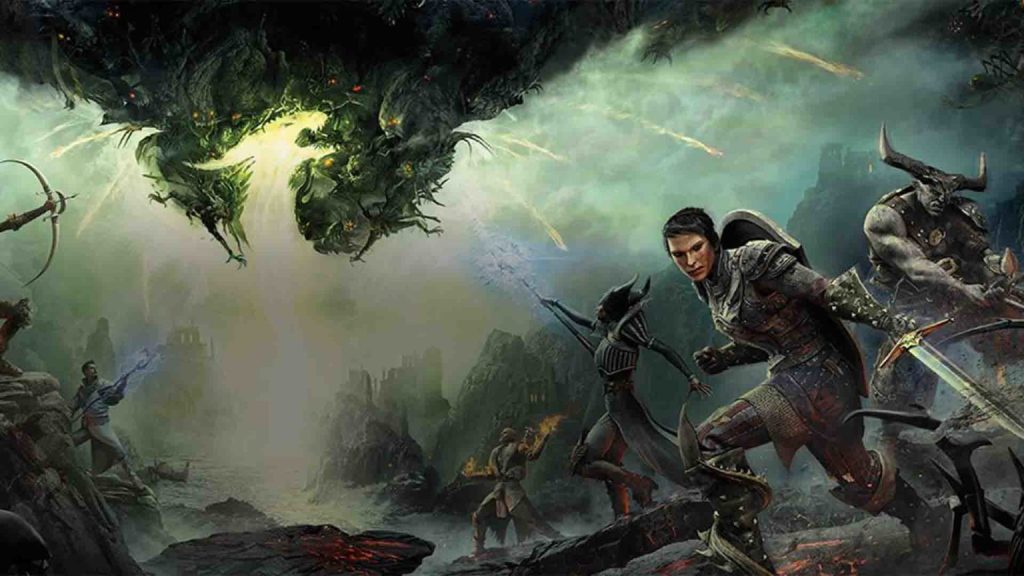
There’s an observation that keeps on reappearing pretty frequently – that BioWare wrote the game for the fans of Fortnite and Marvel, making it more Avengers-style than anything. And… well, every game in this series is a denizen of its age. None of them are as anachronistic as the Soulsborne series and they will never be. Dragon Age: Origins was the comeback to the golden age of BioWare’s RPGs mostly due to licensing (or the lack of it). The World of Thedas was different, grisly and on the verge of an ancient apocalypse coming back. The mythology was there, the cultures were different from what we knew, and it touched on subjects such as racial segregation (the elves are screwed, let’s be honest, being either outcasts, immigrants living in bad conditions or just straight out slaves). The sequel was the answer to the rising popularity of ARPGs (Action Role-Playing Games) but fell short in some respects (the repetitiveness of the dungeons is a recurring nightmare). Still, it did some things right, focusing on themes of greed, migrant crisis and cultural differences, proving that downscaling the world to a city can be a success. Indeed, where Dragon Age II fell short was trying to keep up with the trends and trying to ship the game on a tight deadline (basically, the game was pushed to the public faster than an assembly cycle of a McDonald’s cheeseburger). Lastly, Inquisition was an open-world mess that would probably benefit from cutting down on the extra content (whoever played it knows that the best tip you can give to someone is to get the hell out of the Hinterlands as soon as possible).

The Veilguard didn’t have much of a luxury as a game of the live-service age and it’s glaring everywhere – respawn points, weapon upgrade system (copies meld into an upgrade) or very compartmentalised missions, akin to Inquisition and II. The main problem is, however, that the writing has changed in line with the world-building.
You’re supposed to save the world again. You’re supposed to fix the mess Solas started (the same guy who turned out to be a renegade rebel god of lies in the epilogue of Inquisition) and suddenly the stakes are again massive. Where the problem starts, however, is the treatment of the main characters who often act like a teenage cast and the world-building itself.
Let’s start with the latter – the previous Dragon Age games had some heavy plot points and while Veilguard tries to do it, it focuses so much on the big picture, that it flattens some of the content. Some of the nuances like Qun – a doctrine of life of the Qunari race – are lost when your main points of contact are a girl raised outside the Qun and the brainwashed Antaam who openly defy their cultural constraints. This is a conscious choice of the writers and I could bring more and more examples (like the Tevinter Empire looking less psychotic than what it was depicted in the previous games) but Qun itself shows where the problem lies: this game comes out after a decade (the previous 3 were released in 5 years) and needs to both attract the new and the old players. This isn’t a direction I’d wish for anyone responsible in the game dev. It’s BioWare doing what the market needs (let’s stop the “bad EA” stuff for now. It won’t help anyone). The game needs to sell but it also needs to bring in the new audience, so it’s going to dumb things down.
This, in turn, however, results in changes that sometimes can be baffling. Understandably, not everything can be equally fleshed out, however, given the fact that the main plot points revolve around two elven gods returning, not seeing elves rallying to support them, or even questioning whether their presence is good is glaring.

Another byproduct of simplification is that the characters suffer from heavy-handed expositions and only start to grow on the player after a while – the time during which one might hit that uninstall button. For example, one of the companions, Davrin, rubbed me in the wrong way as a petulant emo boy (and trust me, if I wanted another sulking Warden, I would’ve chosen Blackwall from Inquisition) that is babysitting a mandatory comic relief in a form of a baby griffon. Only playing a bit more made me understand his struggle – suddenly being responsible for something more than himself.
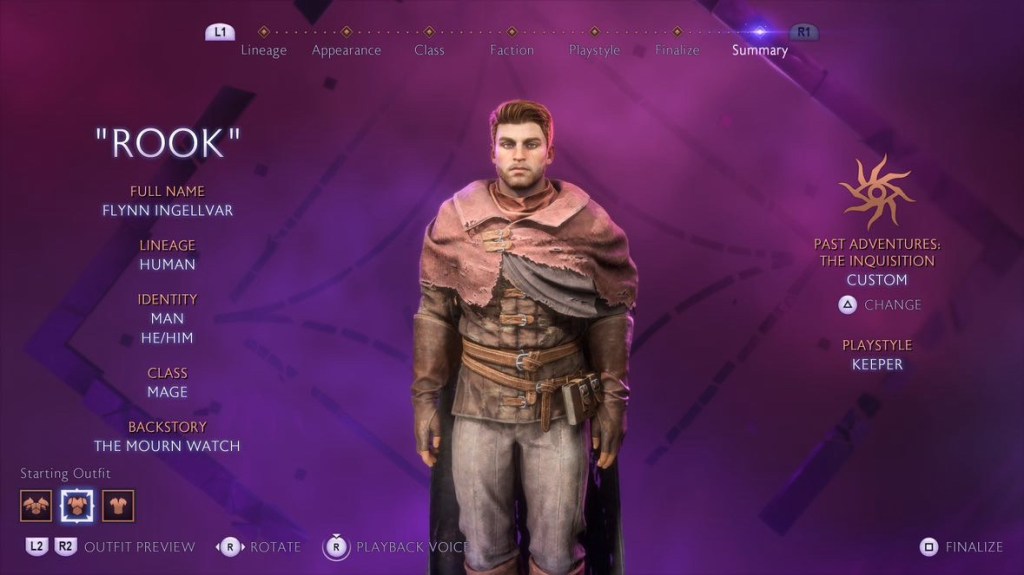
BioWare are known for trying to be inclusive (unless it’s romancing Cullen, apparently) and they’re also known for faltering at doing so when exploring something new to their world (it took 5 years for Kaidan to become a romance option for both genders). This feature might not resonate with every player; however, it adds a layer of depth that, when executed properly, is appreciated by players who enjoy diverse character options. The problem we face is, however, that it is such a delicate subject that while we need to appreciate the pioneering approach from BioWare, it needs to be pointed out that only further down the line, do the choices start to fit the main narrative. Alright, on the other hand, some of the exchanges are so sweet and sugarcoated, that one might get diabetes from just reading the text. However, it needs to be stressed here: BioWare isn’t forcing any agenda down any player’s throat, as some may claim. In the end, how someone’s story develops and who they identify as is boiled down to the user’s choice. There are options on how you act and fit yourself in the world of Thedas – yes, diversity is praised but it’s not a make-or-break feature for progressing the main storyline.
And yes, some of the dialogue is awful. The banter isn’t as sharp and crisp and the fact your party is based on 3, not 4 like in previous games, makes it a glaring problem.
Still, I can’t stress this enough, it feels like a BioWare game, and it feels like a child of love. The amount of detail put in some of the descriptions and Easter eggs makes it clear that the writers knew the material they worked on. They just made erm… questionable choices here and there (everywhere).
Easter eggs-wise, one of the most annoying development decisions was the one to cull Dragon Age Keep – a portal that used save game states for world-building in the sequels. In its scope, Inquisition was tremendous and boiling it down to less than 5 decisions during character creation makes the appearance of the person you played in the previous installment a cameo and nothing else. And if someone tries to get beyond the status of cameo… well. Morrigan sounds like she’s retired and mellowed down (this is what getting kids does to you, apparently) and Isabela didn’t age gracefully either, being a pale version of her former sassy self.
Yes, Dragon Age: The Veilguard is weird and at times painful to play. But behind all these problems which constitute only a part of the actual game, is a breathing world crafted with love. It has engaging combat, is heavy on the plot and tries its best. It’s a great RPG and it’s also a great reminder of what made you love this series in the first place. At the same time, however, it’s getting repeatedly bashed for the same factors as the previous titles – the writing, the systems, the companions. And yet, in time, the previous instalments are looked at with fondness. For a comeback to an old series and an attempt at continuing the old plot while not forcing newcomers to play the previous titles, the outcome is plausible. It’s still entertaining, engaging and probably the only modern Western RPG that doesn’t try to punch your gut in or turn itself into some gacha derivative halfway through. If you add to the fact that the DA veterans have jobs and kids now and no time like back then… it’s a damn good effort worth more than a try.
Discover more from Decadent Serpent
Subscribe to get the latest posts sent to your email.
