
Author: Giulia Prodiguerra. Giulia is the Chief Columnist at Decadent Serpent. Italian-Scottish writing aficionado, jack of a very few trades. Loves art in all forms, and has a soft spot for videogames (but not very good at it).
After the cold nights haunted by the ghost of Lucida Mansi in Lucca, we move to a far warmer place in the South of Italy: Alicudi.
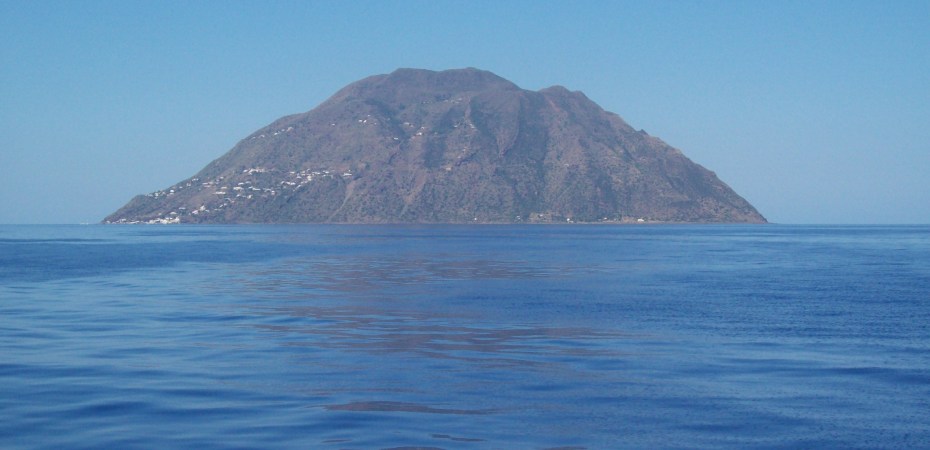
One of the seven inhabited islands in the Aeolian Islands archipelago (Isole Eolie or Isole Lipari in Italian) the volcanic island of Alicudi presents itself as a slice of silent paradise frozen in time: 120 residents, no cars, no roads, surrounded by the crystalline waters. A quiet place, where nothing out of the ordinary would be expected to happen, with donkeys as the only means of transport and fishing boats placidly docked. The Ancient Greeks called the island Ericusa, the “purple island” due to vast amounts of purple heather.
But the pink villa that towers over the old village, where the mill was, gives us an insight into a far more mysterious past. Here, a famed hallucinogenic bread was supposedly prepared in the early 1900s, while stories of witches (called mahare) flying to Palermo, ghosts and men transforming into donkeys populate the traditions of the island. The constant threat stemming from storms and sea trumpets also played a crucial role in the development of the island’s legends.
Already in 1835, during his travels, Alexandre Dumas (author of classics such as The Count of Monte Cristo and the Three Musketeers), wrote about the island: “It’s a corner of the earth forgotten by creation, and stuck in the era of chaos.”
Some residents would firmly deny anything unusual, while others would absolutely confirm that yes, among the placid donkeys and the blooming trees, obscure forces are at play.
THE WITCHES OF ALICUDI

The Mahare are one of Sicilian folklore’s most intriguing characters. Also known as “Mahare Arcudare”, Witches of Alicudi, or Sea Witches, they are described as three mysterious women, all dressed in black, able to shapeshift into animals such as crows and cats, soar in the sky and dictate the fate of the sailors out at sea. They have feminine features, and usually appear at sunset, getting ready to fly to Palermo or to the African coast to gather more provisions for their potions and brews.
But the Mahare are not evil in all their depictions: some versions show them preparing large banquets and inviting sailors to take part. If the sailors accepted the food offerings and participated in the banquet, they would be protected when out at sea. Instead, if they showed mistrust, the consequences might be deadly.
It’s also said that the Mahare would pass on the art of the “tagliata” to sailors. The tagliata (which can be translated to “cut”) is a specific combination of prayers and rituals which is supposed to dispel storms and protect ships. When the “cutter” sailor sees a sea trumpet or storm heading towards the boat, they will perform the precise gestures and recite the words, and this would allow them to “cut” the storm in half before it approaches the boat. This tradition is still alive in Alicudi and Lipari.
But is Alicudi really a haven for the supernatural, a place tucked away from the mainland where sailors can command storms and witches roam free, or is there another explanation?
Most historians, including the local Elio Zagani, have agreed that how to explain the facts that gave the island its reputation, is possibly ergotism.
WHAT IS ERGOTISM?
Ergotism is the effect of long-term ergot poisoning, traditionally due to the ingestion of the alkaloids produced by the Claviceps purpurea fungus—from the Latin clava “club” or clavus “nail” and -ceps for “head”, i.e. the purple club-headed fungus—that infects rye and other cereals. It is also known as ergotoxicosis, ergot poisoning, and Saint Anthony’s Fire or Holy Fire (named after monks of the Order of St. Anthony, who were particularly successful at treating this ailment).

Ergot thrives in conditions of high humidity and damp storage, and it was the base element of the drug LSD before it was scientifically synthesised in 1938. It causes serious hallucinations, gangrene, convulsions, and in some cases, death.
Throughout history, outbreaks of ergotism have been documented, from France in 944 AD to the Salem Trials in 1692, and have definitely contributed to many local legends and folklore. Ergot has also been suggested as one of the main causes of the Dancing Plague that wreaked havoc through Strasbourg, Alsace in 1518.
Zagani proposed that the village women would communally bake the hallucinogenic bread each morning, which was then consumed by all families on the island, with the main hallucinatory spells seeming to have happened between 1902 and 1905. Since the bread was made with infested rye, the bread was laced with the fungus. The population of the island was poor, so they couldn’t afford to waste rye even if it was infected. In some cases the infected rye would be treated with mercury, making the situation even worse.
However, the short period of time identified by Zagani is not nearly enough to explain the number of detailed stories, repeated experiences, and consolidated traditions, therefore other theories propose that the lacing of the bread actually went on for decades. The anthropologist Paolo Lorenzi suggested that it was the British who brought the fungus to the area. They would go to purchase Sicilian Malvasia grapes and pass the Aeolian islands. This would explain how the fungus found itself in a very unfamiliar environment.
Another supporter of Lorenzi’s theory that the infestation might have been ongoing for longer than suggested by Zagani, is the anthropologist Macrina Marilena Maffei, who believes the infestation could actually date back centuries. There are suggestions that the visions and traditions might not only be linked to the ergot infestation but to a much deeper-rooted shamanic tradition, which seems to be confirmed by the fact that the locals are very familiar with the ergot, which they nicknamed “ember”.
It is also interesting to see how many stories not only merge with Alicudi’s local folklore but also with Christian and Catholic beliefs.
For example, it is believed that between the 20th and 24th of August, the days dedicated to celebrating Saint Bartholomew, serious accidents happen around the island. This is blamed on the fact the statue has been moved to another church closer to the village from its original location (situated on the highest point of the island) and the Saint is unhappy with the new location.

But is a rye infestation enough to give a logical explanation to all these legends? For sure, places like Alicudi deserve to be valorised and protected, independently from witches or ghosts, for generations to come.
Further watching:
Discover more from Decadent Serpent
Subscribe to get the latest posts sent to your email.

)