
Warning: this review includes spoilers
The Substance Review – Dinah Kolka
Author: Dinah Kolka. Dinah is the founder of Decadent Serpent and a graduate of Edinburgh Napier University with a BA(Hons) in English Literature. Her work has been featured in publications such as The Salisbury Review and The Mallard. She was also published in the Scottish Book Trust’s 2018 anthology Rebel. In 2023, Dinah self-published her own collection of short stories, The Search and Other Stories.
The most frustrating part of this film was that I loved it. From the very first second, it was a 10/10. With high-pitched loud electronic music that would creep up to your throat and clasp you while the hyperrealistic scenes roll onto the screen, the crunch of shrimp eaten by an ugly mouth, it was beautiful and soul-wrenching. The format of the film worked perfectly with the theme it was trying to present. The Substance is about Elizabeth Sparkle, a 50-year-old woman, a fitness guru who basically gets fired on her birthday for being too old. She then encounters ‘The Substance’, a chemical that will replicate her DNA, to create another, better version of herself. The deal sounds great – the only problem is – they must switch every 5 days to replenish fluids that keep them going. So, for 7 days, she is the dazzling, plump, beautiful girl in her early twenties, for another 7 she succumbs back to being her old, withered self. We can see how this can go wrong very quickly.
The message of the film corresponded perfectly well with the way it was filmed – close-ups of every wrinkle, imperfection, and saggy body part. It was uncomfortable and it made you grapple with the harsh truths of aging. Demi Moore as the protagonist performed beautifully, with a zest not often found in many actresses. The beauty of the film was its rawness, and its uncompromising desire to present the reality of struggles of a lonely woman. At no point do we see the ‘old’ Elizabeth surrounded by friends, family, or lovers. She is lonely and all she had was her career. Now this career is over – and she has nothing left.
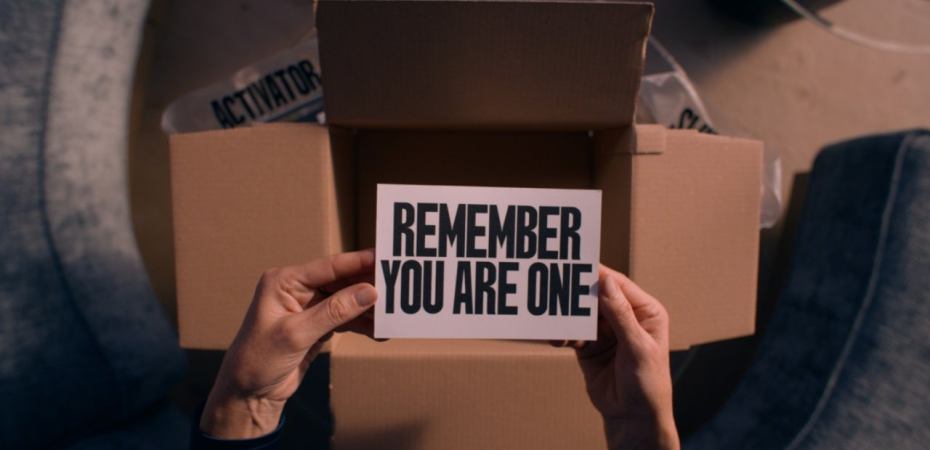
On the other side, the young version of her, ‘Sue’, is glamorous, gorgeous and great. She dates, she goes out with friends, and her career flourishes. But as the man who sold her The Substance states ‘you are one’. It is easy to forget that your younger self and the older self are still the same person, and you must make peace with the fact, that they are both within you. This is a film about the struggle to accept the passing of time, wrestling with the concept of ageing, and the difficulty of navigating the world as a woman when you are no longer relevant. And it is a difficult battle to fight – they start hating each other as the film progresses. Sue resents Elizabeth for wasting her time on eating and watching TV and doing nothing productive with her time, whilst Elizabeth resents Sue for being able to do things she no longer can. It’s almost a toxic mother-daughter relationship, with resentment on both sides, simply because they can’t accept the passage of life.
But the film eventually goes in a completely wrong direction. And I say this, accepting that one of the chief influences for the director Coralie Fargeat is David Cronenberg. I get it, you loved Crash. The problem is that if you try to create a film that has high critical appeal, maybe, just maybe, don’t put grotesque blood spraying at the very end with an ending that was wholly unnecessary. We learnt the lesson of the movie. Why prolong it? It was one of those endings where you can put a finger on an exact scene where it went wrong. I was willing to give it a benefit of the doubt – nearing the end after Sue kills her other self in a Jungian premonition, she finds that she’s basically disintegrating. So she proceeds to reuse The Substance despite explicitly being told not to. But this leads to her horribly disfiguring herself and turning into a grotesque monstrosity. The said monstrosity proceeds to walk through the hall filled with people, with all of them telling her she’s beautiful – this could have worked. The simulacrum. People don’t even notice she’s a monster as she places a mask over her face. This has been done and has been done well in other films. But no – The Substance has decided to take that away as the second the monster appears on stage; everyone starts pointing fingers and calling her a freak. Either keep up the pretence or don’t include the pretence at all. And I get it – if you truly feel like you need to make a film overusing fake blood, just leave it for another film. Please.
Overall, my rating of The Substance has gone down from 10/10 to 7/10 as a result of the really poor ending. Saying that – I still recommend you see it. It is a poignant film dealing with haunting parts of the feminine psyche. The very next day after seeing the film, I looked at myself again, both grateful for still having some time left. But there are days when I can understand the old version of Elizabeth Sparkle acutely, which makes me wonder – if I had the chance, would I take The Substance? On some days, I would say yes. And I won’t be wrong if I say that most women who are reaching their late 20s and over are going to understand what I mean.
The Substance Review – Ross Hepburn
Author: Ross Hepburn. Ross is an avid fan of horror and a founder of HauntedBurgh, a ghost tour company operating in Edinburgh.
I need to preface one thing before we get into this review. For anyone familiar with my taste in the horror genre, it’s clear that I’m not the biggest fan of the sub-genre known as body horror.
I loathe Brian Yuzna’s cult classic Society, and I’ve never liked any of David Cronenberg’s works, which tends to get me into infamous debates in film circles when I mention that I hate Cronenberg’s hailed masterpiece, The Fly.
For me, body horror is one of those genres that’s hard to criticize if people love it. There’s something so taboo and primal about the human experience when watching a body horror film that, when one resonates with audiences, it seems almost impossible to speak negatively about it. The wild hordes of film buffs will come at you, ready to rip out your aorta.
With that said, when I heard The Substance was coming to cinemas, my interest was piqued. What initially drew me in was the Oscar-bait level of positive praise the film was receiving. It also featured a respected cast, including Demi Moore and Dennis Quaid, and had won an award for its screenplay—a rare accolade in horror that should never be overlooked.
The film’s tone and atmosphere have a surreal, almost distorted quality of reality. It manages to address the subject of ageing and the associated struggles while weaving in strong elements of realistic satire that will captivate you through the strength of its storytelling. The film handles its themes perfectly without relying on tired, overused messages or exposition dumps to bring you up to speed if you’re unsure of what’s happening.
Demi Moore delivers possibly one of the most fearless performances of her career. While her work in the ’90s was impressive, in this film about an ageing star, Moore excels in portraying someone desperately clinging to their past and youth.
Dennis Quaid is wonderfully over-the-top in this film. He expertly performs his role as a Hollywood producer. Let me say this: I like Dennis Quaid as an actor, so his presence on screen was always a joy to watch.
Then we have Margaret Qualley, who, thanks to the help of this black-market drug called The Substance, portrays a younger, more youthful—and in every possible way that a woman’s body can be displayed—sexier version of what Demi Moore’s character longs to be again. I’m loving this new era of actors in independent films. We’re witnessing a fearlessness in actors who are willing to bare all and deliver performances that many would shy away from, fearing the impact on their careers. Thankfully, that’s beginning to fade, and Margaret Qualley proves it in this film and role.
Of course, with this being body horror, I was thrilled to see that most of the effects in this film are done with makeup, prosthetics, and good old-fashioned practical effects. The film fearlessly shoves in your face the biological reality of being human—something we often try to forget. Even I was grossed out by certain moments, but I won’t spoil those for you.
As the story progresses, it grows darker. Demi Moore’s character begins to despise herself more because of her age and resents Margaret’s character for her beauty and youth. She starts to rebel against her younger self, while the younger version becomes greedy over her growing popularity and fame. The conflict between the two escalates, turning into a mix of Jekyll and Hyde and a Faustian bargain. And this is ultimately brilliant—for at least 95% of the film. It could have quickly become my favourite horror film of 2024. But, to borrow a line from Rick and Morty: “I’ve really Cronenberged the whole world up, didn’t I?” Yes, The Substance, you did. Hang your head in shame. I’m not angry; I’m just disappointed.
To explain my point, I have to go on a slight tangent. One of the main reasons I hate The Fly is because it tries to be more than what it actually is. It heavily leans on the performances of Jeff Goldblum and Geena Davis, expecting us to care deeply for the characters and the horrific things that happen to them. But the ending is so ridiculous—with Jeff Goldblum vomiting acid on the only other character besides the two leads, followed by a bizarre reaction shot of the guy getting his foot melted off. Then Goldblum completes his transformation into literally becoming a FLY, ending with an explosion of dry ice and fireworks.
Such a confusing and bizarre ending undermines all the seriousness it built up over the previous 85 minutes. Cronenberg couldn’t end the film seriously, so he just threw everything at the wall to see what stuck. Rather than end it on a note that could have been sombre and sad, he ends it like the B-movie original it was inspired by. And The Fly isn’t the only offender in his work (I’ll rant about Videodrome another time).
The Substance made a similar mistake for me. The final 10 minutes take all the wonderful storytelling, brave central performances, and thought-provoking subject matter and turn the film into a splatter house flick as if it were late to the party and tried to sneak in. The ending expects us to accept it as though it was the film’s intended conclusion all along. I couldn’t help but feel anger, not because of what I had watched previously, but because the ending felt as if it should have been there when it just simply didn’t fit.
This film deserved a much better ending. Everything else about it is perfect. I urge you to see it—it’s fantastic. I do think it’s great. BUT the ending is so catastrophically disappointing and heartbreakingly bad that, despite all the praise and near-universal critical acclaim, I can’t help but feel the film fumbled at the last hurdle.
If you read this review, I need you to do one thing: if you meet someone who likes the film, even if you don’t, it’s fine. Let them enjoy it. Good art deserves to be discussed and debated. Yes, I wanted a better ending, but some people will think it was perfect and ties the film together. I’m just not one of them.
In conclusion, this film had everything going for it. I cannot deny that it’s brilliantly made, fantastically acted, and was so close—SO CLOSE—to being the first body horror I would actually say I enjoyed. However, the ending was all it took for the film not to take its place… though I’ll more than likely still buy it on Blu-ray.
Discover more from Decadent Serpent
Subscribe to get the latest posts sent to your email.

[…] ruining other horror films for everyone else. By the way, you can read my review of The Substance here, below Dinah’s […]
LikeLike
[…] certainly one of the top films of 2024, which we reviewed here, was one of the most culturally significant films of the year. With hyperrealistic shots, visceral […]
LikeLike