
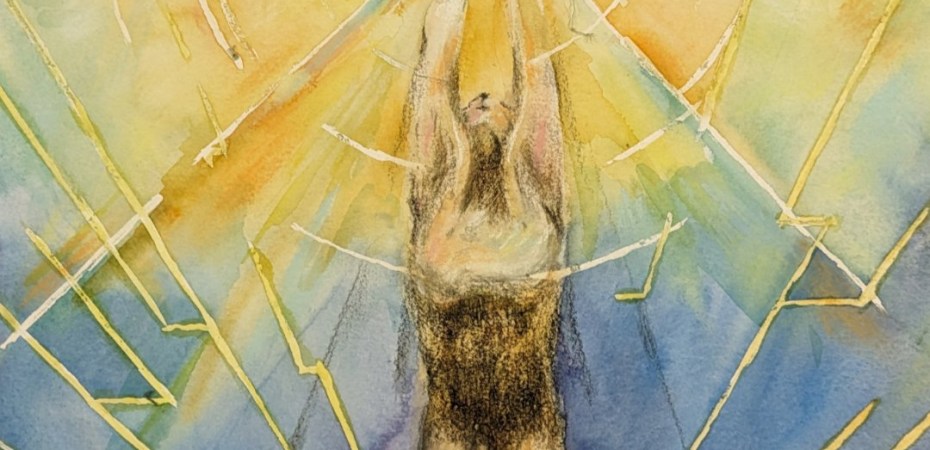
Author: Samuel Wild. Samuel Wild is an artist working in painting and printmaking exploring vitalism and perennialism in art. You can follow his work here.
It can be safely said that over the past few years, there has been a call for a more appropriate art for our age. It is a common perception that there has been a general dissatisfaction with the works presented to us by our major artistic institutions and subsequently, there has been a call for a different model for our art.
Many rationalise this perception within a broader cultural criticism of our society, naming it soulless and confused, a culture that opposes ideals of life and beauty. This, in turn, has been duly complemented by a severe stubbornness on the part of those institutions. An entrenchment has taken place, in both the realms of art and ideology.
In terms of art, a species of post-conceptual work that focuses on a set menu of ideological themes is not only privileged by our institutions but any challenge to it is seen as a direct threat. Why these institutions would wish to forcibly narrow our cultural discourse I will leave to the reader but needless to say, it has engendered a predictable reaction, and it is these reactions, and their possible inadequacy, that is the topic I wish to examine.
One possible solution offered to us is the potential of AI art. The power of technology, according to this theory’s enthusiasts, will allow us to reinvent our former glories in a completely novel context. This age is fundamentally different from those of the past; embrace this or be left to oblivion. Not only that but also AI can broaden the reach of art. Who knew that it was so easy to create beautiful things! Thanks to the power of modern programming anyone can be a Michelangelo or Christopher Wren. This is if we still have time whilst we spend our days fishing, hunting and being critical critics.
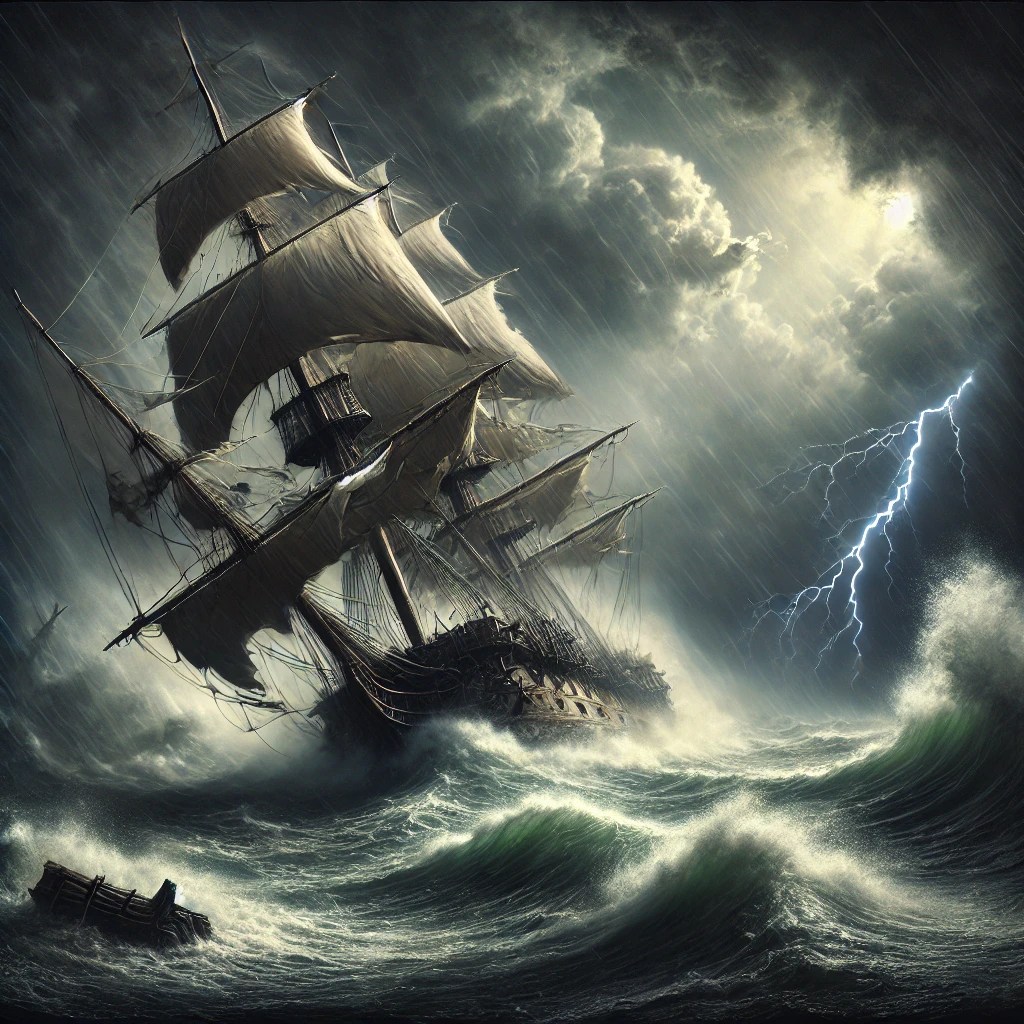
There is nothing new in this outlook. The reasoning of the AI advocates has been proposed many times in the past. For example, the assertion that we must change with the times is ironically as old as the Earth itself. What makes it doubly ironic in this context is that our erstwhile algorithmic champions wish to use this argument to save the art traditions of the past. In order to save carving, we must abandon carving, to save painting we must put down our brushes. In truth, Michelangelo’s and Bernini’s craft differed little from that of Greeks before them, indeed it may have been inferior in many respects. Technology will not give us greater power to become better carvers or painters, only time and work will suffice.
Another example of the fallacious reasoning of these proponents is the dream that this technology will lead to greater creativity. This is a bold claim given we know so very little about it. What counts for creativity with AI is a mere magpie collection of reference points to other, better artworks. To gather these together in a jar and shake them around is not originality per se. For true originality, as William Hazlitt wrote, is novelty plus truth. To be original and creative requires an inquiring and sensitive mind that can realise its own thoughts in a medium. AI is literally prompted to rearrange pre-existing information into a new order; the creation of information itself eludes it.
So much for AI but there is another seemingly contrariwise reaction that we must examine. This is the view that we must ‘return’! Return to what you may ask? To grasp again the sacredness of our mediaeval cathedrals and the grandeur of our Baroque palaces we must return to Classicism, and better still, Classical Realism. The apparent contradiction in the very term Classical Realism doesn’t put off the proponents of this view who advocate that we must revive the atelier method of the old academies. We must copy busts of ancient Greek sculpture, learn about the golden mean and produce our plumb lines.
Now, there is more to this latter view than the former. The Classical Realists recognise that there are no shortcuts and that what is needed is skill and hard study. The study of the past is of critical importance and the resurrection of drawing, painting and sculpting skills is an absolute necessity if we are to pursue any ambitious art whatsoever. The problem here again is the narrowness of the vision and its lack of catholicity and openness.
For which Classicism do we mean? That of Ancient Greece or Rome? That of Florence or Venice? Is Rococo sufficiently classical? There is no dogmatic and homogeneous classical tradition. There is a conversation across time by original artistic minds sharing a common language of design. The present writer considers his own work, meagre as may or may not be, to be in conversation with this larger language but one does not allow one’s own ugly face to petrify this conversation into a dogmatic heap of stone. For languages to develop they must be alive and open to new influences and interpretations.
The emphasis here has been on original minds taking up a language and using it to articulate their own truth. Neither AI art nor Classical Realism can permit this as they fossilise the creative process. Real work is about playing around with clay, studying nature and thinking about colour. There are no handy, off-the-shelf solutions to making great work. Only real human beings engaging with their medium can do this. There is a great horizon for human creativity in this practice and it should be honed, rather than stifled.
The only way forward must be the way of design. Design is the conscious and skilled ordering of elements within a medium, such as stone, clay, paint or textiles. In ordering these elements into a composition a designer communicates something through it, and it affects us emotionally as viewers. Representation cannot be separated from the form. How we make art informs what we say in art. Therefore, the design process and the art of making are bound up in what an artist wishes to say (provided he has actually got something to say, which can never be taken for granted!).
It is imperative therefore that we allow artists to play with the principles of design, with the proviso that these principles are grounded in standards of quality learnt from past cultures and civilization. AI art sacrifices this to the algorithm, Classical Realism imprisons it into the cage of 19th-century academicism. Thankfully there are artists working with a freedom appropriate for our age but are grounding their work in tradition. The work of Matthew Fall Mckenzie and Fen de Villiers exemplify this way of working in painting and sculpture respectively, as well as the designer Ferro in textiles. The efforts of the humble author of this article try to exemplify this as well as he is able. There are many outside the plastic arts too that take a similar stance but in the world of verse, such as Columba and Panama Hat.
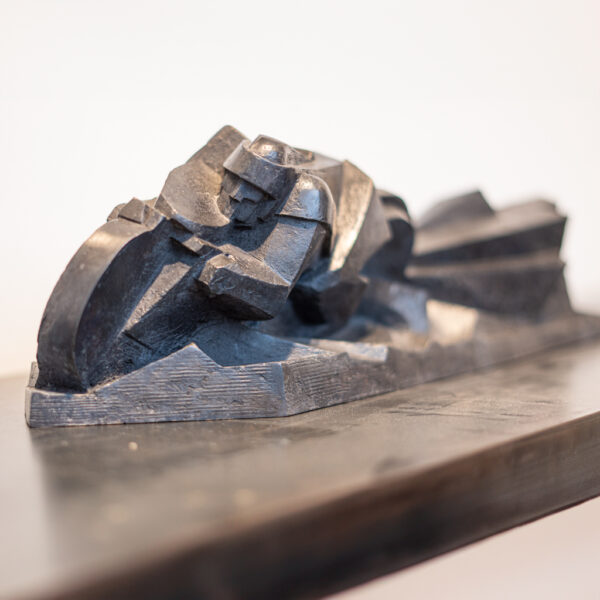
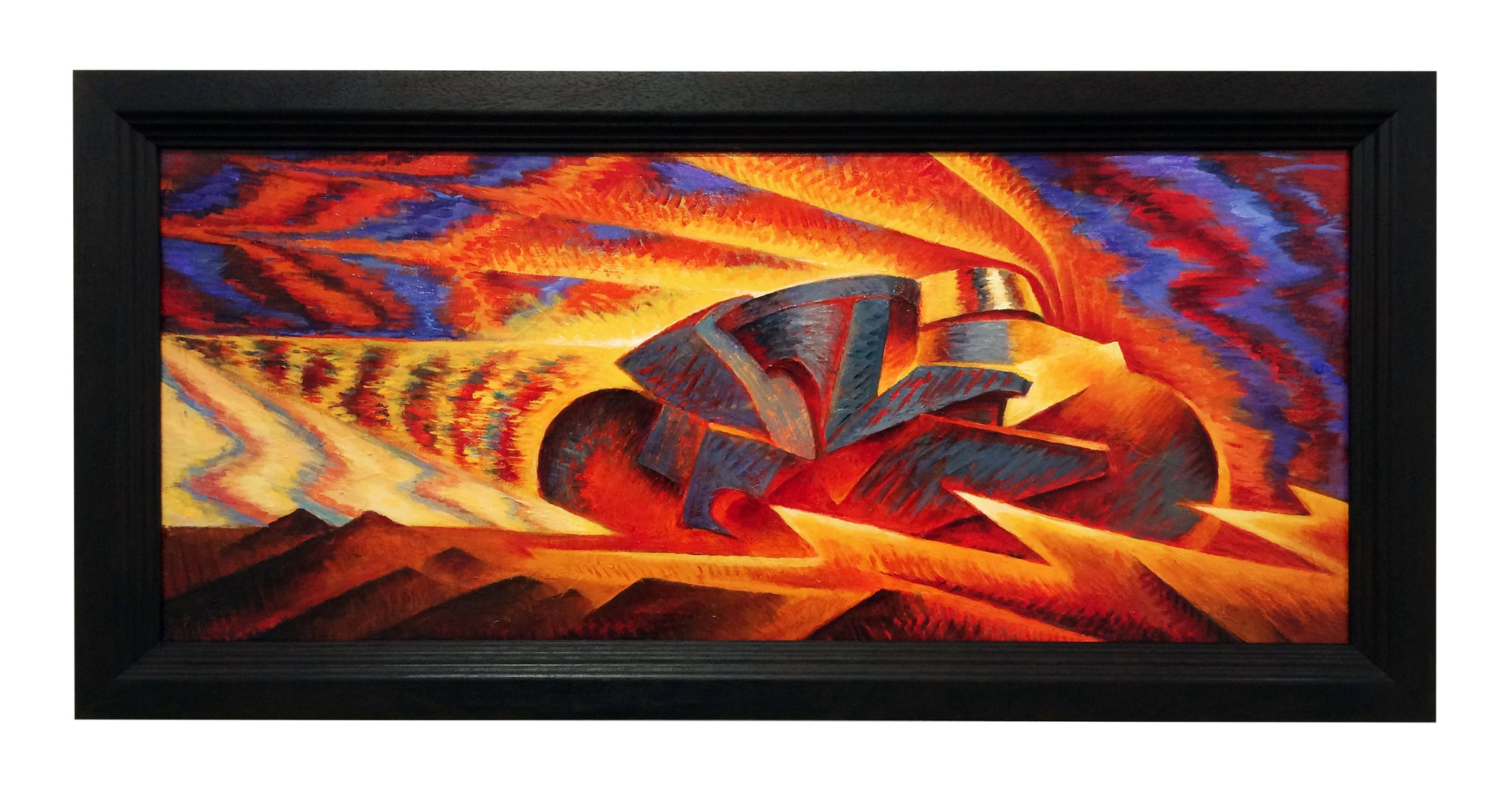
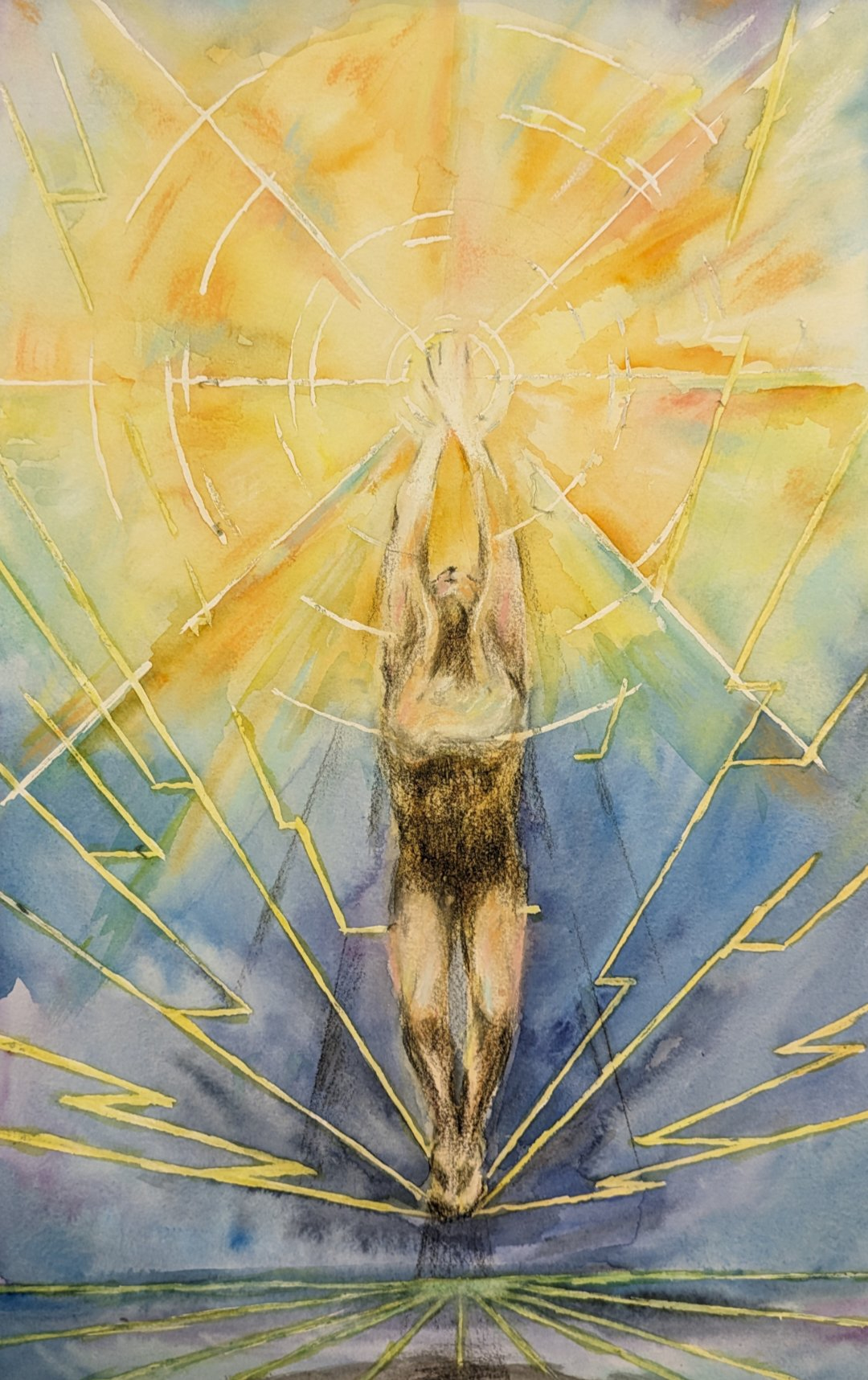
Top left: Fen de Villiers, Momentum, bottom left: Matthew Fall McKenzie, Momentum (Homage to Russolo) I, right: Samuel Wild, Prometheus
Ultimately the responsibility of standing up to the institutions that are crushing our artistic culture must be taken by artists who have confidence in their craft and in their own creativity. After a time, the quality of the latter will outshine the former and prosperity will be the judge and prosperity loves design!
Discover more from Decadent Serpent
Subscribe to get the latest posts sent to your email.

[…] forms. One of the examples is Fen de Villiers, or Matthew Fall McKenzie, previously mentioned by Samuel Wild in his article on future of art. Marinetti was a madman, but he was a madman with charisma and a great commitment to his work. The […]
LikeLike
[…] I had to admit that Daniel’s work had plenty of merit. To quote our own Chief Columnist for Arts, Sam Wild ‘If art does not free our imagination, if it does not give us a new breath of life, then what use […]
LikeLike